Posted on

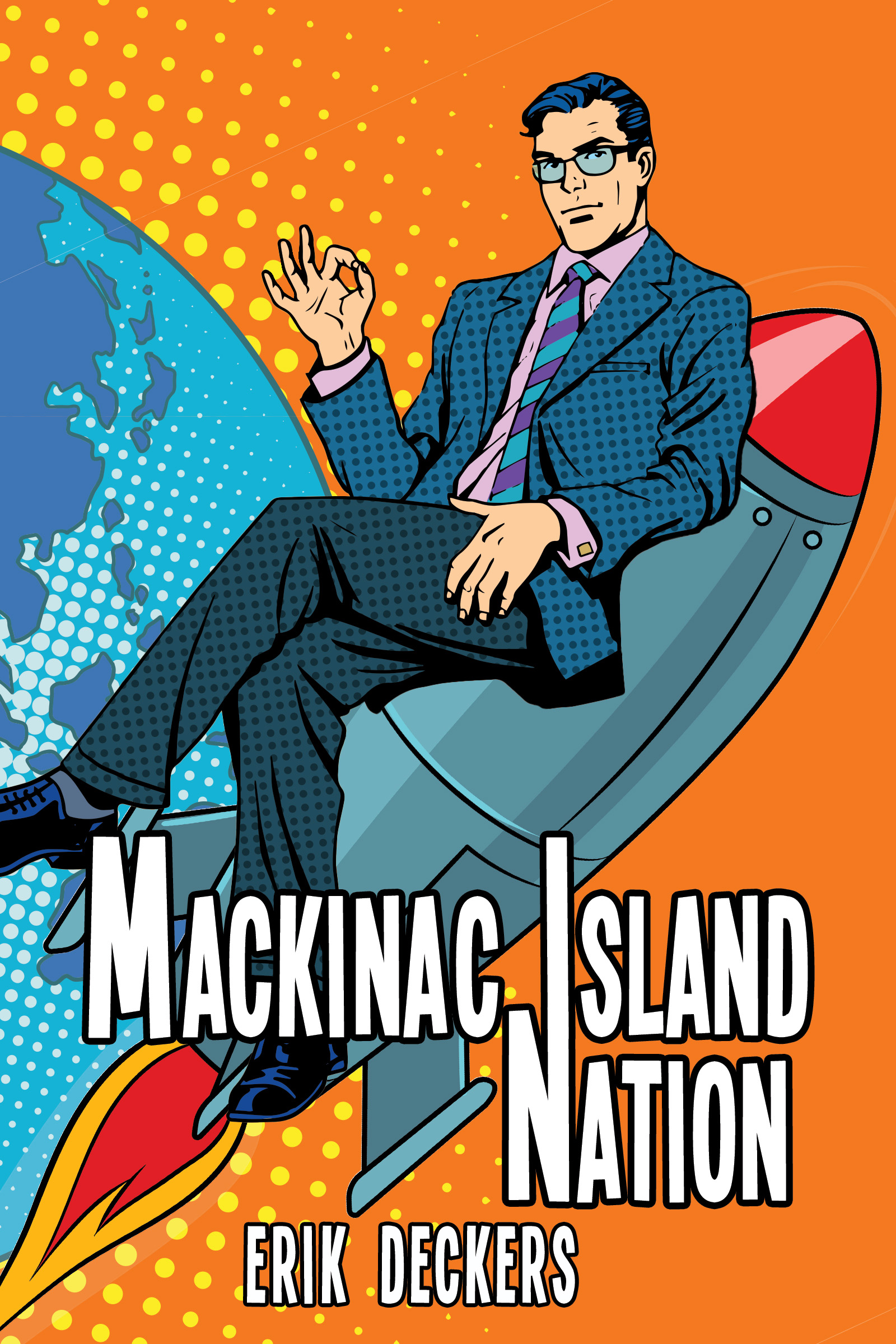
How (and Why) I Wrote Mackinac Island Nation

It was 1995, and my wife and I were on a carriage tour around Mackinac Island when I thought, “What would happen if the island got cut off from the mainland? How would they cope?

Mackinac Island is notable in that there are no cars allowed on the island, only horses and bicycles. If you wanted to go anywhere, you rode a horse, rode a bike, or walked. 

There are no bridges. The only way to cover the eight-mile distance to the mainland was by ferry or a private boat between Mackinac Island and Mackinaw City. Or a snowmobile in the winter if it got cold enough.

We visited Fort Mackinac, the Iroquois Hotel, the Pink Pony restaurant, and the Grand Hotel — the place where Jane Seymour and Christopher Reeve fell in love across the decades in Somewhere In Time.

The question pinged around in my brain over the weekend. How would people get food? Would they still be able to leave the island? Could people bring in supplies? Would smugglers bring in groceries? Would they build a self-sufficient economy where they didn’t need the outside world?

Vacation ended, but the question never left me. We went back three or four more times, staying in different inns and hotels, and I pondered it for the next 14 years.

Finally, one day in 2014, I started writing:

Pete stared at the fussy man in the gray wool suit sitting across from him. The man constantly adjusted and touched his glasses, and Pete wanted to rip them off his face and stomp on them.

“I don’t know what I’m supposed to do about this,” said Pete. “It sounds like your problem, not ours.”

“Well, this affects us both, Mr. Bidwell,” said the man, touching his glasses again. “And it affects everyone who lives on this island, visits it, or has business interests on it.”

“I don’t see how. It’s a 200-year-old treaty that’s been sitting in a dusty old office somewhere.”

The story didn’t come easily — I’d had 14 years to think of it, but honestly, I hadn’t gone past the opening scene and a few additional scenes that happened later in the story. So I started writing and waiting to see what happened as the story developed — “pantsing” it, as it were.

It was a slog, and I eventually got stuck on chapter 4. I had no idea what should happen next or how the story should progress. I had mentally certain scenes much further into the book, but I had no idea how to get there.

A friend taught me how to plan out the story on index cards, writing one plot point per card and organizing them into chapters and storylines. I learned that little trick about a week before I entered the Kerouac House in Orlando to be the Spring 2016 writer-in-residence, so I knew what I had to do once I got there.

I was dealing with a major case of impostor syndrome when my residency started, and I was sure the board was going to realize they’d made a mistake in choosing me because I wasn’t a “real writer” and were going to kick me out.

So, I buckled down and got to work. I plotted out the entire book on index cards in two days, spent a third day organizing them into chapters, and writing the outline. After that, I got to work.

I wanted to get as much done as I could because any day, the board was going to show up and kick me out. I wanted to be able to say, “No, look! I’ve been working really hard. I got a lot done. Can I please stay?”

But they never came.

They never showed up, never knocked at the door, and never asked me to leave.

In fact, they did the opposite: two months later, they asked me to join the board.

I spent the next three months working on my novel and completed half of it during my time. Then, in 2017, I didn’t touch it. At all. Ever.

Not even to look at it, gaze at it in the moonlight, or stroke its cheek and say, “Soon, my darling.” Because it was on my computer, and that would be weird.

Then, in 2018, I decided, “I’m fucking well sick of this!” and worked on it every weekend. I hung out at Vespr Coffee in East Orlando for four hours every Saturday and Sunday night and pounded away at the book, trying to finish it before the end of the year.

In September, I thought, “I must be halfway finished with this by now.” A first novel is generally about 60,000 words long, and I thought, “Surely, I’m at 30,000 by now.”

I counted up the words for each chapter and discovered I was at 90,000 but still had half the outline to go.

Uh-oh.

I started hacking up the outline, removing sub-plots and minor characters’ storylines, and was able to knock it down to five chapters to go. 

I managed to finish the rest of the book before the end of the year and clocked in at 128,000 words. 

I self-published the book in April 2019, and four years later, it was picked up by 4 Horsemen Publications, given a brand new cover, and they’re now producing my next novel, Whither, Utopia, while I’m in the middle of writing my third.

I’ve been writing satire and humor ever since a banned books poster told me not to read Slaughterhouse-Five and Catch-22, and I went and read them. Ever since then, I’ve always wanted to write books that make fun of people in power and that contain a lot of swear words.

Little did I know that one of my favorite vacation spots and an idea that bubbled and brewed for twenty years would end up becoming my most favorite book I’ve ever written. I hope you enjoy it half as much as I enjoyed writing it.
Posted on

Welcome to My World

“The Black Dust fell, and the world changed…”

Welcome to the world of THE JUNGLE SERIES.

As an author I followed one of the main tenets in writing, and that is, always write about what you know. Though the JUNGLE SERIES is a work of dystopian fiction, all four novels are set in the “real” world, the world I grew up in.

Southeast England is a beautiful part of the United Kingdom, the places I write about are real places, though some of the names have been changed. The same with the third novel, [LINDA’S STORY] which is mainly set in Ireland. The fourth novel [GENOCIDE] incorporates most of the U.K. especially Scotland, a wild, exciting land.

A lot of the characters are based on people I have met, people that have stuck in my memory. I have a lot of fun giving them new personas, making them dance to a new tune. Turning them into heroes or villains, colourful, whimsical characters that inhabit a real world, my world.

The world[s] I create have to be real, they have to resonate, give the characters stability, a purpose, and a home. It gives them a reason to fight. 

You are invited into my world, come meet Adam Blake, Linda Stephens, Charlie… They’re just ordinary people like you and me, in an extraordinary situation. You probably already know people who are just like them, everyday people, until they’re not.

This new world is a dangerous place, every day is a fight for survival, death lurks behind every tree, every bush. Real monsters lurk in the woodlands, in the forests, the plant life seeks your death, sentient, evil, patiently waiting for the unwary.

It’s also a beautiful place, where true friendships are born, where everyone comes together with one purpose, one goal, working together, for the common good. Love blossoms, bonds are forged, despite the terror that continually assails them. They are strong in the knowledge that whatever challenges they face they will face together, as friends, as brothers and sisters, as a family.

Welcome to my world, make yourself at home, I will tell you a story….

Follow Alan at: 

Posted on

Welcome to Mansfield Wins FAPA President’s Book Award!

We are excited to announce A.R. Farina has won the Bronze President’s Book Award from FAPA for Welcome to Mansfield – Book 1 in The Austen Chronicles.

4 Horsemen is so excited to bring you this Jane Austen retelling. 

Sometimes you have to leave home to find where you really belong.

Junior Price wanted desperately to get out of her small town and the demands of her big family. Upon winning a scholarship to an elite private college thousands of miles away, she packed her bags and went to find her place in the world. She soon discovers that she may not be ready to be out on her own.

Mansfield College is full of the rich and the wealthy who play by a whole different set of rules than Junior understands. She tries her best to fit in and follow her heart only to discover that her small-town southern charm doesn’t work on everyone.

Will she become someone she doesn’t recognize to try to make everyone happy or will she find herself as she becomes the young woman she wants to be? This book is a modern-day, coming-of-age retelling of the classic Jane Austen story filled with heartache and friendship.

You can buy this book and the next in the series here:

You can see the complete list of winners here:

https://www.myfapa.org/copy-of-2023-year-s-medalists

Posted on

Crowdfunding – Chronicles of the Crossing

Where Epic Metal RPG Campaigns and Fantasy Novels Meet!

It is only 46 days away!!!!

In partnership with Storytellers Forge, the crowdfunding campaign for the Chronicles of the Crossing. These epic full-length novels of different genres, each written by a different author to explore the journeys through the Purgatory setting of The Black Ballad.

These novels explore the age-old question any adventurer has had to ask in a TTRPG campaign…..

You died, now what?

Be one of the first to reserve your spot here:

https://www.backerkit.com/call_to_action/505f884a-0e64-48e9-816e-7f8b64412c6f/landing

Posted on

The World of Lizardville

I’m frequently asked how I came up with the Lizardville Ghost Story series idea. The answer is simple: I lived it, well, sort of.

I’m grateful to my mom and dad for buying the damkeeper’s house in 1969. I grew up in Mill Hall, Pennsylvania. We lived on Lizardville Road in a historic four-story home built in the early 1900s, complete with a full basement, first floor, second floor, and a spacious attic.

Our house was nestled in a valley surrounded by mountains. Across the way, we had the ruins of a dam and the remnants of the Axe Factory along Fishing Creek. As kids in a small town of just a thousand people, we often thought life was boring. So, we made the best of it. But now, as an adult, I realize how fortunate I was to grow up in such a close-knit community.

I want to thank my older brother and a small group of neighbor kids—though I use the term “neighbors” loosely since most houses were a quarter mile apart or further. We would walk or ride bikes to visit each other. That was our only way to spend time together. We loved fishing, camping, and hiking in the woods. We used our imagination, or at least I did. Growing up in the seventies was a different experience than what the children of today face. Many of my childhood memories inspired the stories I write.

About half a mile from our house was a motorcycle shop. Back then, motorcycles were shipped in wooden crates lined with large pieces of Styrofoam, and the shop would pile all the foam out back. We would drag these large pieces of foam to Fishing Creek during the summer and float down the river, turning simple summer days into memorable adventures. We would spend a lot of time on the creek swimming and fishing. 

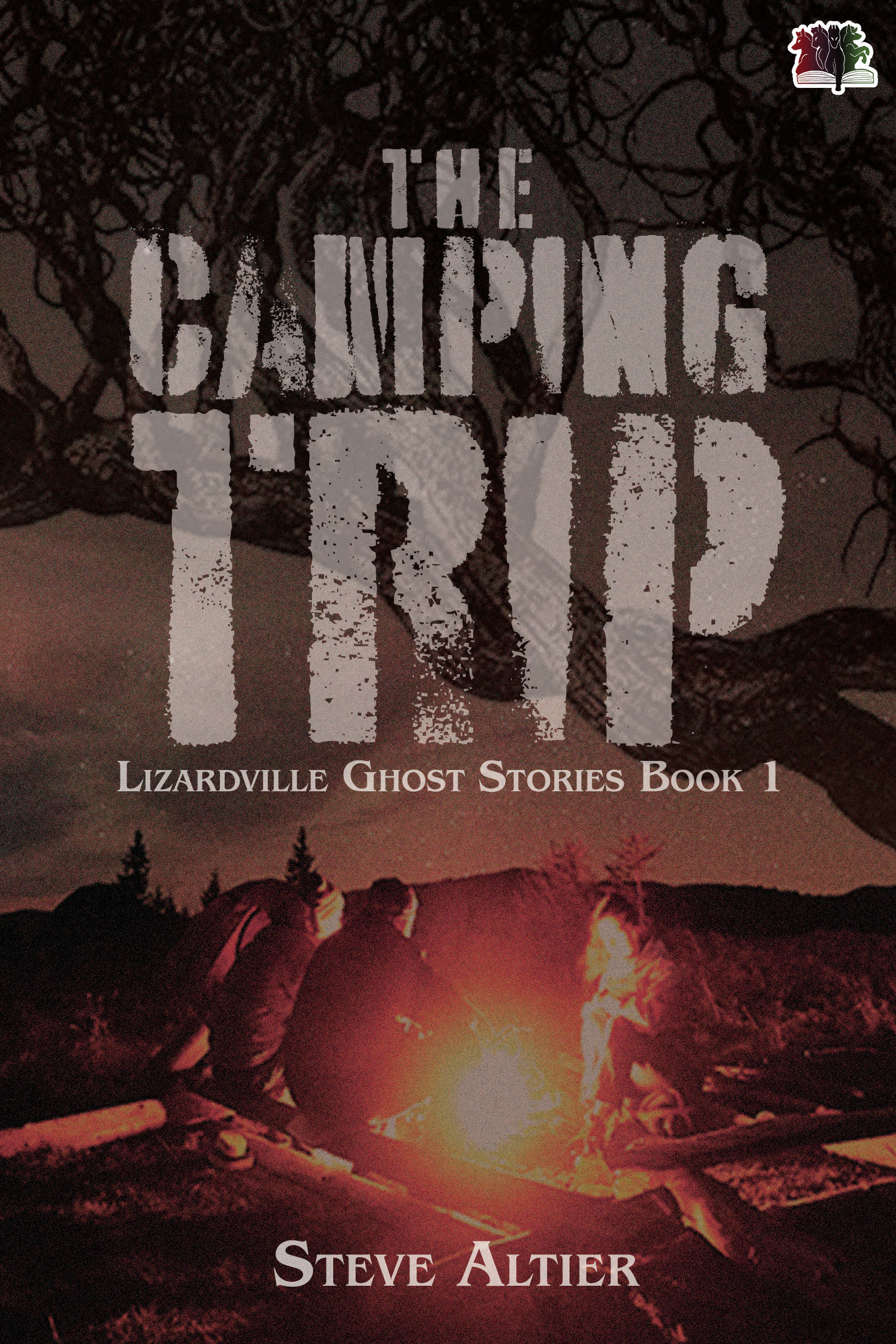
Wildlife thrived in the woods, creek, and the dried-up lake bed where the dam once held back the water. From swimming in the creek to fishing and encounters with various animals, these experiences became the foundation for many of my stories. I often get asked if the scene on the bridge was real. Yes, it was, and you will find many of our adventures in The Camping Trip were real, except for me talking to ghosts. 

The remains of the Axe Factory, mostly destroyed in a flood before my time, provided a fascinating area to explore. People often ask if we ever had any ghostly encounters as kids. I have to say no, but there were unexplained occurrences that left us puzzled. Our parents or older kids usually say animals or other explanations caused these events.

I encountered all sorts of wildlife in the woods—snakes, muskrats, beavers, deer, and even the occasional black bear. No matter the season, I loved the outdoors. As we became teenagers, our adventures evolved from overnight trips to full weekend excursions. Learning to live off the land was a part of life. We spent more time outside than inside. I look back now and think, what were my parents thinking. But I must mention that times were different back then. 

Posted on

Release Day: The Valley of the Blue Mists

We are excited for the release of The Valley of the Blue Mists by R.J. Young! This is Book 3 in The Sky Elders Series!

Tawa, leader of the Itiwana, is lost and dying.

Far away, his son Pahana is settling into his leadership role but has trust issues due to Hayoka’s scheming. Pahana faces a dangerous new threat when the Itiwana tribe encounter enigmatic shaman from the Valley of the Blue Mists.

Kia, Tawa’s daughter, is a young shaman whose power is growing at a fantastic rate. Can a 14-year-old control such incredible power, especially when she’s being manipulated by outside forces?

Pahana fights to protect his people from the latest threat sent by the Winter Elders, including the monster Spear-Finger, only to get word that his father is near death. Pahana must take it upon himself to continue his father’s quest. But can he succeed where even the great Tawa failed?You can order this book  in all formats directly from our 4HP Website and receive 10% OFF using coupon code 4HP10!

Posted on

Release Day: Aestrangel the Risen

We are excited for the release of Aestrangel the Risen by Maria Devivo! The final book in the Aestrangel Trinity!

Will she decide to continue being the pawn of the Morning Star…

…or will she carve out her own destiny in a quest for power? Aestrangel finds herself in quite the predicament: Lucifer Morningstar has tasked her to produce offspring. It will be her child that will ultimately destroy the holy host of angels.

Aestrangel has other plans. As Lucifer sends demonic suitors to her side who all fail in providing a child, she steals something from each of them. Now inside her may lay the key to her own freedom while she uncovers why this battle between the angels and demons unfolded in the first place.

The final installment of this unique trilogy explores what happens if evil conquers good, and then conquers evil again, and no one lives happily ever after. Can the balance of evil and good ever be returned?You can order this book  in all formats directly from our 4HP Website and receive 10% OFF using coupon code 4HP10!

Posted on

From the Author’s Desk: Worldbuilding 101: Consider Your World’s Cultures

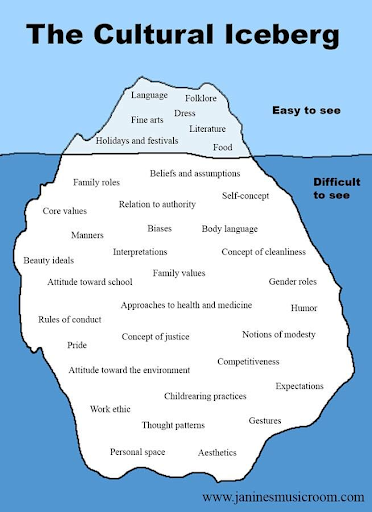
Thinking about the way different people behave is an integral part of worldbuilding. Often it impacts your story, but sometimes, it’s just background that gives readers the feeling that there is a lot more below the water’s surface–that the iceberg is indeed quite deep. One way to do that is to flesh out small details as well as the big picture ideas. 

When it’s time to build the cultural practices of the people in your world, consider the following questions: 

  1. What are the cultural practices of the people in your world? How are the cultural guidelines unique? Are they specific to different groups? In what way? (Do they brush their teeth with their toes? Do they leave their babies with strangers? Do they shave their heads before childbirth? Do they use distilled human remains to lengthen their lives like in Jupiter Ascending?)
  2. How do different groups of people view one another and why? What is the power dynamic between different groups (gender, race, country, etc.)? Are men in charge of women or vice versa or are they equal? Are certain races or nationalities seen in specific ways? (Women are subservient, Vikings are wild men, orcs are evil, Native Americans are noble savages, etc.).
  3. What religions exist in your world? How do they function and who follows them? How important is religion in this world—enough to fight wars over? 
  4. Does slavery exist in your world? How does it work? Which group enslaves what other group? How do people become slaves and how can they be freed? How do other cultures view those who practice slavery?
  5. What is considered a family unit in this world? How does the average person define “family”? What determines who runs a family unit? Is it the breadwinner, the oldest, the one born under a good sign?
  6. Are small or big families common in your world? At what point has one reached a “big” family? Is this a social status thing—do lower classes have fewer children while higher classes have many?
  7. What is the general attitude toward birth control in your world? Is it available? Is it encouraged or frowned upon? Does abortion exist as a medical procedure or a concoction of plants? How do people view single parents?
  8. At what age is an inhabitant considered an adult? What is the average life expectancy for your people? How does social status affect that projection? Do wealthier people live longer?
  9. How is adulthood different from childhood? Is “childhood” a thing in your world or are children expected to behave like little adults from the time they can walk and communicate?
  10. What are common child rearing practices among inhabitants? How are children treated in your world? How do parents discipline their children? Are children expected to work right away or can they wait until they are older?
  11. What kind of stories are told to the children of your world? Is there a boogeyman? What are children taught to fear? To respect? Why?
  12. What kind of games do children play? Where do those games come from?
  13. What are some of the sports in your world? How are they played?
  14. What is considered art in your world? Is it the traditional Humanities (painting, sculpture, music, literature, etc.) or is there more to it? Do people argue about what is “art”? Is art valued in this world or seen as a waste of time and energy? Is reading stories or listening to music a treasured moment or a lazy indulgence?
  15.   Can the average person in this world read? Are fiction/non-fiction books a thing, or are they oral stories, or both? How many books does the typical person in the world have at home? What kind of books would a person read—fiction, history, science?
  16. How do people relax in your world? What are some common hobbies? What activities would the average person do at home after the “major” work of the day is over—needlecraft, painting, sculpting, cooking, watching television?
  17. Is the schedule of the average person set by sunlight and everyone goes to sleep at sunset, or do people stay up after dark to do things? Is non-natural light available? How is the average day divided into work and play? 
  18. Are there major holidays in your world? What are they? Where did they come from?  How do inhabitants celebrate important days throughout the year? Do people celebrate equinoxes/solstices? Are certain days more important than others? 
  19. How do inhabitants keep track of birthdays? Are they celebrated? Do birthdays involve cake and presents or something else? (Hobbits give away presents on their birthday.)
  20. What are common hygiene practices for the people? Do they bathe every day, wear perfume, wash their clothes often? Is there an industry of products around hygiene (hair, body wash, soap, make-up, etc.)?
  21. How much food does the average person have in their home? Is it common for people to make dinner at home, or do they grab food elsewhere? Is food delivery a thing in this world (Doordash, Uber eats, etc.)?
  22. What are some popular foods that are unique to your world? What is considered a lavish meal, an afternoon snack, a poor-man’s-breakfast?
  23. Is food preserved in some way, or is it all fresh? Do people store food for the winter because they must supply it themselves, or is it always available?
  24. What do the inhabitants of your world celebrate (birth, graduation, new cars)?
  25. What do they grieve (war, famine, death of a loved one)? What do they fear (spiders, zombies, pandemic)?
  26. What do they love (other people, satisfying pens, great advice)?
  27. Do people have pets? What is considered a normal pet in your world? Where is the line between a pet and a food source?
  28. What do people value? What is considered beautiful or handsome? What facial/body features are prized right now?
  29. Are certain traditions prized more than others? What practices are looked down on by most people?
  30. How much does the average person know about the cultural practices of other people?

Considering the answers to some of these questions when you aren’t writing will allow you to continue writing when you reach the moment when you need to insert a detail about one of these beliefs or behaviors or practices. Like thinking this way? Check out The General Worldbuilding Guide for more questions and fun activities!

Posted on

Release Day: The Aftermath

We are excited for the release of The Aftermath by C.K. Westbrook! This is Book 4 in The Impact Series!

Lured to a strange hotel populated by stranger guests, Tia unwittingly finds herself at the center of a conspiracy.

It’s been almost five years since a wrathful extraterrestrial called Rex perpetrated a mass shooting that caused hundreds of millions of people to take their own lives. The world has mourned its losses and moved on, trying to adhere to The Pledge to save themselves from more violence. But when a solar storm conceals the dangerous activities being done at the hotel, Tia must figure out who these strangers are and what they are doing before the shooting’s anniversary.

Are these strange and beautiful people adhering to The Pledge? Or are they creating their own violent and nefarious rules in order to change the world? Tia has only days to determine whose side they are on—not to mention, whose side she is on—but first, she must stay alive.

“Westbrook crafted a world that feels both post-apocalyptic and very real to the present. And oh man, when that big reveal hits… watch out.” – P.C. Nottingham, sci-fi author of the Earthquake War series

“Westbrook has created an imaginative and surprising post-shooting world with suspenseful twists, while providing fascinating commentary on society through the revelations and choices Tia, the main c”haracter, confronts.” – Chelsea Henderson, author of Glacial, The Inside Story of Climate Politics

Westbrook’s books are spellbinding and enchanting.” – Karyne Messina, Ed.D. author, psychoanalyst, and podcast host for The New Books Network

You can order this book  in all formats directly from our 4HP Website and receive 10% OFF using coupon code 4HP10!

Posted on

Release Day: Facing the Music

We are excited for the release of Facing the Music by A.J. Buchanan! This is book 2 in the No Strings Attached Series!

Tristan and Benedict must decide if their relationship is worth the risk.

Tristan DeVere, bass guitarist for the rock band Third Generation, swore off relationships a long time ago. After his estrangement from his father at twenty-one, Tristan fell for an older sophisticate who made him think he could rule the world. Unfortunately, the older man showed Tristan his true colors in an extremely humiliating way and brought his family into an unwelcome spotlight. Scarred by the public betrayal, Tristan fears commitment, especially with an older man.

Widower Benedict Priestley, a successful architect and entrepreneur, has kept his bisexuality from everyone except his two closest friends and the wife he lost three years ago. After being married to a woman for years, navigating a relationship with a man is a daunting task. Falling for a younger man like Tristan means he will have to come out to his children. If he wants Tristan to be his, he can’t hide him from the most important people in his life.

Neither Tristan nor Benedict have any interest in coming out from behind the walls they’ve built to protect themselves. When Tristan picks Benedict’s architectural firm to help with his home renovation, each man must face the music and choose passion over prudence in this slow-burn second-chance romance.

You can order this book  in all formats directly from our 4HP Website and receive 10% OFF using coupon code 4HP10!