
Posted on

From the Author’s Desk: Worldbuilding 101: Diversity in Relationships

An important aspect to consider any time you are creating your world is how the inhabitants there interact with one another. You don’t need to be writing a romance to have relationships between characters, and those parameters should be clear to your readers. 

Here are some questions to consider when building the relationships in your world:

  1. What does the average relationship look like in your world? Describe the typical romantic relationship.
  2. What does an atypical romantic relationship in your world look like? Describe a relationship that exists but would surprise others.
  3. Is gender the deciding factor for one’s role in the relationship? How does gender present in your world? How are genders defined in your world (if gender is the social expectations associated with one’s assumed sex while sex is the biological determination using physical attributes)?
  4. How many sexes exist in your world? Are there same-sex relationships? How does society view same-sex couples? In Prince’s Priest by VC Willis, the scandal is that the relationship is between a vampire prince and a human priest. The fact that they are both men is an expected option in that world.
  5. How do people feel about relationships between classes? What about relationships between races? How does the average person feel about people from different places being in a relationship?
  6. How does a typical relationship progress? Describe the usual steps of a courtship (meeting, wooing, dating, flowers, sex, meeting families, moving in together, proposal, marriage, family, children, etc.).
  7. Do people choose their partners, or are relationships arranged by family members? Are arranged marriages the norm? Are they outdated or outlawed? If they are a thing, how do families determine a fitting suitor?
  8. How do couples introduce prospective partners to their families? Is this an important step in the courtship process or just a casual affair?
  9. Do couples live together (before/after marriage)? How does society feel about those who break this expectation one way or another?
  10. Do couples get married, or does cohabitation mean they are an official relationship? Which relationships are recognized as official by the government? Does marriage matter, or is it just a minor bit of paperwork?
  11. What does a typical wedding ceremony look like? Who attends? Who speaks and what do they say? Does someone need to vouch for the couple or forever hold their peace?
  12. Do couples need permission to marry? From whom? Is there a waiting period, or can people get married right away?
  13. Do people elope to Vegas or run away to be together? How does society feel about this behavior? Is it cute or romantic, juvenile or crazy?
  14. Do people change their name when they get married? Is the new member fully embraced by the partner’s family? (You’re a Jones now!)
  15. Is there a physical sign that shows a person is married (ring, hairstyle, article of clothing, etc.)? Can someone tell at a glance if a person is in a committed relationship or not?
  16. Do couples marry for love? Convenience? A combination of both? Why do most couples pair up?
  17. Can anyone marry anyone, or are there rules? Who establishes these rules? What happens to those who break the rules? Are they ostracized like Anna Karenina or forgiven like Count Vronsky?
  18.  What are the rules regarding marriage? Who established them? Why?
  19.  Is marriage about procreation and children and continuing the family name? How does society feel about childless couples? What is the general view on couples having children?
  20. In terms of children, do couples value one sex over another (boys over girls)? How about twins or triplets, etc.? Are such children a blessing by the gods or a curse?
  21. Consider the maternal mortality rate during childbirth in your world. Is childbirth a dangerous proposition for women in your world? (If only women can give birth.)  
  22. Are relationships limited to two people, or do people support multiple partners in relationships? How does society view thruples/poly-groups? In Signs of Affection by Lynn Chantale, the main character courts a love interest who practices polyamory.
  23. How does the average person define love in your world?
  24. Is love something that happens to a person (over which there is no control)? Do people fall in love like they fall off a cliff? Is love a conscious decision made by a person? Can a person choose to fall in love?
  25. Is love an expectation in relationships? Or is being part of a relationship more commonly a matter of convenience and love is found elsewhere?
  26. How do people view adultery? How do people view emotional affairs? Physical affairs? Where is the line when a relationship has become adulterous (a glance, a stolen kiss, a long hug, sex)?
  27. Are there established punishments for breaking a vow to a partner? How are they enforced? Are they different depending on who has committed the offense (women are killed while men are chastised)?
  28. Is love predetermined by an outside force? By what/whom? Are certain lovers fated to be together in your world?
  29. Is there a deity of love? Who is it? What powers do they have? How do people view this deity? How much control does a love deity have over the inhabitants?
  30. Are there love potions/love spells in your world? How do such things work? How long does a love potion/spell last? What are the long-term effects of a love potion? (Are the children of such unions born unable to love like Voldemort?)
  31. Do people believe in love at first sight? How do people feel about such relationships?
  32. Is love an acceptable excuse for irrational behavior? Do people excuse “crazy” behavior on account of love?
  33. Does love have physical symptoms? Can others see that a person is in love?
  34. Are the majority of the inhabitants romantics or cynics when it comes to love? What do your characters think about this?
  35. What does the average person think about relationships in your world?

Bonus Questions: 

  1. What kinds of familiar relationships are you featuring in your story? Why did you choose those and not others?
  2. What new types of relationships appear in your story? How are they different from traditional real-world connections?
  3. How much of the relationships depicted in your story are a reflection of your own experiences? What elements did you add to the relationships and why?
  4. How important are relationships in your story? Do they reflect real-world behavior, or are they exaggerated in some way? If so, how and why?
  5. If your story were turned into a film, what category would Netflix put it under: romance, romantic comedy, drama, horror, etc.? How much of the distinction is based on the types of relationships you include in your story?

Thinking more broadly about how relationships work beyond the scope of the story you’re telling allows you to write a story in a well-developed world, something readers will appreciate as they get to know your characters and the world they inhabit. For more Worldbuilding Questions, check out The General Worldbuilding Guide!
Posted on

Series Catch Up: The Quill Point Chronicles

Series Catch Up: The Quill Point Chronicles

Do you love to dive into an amazing series?

We have the ultimate Thriller, Horror, LGBTQIA+ series for you: 

There are 2 books so far in the complete series.

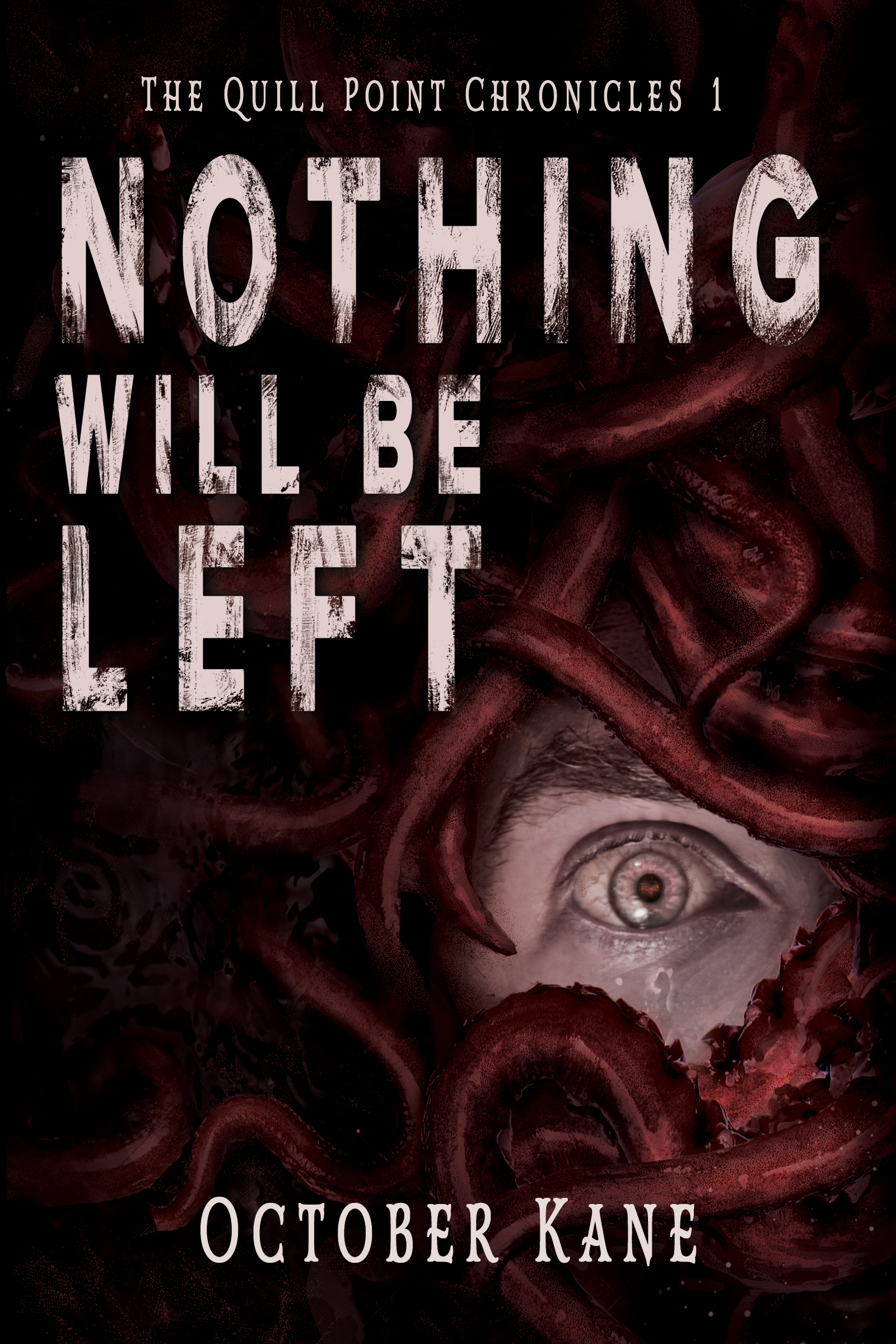
Check out book one Nothing Will Be Left here:

Albert Turner was only supposed to be visiting Quill Point, but now he may never leave.

Quill Point, Illinois, used to be like any other small town. Most of its citizens have lived there their entire lives. Each of them is a part of a larger community of friends, neighbors, and coworkers.

When the sky changed, no one saw it for what it was: the beginning of the end. Now, as horrors and monsters rise, and the population of Quill Point dwindles, the remaining citizens must try to survive the evil machinations at the heart of this new apocalypse. They are in the middle of something beyond human understanding. Something primal and hostile.

Nothing Will Be Left is the first book in the terrifying Quill Point Chronicles. A cosmic horror anthology series told from multiple perspectives. It’s full of existential terror, body horror, and unknowable destruction waiting to be unleashed.

You can order this book  in all formats directly from our 4HP Website and receive 10% OFF using coupon code 4HP10!

Posted on

Author Spotlight: Dominic N. Ashen

If you have not grabbed up one of the books from Dominic N. Ashen you are missing out!

Dominic N. Ashen is an author and avid reader, with a heavy focus on gay, BDSM-themed erotica. After spending his youth in search of books with characters who were more like himself – queer ones, specifically – he decided to start creating some of his own. His stories star queer protagonists, most often gay and bisexual men, and feature heavy themes of dominance, submission, and all sorts of kinks. Dominic loves the fantasy, sci-fi, and horror genres and has a penchant for writing longer stories where he is able to weave in the sex and kink right alongside the plot.

You can order his books in all formats directly from our 4HP Website and receive 10% OFF using coupon code 4HP10!

Check out all their work here:

Posted on

Where Are the Queer Characters Who Are Just… Being Queer?

Seasonal allergy season is almost over and TikTok is full of mid-level influencers critiquing the latest rainbow romper offerings at their local Target, which can only mean one thing: Pride Month has officially arrived!

Every year since 1999, June has been a time to celebrate the kaleidoscope of identities within the 2SLGBTQIA+ community, but also to reflect on the narratives that shape our understanding of these diverse experiences. It’s also a chance to see the Babadook in daisy dukes dropping it like it’s hot at an outdoor festival to a dubstep remix of a Whitney Houston song. But horror icons clapping cheeks aside, Pride Month is so much more than a parade or weekend celebration; it’s a vibrant tapestry woven with the threads of resilience, courage, and love. It’s a time to honor the trailblazers who paved the way and to reaffirm our commitment to the ongoing fight for equality. It’s a month to remember how we got here and to reassess the tools we need to continue to evolve. Among those tools, few are as important as the written word.

Early this year, I had the privilege of lending my voice to a panel at the Association of Writers and Writing Programs (AWP) Conference. We discussed the current state of queer books and identified a gap. Among the difficult coming out stories and tragic tales, where are the queer characters navigating the mundane complexities of everyday life? Not just gay or bisexual people. Where are the other equally important members of our community centered in tales that are unrelated to the journey of their sexual preference or gender identity? 

What I’ve learned partnering with bookstores as an event host is that many traditional publishing houses have been slow to embrace the call for evolved LGBTQIA+ portrayals, clinging to outdated notions of what constitutes marketable fiction. Thankfully, publishers like 4 Horsemen Publications are brave enough to challenge the status quo and step up to fill this void. They recognize the demand for stories which accurately mirror the full spectrum of human experience. 

Readers of all ages crave tales that delve into the nuances of asexual, polyamorous, pansexual, agender, transgender, non-binary identities, and everything in between. They want romance, mystery, people like them living their life after the coming out stage (or characters who never had to go through one at all). While coming out can be an important part of the queer reality, stories with a shifted focus also resonate with authenticity, offering validation and representation to those who are often overlooked.

4 Horsemen Publications’ commitment to championing these kinds of diverse voices is not just commendable; it’s essential. By taking a chance on chronicles that challenge industry expectations, they’re paving the way for a more inclusive literary landscape. They’re showing that there’s both a hunger and marketability for stories which showcase the colorful mosaic of human identity.

As we enjoy the festivities of Pride Month, it’s important to remember why we celebrate. Pride is about reclaiming our narratives. Affirming our existence. Telling society who we are and that we plan on staying. In a world that often seeks to erase or silence us, working with publishers who are on our side is among the ways we continue to progress. 

Books have the ability to change hearts and minds, to foster empathy and understanding, and to illuminate the shared humanity that binds us all together. When we write and champion diverse stories, we’re not just enriching our literary landscape; we’re fostering a more compassionate and inclusive society.

So this Pride Month, grab your local Babadook or drag performer by the hand and throw some glitter on. Raise your voice in celebration of all the stories yet to be told. Imagine what we could learn from each other if we printed more books than we banned, let more people tell their stories than we tossed in the “slush” pile, stopped telling queer authors their experiences aren’t book-worthy because they can’t be packaged and sold like trauma-flavored bubblegum. 

Let’s embrace the power of literature to inspire change and uplift marginalized voices, continue to push for a world where every identity is not just acknowledged, but shared. With the help of publishers like 4HP, we can create space for characters representing every letter of the 2SLGBTQIA+ community. As authors and readers, we have the power to mold the narratives of tomorrow. 

Happy Pride Everyone. Keep reading. Keep fighting.

Posted on

Series Catch Up: Hidden Love

Do you love to dive into an amazing series?

We have the ultimate MM series for you: 

There are 5 books so far or in this complete series.

Check out Hidden Love here:

Connor thought he had life all figured out, until he met Jamel.

A military veteran from a good Irish Catholic family; blonde-haired, blue-eyed Connor has had the same beautiful girlfriend since high school. But Connor has a secret. He lives a second life as a closeted gay man, jumping from one sexual partner to another. To avoid judgment from his family, Connor’s best friend Afia plays along with the elaborate ruse of their romantic relationship. But now, Connor’s safety net is falling for someone else.

In steps Jamel, an African American man with an irresistibly hard body and gentle soul. He just so happens to be Afia’s new love interest’s brother and captures Connor’s attention from the moment their eyes meet. As their erotic affair sizzles, Connor fears what his father and brother may do if they discover he has feelings for another man. With a newfound reason to change the course of his entire life, will Connor find the strength he needs to finally come out? If he does, will Jamel wait while Connor decides if he’s ready for something as real as their love?

This m/m steamy romance is driven by incredible sexual chemistry in a world where relationships are not always easy. Keep up with Connor and Jamel through the entire Hidden Love series as they navigate the complexities of attraction, personal identity, and overcoming intolerance in the name of deep passion. Content Warning: Racism, homophobia, and incidents of violence.

You can order this book  in all formats directly from our 4HP Website and receive 10% OFF using coupon code 4HP10!

Posted on

Tapping into Your Hero’s Emotions: The Key to Engaging Creative Writing

In the realm of creative writing, heroes are more than just characters who drive the plot forward; they are the heart and soul of your story. Understanding and tapping into your hero’s emotions is crucial for creating compelling narratives that resonate deeply with readers. 

Emotions not only humanize your hero but also provide the reader with a window into their inner world, making the journey more immersive and impactful. Here’s a detailed guide on how to effectively harness your hero’s emotions in your writing.

The Importance of Emotional Depth

Emotional depth in a hero is what transforms a flat character into a dynamic one. Emotions provide motivation, shape decisions, and drive actions. They also make your hero relatable, allowing readers to connect with them on a personal level. This connection is essential for maintaining reader interest and investment in the story.

  1. Relatability: A hero with authentic emotions mirrors the human experience, making them more relatable. Readers are more likely to empathize with a character who feels joy, sorrow, fear, and love in realistic ways.
  2. Motivation: Emotions are often the driving force behind a hero’s actions. Understanding what your hero feels helps to explain why they make certain choices, adding layers to their character and making their journey more believable.
  3. Conflict and Growth: Emotional struggles and triumphs create compelling conflict and drive character development. Witnessing a hero navigate their emotional landscape allows readers to experience growth and transformation alongside them.

Techniques for Exploring Your Hero’s Emotions

To effectively tap into your hero’s emotions, you need to employ a variety of techniques that reveal their inner world to the reader. Here are some strategies to consider:

  1. Show, Don’t Tell: Instead of directly stating how your hero feels, show their emotions through actions, dialogue, and internal monologue. For instance, instead of writing “John was angry,” describe how he clenched his fists, his face turned red, and he spoke through gritted teeth.
  2. Internal Monologue: Use your hero’s thoughts to delve deeper into their emotions. Internal monologue allows readers to hear the character’s inner voice, providing insight into their fears, hopes, and desires. This technique is particularly effective for conveying complex or conflicting emotions.
  3. Dialogue: Emotions can be powerfully conveyed through dialogue. The way your hero speaks—tone, word choice, pacing—can reveal their emotional state. Pay attention to subtext as well; what is not said can be as revealing as what is said.
  4. Body Language and Facial Expressions: Nonverbal cues are a vital part of emotional expression. Describe your hero’s body language and facial expressions to convey their feelings. Slumped shoulders can indicate defeat, while a bright smile can suggest joy or relief.
  5. Sensory Details: Emotions often heighten the senses. Use sensory details to immerse readers in your hero’s emotional experience. Describe how the world feels, smells, sounds, and looks from their perspective when they are happy, scared, or grieving.

Building Emotional Arcs

An emotional arc is the journey your hero undergoes in terms of their emotional state from the beginning to the end of the story. Crafting a strong emotional arc is essential for character development and overall narrative impact.

  1. Starting Point: Establish your hero’s emotional baseline at the start of the story. This provides a reference point for measuring their growth and changes.
  2. Challenges and Triggers: Introduce events and situations that challenge your hero’s emotional state. These triggers should be significant enough to cause an emotional response and propel character growth.
  3. Climax: The emotional climax is often tied to the story’s overall climax. This is the point where your hero faces their greatest challenge and their emotions reach a peak. It’s a moment of intense vulnerability and revelation.
  4. Resolution: Conclude the emotional arc by showing how your hero has changed emotionally. This can be a return to a new normal, a moment of acceptance, or a newfound strength.

Playing on Your Hero’s Trauma Using CBT Principles

Cognitive Behavioral Therapy (CBT) offers valuable insights into how trauma shapes a person’s emotions and behaviors. By applying CBT principles to your hero’s emotional journey, you can create a more authentic and nuanced portrayal of their trauma and growth.

  1. Identifying Core Beliefs: Trauma often leads to the formation of negative core beliefs. These beliefs shape how your hero sees themselves and the world. For instance, a hero who survived a traumatic event might believe they are powerless or that the world is inherently dangerous. Understanding these beliefs helps to explain their actions and reactions throughout the story.
  2. Triggering Emotional Responses: Use specific events or interactions to trigger your hero’s trauma-related emotional responses. These triggers can be people, places, or situations that remind them of their trauma, leading to intense emotional reactions. This technique adds depth to their emotional arc and provides opportunities for growth.
  3. Cognitive Distortions: Highlight your hero’s cognitive distortions, such as black-and-white thinking, catastrophizing, or overgeneralization. These distorted thoughts can create internal conflict and drive the plot. For example, a hero who catastrophizes might interpret a minor setback as a complete failure, leading to a crisis of confidence.
  4. Emotional Regulation: Show your hero learning to manage their emotions through healthy coping mechanisms. This can include self-reflection, mindfulness, or seeking support from other characters. Their journey towards emotional regulation can be a significant part of their character development.
  5. Reframing and Growth: As your hero confronts their trauma, use CBT techniques like reframing to show their growth. Reframing involves changing negative thought patterns into more positive or realistic ones. For instance, a hero who initially believes they are powerless might, through their experiences, come to see themselves as resilient and capable.

Tapping into your hero’s emotions is essential for creating rich, engaging narratives. By understanding their emotional depth, employing techniques to reveal their inner world, and crafting a compelling emotional arc, you can create heroes that resonate deeply with readers. Incorporating CBT principles into your hero’s emotional journey adds authenticity and depth, making their experiences and growth more believable. 

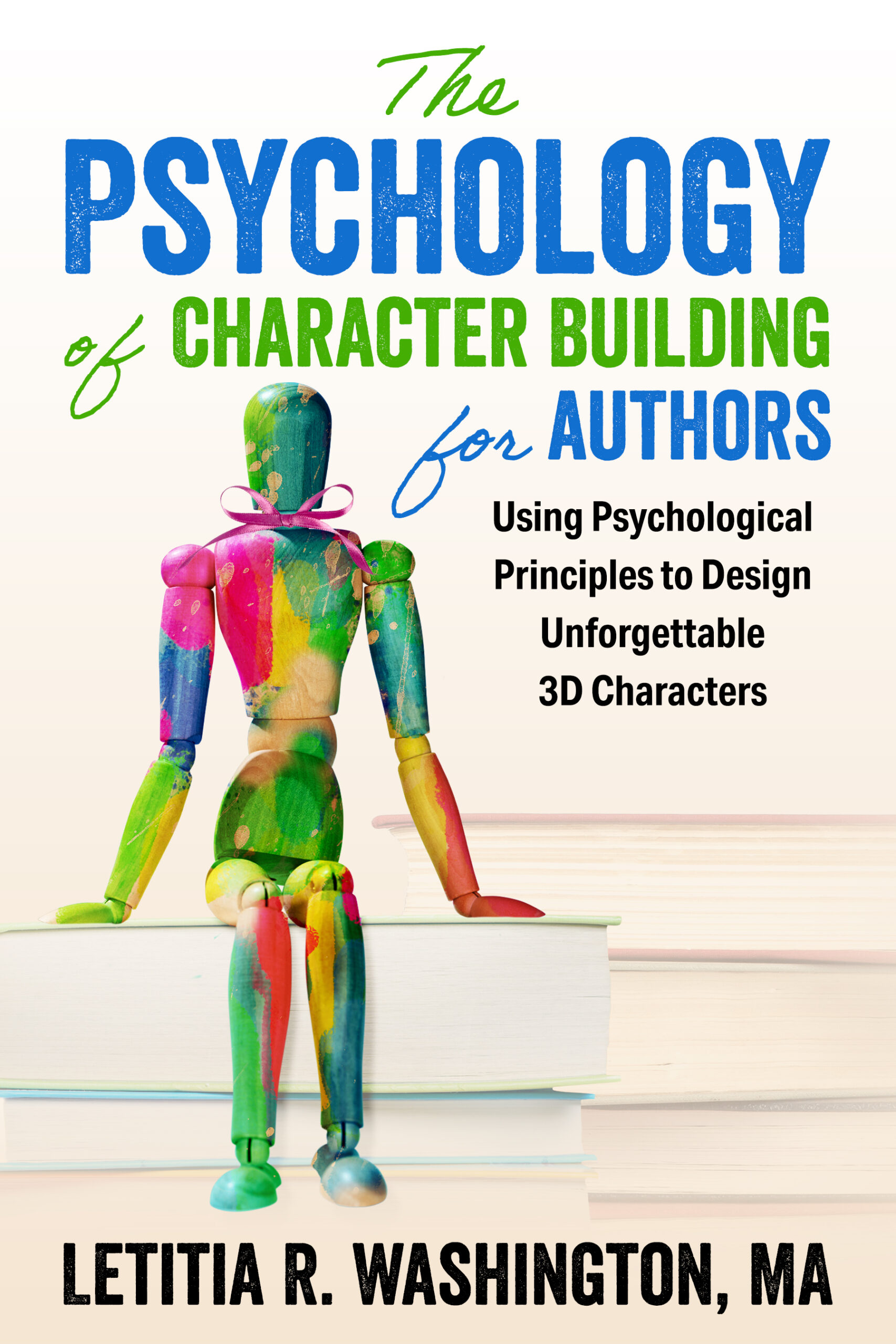
If you’re eager to explore more tapping into your Hero’s emotions and using psychological principles to do it, I highly recommend checking out my book, The Psychology of Character Building for Authors. This comprehensive guide delves into the psychological underpinnings of character development, providing invaluable insights and practical techniques to help you create multifaceted characters that resonate with readers. 

Happy writing!

Posted on

Release Day –  The “Other” Horsemen of the Apocalypse

We are excited for the release of The “Other” Horsemen of the Apocalypse anthology by multiple authors!

Behold, the four horsemen of the apocalypse and … the other guy.

The cataclysm is said to be heralded by a barrage of hoofbeats, each fearsome rider wielding a mighty weapon. The Horsemen are so ubiquitous that they have been depicted in art, film, television, video games, comic books, literature, and music.

But who didn’t make the cut? Surely, there were other Horsemen that auditioned but missed the mark. Perhaps their horse was just a pony, or they just liked humanity too much to allow the End Times. Maybe their audition ended in tears because the Four Horsemen were too mean, or they simply just couldn’t figure out where on Earth they even were. It could be that they kept encroaching on the Horsemen’s territories, and why would they allow someone who keeps stepping on the others’ toes? The “Other” Horsemen of the Apocalypse is a collection of stories by authors from around the world answering your burning questions.

This anthology includes (in order of appearance): “His Strength Waxes Mighty” by Stephen Clements, “A Slight Misunderstanding” by Michael Rice, “Corrupts Absolutely” by Jay Mendell, “A Fowl Day” by Bevanny Stearman, and “Rebirth” by Kay Hanifen.

Let the Apocalypse begin…

You can order this book  in all formats directly from our 4HP Website and receive 10% OFF using coupon code 4HP10!

Posted on

Love Your Kindle: The Fall of the House of Otter

Do you need a new series to dive into on your KINDLE? Check out the The Fall of the House of Otter series by Leo Sparx!

“For readers who enjoy a dark mysterious plot with their sexy books, this m/m (and m/m/m) series is just as sinister as it is kinky and was inspired by the Edgar Allan Poe tale, “The Fall of the House of Usher.”

A gay otter boy (meaning: a young fit man who does not shave his body hair) named Alexander, is an out-of-work hustler in his small town by the ocean. In a sudden change of luck he finds himself drawn to a strange mansion and inside, a mysterious millionaire pulls him into a world of sinister extravagance and sexual discipline. With a background as a sex worker, Alexander is no stranger to trading his furry body for money, but he was never expecting to develop deep feelings for his new eccentric keeper.

With an introduction to the BDSM lifestyle, the mostly submissive Alexander learns a great deal about himself and his master through whipping, CBT, endurance, and being collared to an older man. Unsure if he is a toy, pet, or partner to the Daddy of the manor he used to think was abandoned, Alexander navigates the secrets of the interior with another otter boy from his past. Things get complicated further when emotions for the other hustler in the strict hierarchy come to the surface and he breaks one of the many rules within the house.

Including paranormal elements and unexpected magic, this queer erotic romance series begins in the fall season at the House of Otter then twists and turns through the seasons. Expect: jockstraps and hairy men, Daddy and Boy dynamics, bondage, sadomachochism, harnesses, dominance, fetish gear, nipple play, mystical prophecies, destiny, and whispered words with the power to open the door to forbidden fantasies. In the end, Alexander must decide how much of his body and sexual freedom he is willing to surrender in exchange for a life of opulent luxury.

It’s Edgar Allan Poe but with a queer, kinky, and paranormal twist!

This MM BDSM Dark Paranormal Erotic Romance takes consent seriously. No otter boys were harmed (unless they wanted to be) in the writing of this book.*

You can find all these amazing books in the series on your Kindle. You can start here:

Posted on

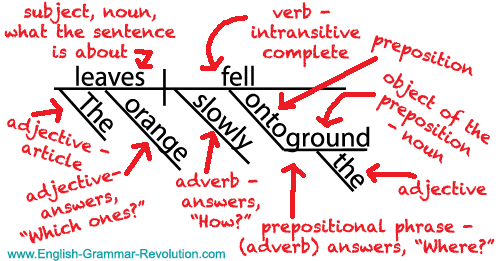
From the Professor’s Desk: Sentence Diagramming 101

Do you ever wonder about what’s under the hood of the English language? English is a rich language with a convoluted history and tons of inconsistencies, but contrary to appearance, it does actually have rules that organize the way we put our words together. One way to visually explore the way English functions is to use a technique called sentence diagramming. 

Some of you may remember traditional sentence diagramming from some long ago class in elementary school or think of it as something you did for a day in grammar school during the 80s. Yes, sentence diagramming has been around for a while (since the 1900s!), but it’s still relevant if you want to think structurally about the way English works. 

Sentence Diagramming 101: Fun with Linguistics (and Movies!) is a great resource for anyone interested in understanding the underlying structure of the English language.

“A surprisingly fun jaunt into the convoluted wilds of the English language!”

Sentence Diagramming 101: Fun with Linguistics (and Movies) explores the relationship between words using traditional sentence diagramming and amusing movie references. Inside this textbook, you’ll find detailed explanations as well as 50+ film-focused practice exercises, and on the companion website, you can explore the answer key, informative videos, additional practice, and lively discussions about the English language.

One abiding question often accompanies any discussion of traditional sentence diagramming (Reed & Kellogg): does sentence diagramming create better writers? This book’s answer: Maybe. If you think of the English language as a car, think of this book as a look under the proverbial hood of the language. Someone may know the names of all the parts and how they work together to make the vehicle move when the gas pedal is held down-but does that knowledge create a better driver? Perhaps. Perhaps not. Perhaps that driver will explain spark plugs while they drive straight off a cliff.

Such is also true of writing. English can be messy, filled with archaic bolts and cobbled coils, but somehow, it still manages to get users where they want to go. Hop in and enjoy the ride!

A great primer for writers, word enthusiasts, and those seeking to understand the fundamentals of English grammar, this textbook breaks down complicated ideas into digestible pieces.

Topics include:

  • The Basics: Parts of Speech and Word Function
  • Sentence Patterns
  • Phrases, Verbals, and Clauses
  • Sentence Types
  • Weirdness: Questions, Commands, Expletives, Poetry, Made Up and Repeated Words

Additional features:

  • ADA Compliant
  • Free Companion Website with Video Overviews, Answer Keys, Practice Explanations, Additional Practice, and Language-Focused Discussions

Get under the hood of the English language with Sentence Diagramming 101!

Posted on

Monthly Releases – June 2024

We are excited to bring you the NEW RELEASES for the month of (Month)!!!

Make sure you check out all of our amazing new releases here.

You can order these books in all formats directly from our 4HP Website and receive 10% OFF using coupon code 4HP10!

If you order before the release date you will automatically get 15% OFF cover price!

Release Date: June 3rd 2024

We are excited for the release of Service Duty by Dominic N. Ashen!

Don’t do the crime unless you wanna do the time!

David likes to think he’s a funny guy. He’s good at making people laugh and who doesn’t love a good prank? Turns out a lot of people, especially Chief Grandtooth, the one person Khazak can’t protect him from. As punishment, David is assigned service duty—”taking care” of the entire ranger station.

Of course, it was Nylan who put him up to the prank in the first place. He feels terrible; the only person it was supposed to target was Ragnar. So, in addition to dealing with his own punishment, he’s somehow going to have to make things up to David. And David is not going to make it easy for him.

This is a tale of pranks gone wrong, mending friendships, and lots of different kinds of punishment. Enjoy this short and steamy side-story in the Steel & Thunder universe featuring some of your favorite characters.

Release Date: June 7th 2024

We are excited for the release of The “Other” Horsemen by Multiple Authors!

Behold, the four horsemen of the apocalypse and … the other guy.

The cataclysm is said to be heralded by a barrage of hoofbeats, each fearsome rider wielding a mighty weapon. The Horsemen are so ubiquitous that they have been depicted in art, film, television, video games, comic books, literature, and music.

But who didn’t make the cut? Surely, there were other Horsemen that auditioned but missed the mark. Perhaps their horse was just a pony, or they just liked humanity too much to allow the End Times. Maybe their audition ended in tears because the Four Horsemen were too mean, or they simply just couldn’t figure out where on Earth they even were. It could be that they kept encroaching on the Horsemen’s territories, and why would they allow someone who keeps stepping on the others’ toes? The “Other” Horsemen of the Apocalypse is a collection of stories by authors from around the world answering your burning questions.

This anthology includes (in order of appearance): “His Strength Waxes Mighty” by Stephen Clements, “A Slight Misunderstanding” by Michael Rice, “Corrupts Absolutely” by Jay Mendell, “A Fowl Day” by Bevanny Stearman, and “Rebirth” by Kay Hanifen.

Let the Apocalypse begin…

Release Date: June 24th 2024

We are excited for the release of A Familiar Family Connection by Eskay Kabba!

Ryan D. Ryder and Mr. Deep Strokez are official but not Facebook official!

Rion Matthews—AKA Ryan D. Ryder—flew across the country to be with the man he fell in love in London last summer. And Nicholas Highton—AKA #MrDeepStrokez—is ecstatic to have Rion in his city, his life, and his bed every night. The two lovers try to keep it just between them since Nick’s sex tape went viral. With over twenty million social media followers and paparazzi dogging his every move, Rion wants to be sure that their steamy connection had the foundation to go the distance before they became a hashtag.

After Rion is accidentally introduced to Nick’s siblings, he is pulled into the world of the One Percent, where money, sex, and power is at their fingertips. Meanwhile, traumatic events force Rion back to California, leading Nick into the dark and dangerous world that Rion was raised in.

Will their connection grow stronger as they walk through each other’s worlds, or will the journey create doubts about their relationship’s longevity?