Posted on

From the Editor’s Desk: How to Format Dialogue so It Doesn’t Annoy Readers

I know that you know this already, but something weird happens to authors when they write their own stories—they suddenly stop following any kind of formatting rules around conversations and just start throwing words and punctuation around like darts in a whirlwind. Writers, you know what dialogue in a novel should look like—I know you do. You’re readers. You’ve all seen this format hundreds of times. But I also know that there is a strange disconnect between seeing how something looks on the page when someone else—a famous author perhaps—does it and applying those same expectations to your own work. 

First, let’s talk about why this happens and then get into some guidelines to keep in mind when you are writing dialogue. Sometimes, this disregard for the rules happens for the simplest reason: writers assume someone else will clean up their messy words and formatting. “My editor will fix it for me.” After all, the author is the cook—she need not clean the kitchen as well. Maybe so. But cleaning up after your own words will remind you of the rules—how things ought to look—and you will be a stronger writer as a result. Yes, your editor can clean it up for you, but that person will do so at the expense of everything else, spending valuable time adding commas and lowercasing words instead of getting into the real work of editing. You are essentially paying someone a lot of money to do a menial task when that money could be paying for expert attention on other matters that would make your story better—not just bring it up to code. 

Another reason formatting may get wonky is because writers promise they will go back and fix it later—and then don’t actually go back and fix it. I know how it is. We writers may be a forgetful lot. We focus on other things, get sidetracked by other stories, fascinating characters yearning to break free, and we move on to the next one, never actually going back in and checking the capitalization in chapter two. Now, I know you love re-reading your stories. You wouldn’t have written it if you didn’t enjoy reading it (unless you’re writing to market or ghostwriting or something like that, but this blog isn’t for you, specifically). Read it again—except this time pay attention to your dialogue and tweak any remaining issues. 

This brings us to another reason for messy dialogue format: you’re just not sure. And that’s okay! Just ask. Or review the guidelines listed below. 

How to properly format dialogue in novel writing

  • Every time a new person speaks, indent on a new line: 

“What are you doing?” Samantha asked. 

“Rearranging matches,” Sebastian said, boredom seeping through his voice.  

“Why?” Samantha inquired. 

“I have no idea,” Sebastian admitted. 

  •  When a character speaks both before and after an interjection, the punctuation should follow like this:

“You never have any idea,” Samantha sneered. “That’s why I’m leaving you.” 

“You can’t leave me,” Sebastian replied, “because if you do, who will organize your things?” 

  • If there is more text beyond the conversation, it can stay in the same paragraph:

Samantha glared at him. “I don’t need anyone to organize my things,” she snapped. “I was just fine in my organizational skills before you came along. I don’t need someone to look after me like a child.” She scanned the library, haughty eyes taking in other annoying details of his obsessive behavior. 

“Huh,” Sebastian scoffed. “You couldn’t tell that from where I was standing, dear.” He turned away from his latest project to stare at her. As usual, her clothes were in disarray, her wrinkled pants and untucked shirt almost screaming her need for his guidance. “Come here, Sam. You look a mess.” 

“You could use a good mess!” Samantha shouted, stalking out of the library. 

  • All periods, commas, question marks, and exclamation points go inside the quotation marks.
  • You should never put “double” “quotation” “marks” next to one another unless you are making a list of quoted items—otherwise, “double quotation marks” is sufficient. 

As I recall, you told me, “I am busy,” “I have plans,” and finally, “I am dead. Please leave a message” the last time we talked about this.  

Review the Rules

  1. If you start a sentence with dialogue, capitalize the first letter of the spoken words but leave the rest in lowercase (except proper names). Put a comma at the end of the spoken words (inside the quotation marks) if it’s not a question or exclamation point. 

“I don’t know why you do this to me,” Sebastian pondered. He stared at the books lining the walls, face blank while his thoughts raced. “It’s only matches,” he whispered. 

  1. If you start with the tag (the “he said” part of the sentence), you should start the actual spoken words with a capital letter. Put a comma (if it’s not a question/exclamation) after the verb and before the first quotation mark.

Sebastian said, “She’ll be back.”

  1. If you interrupt a complete sentence with a tag, do not capitalize the words after the tag. If you have two separate sentences with a tag ending the first one, capitalize the second sentence.  

“I know she will forgive me,” he moaned, “eventually.” He glanced at the door, suddenly sure he heard her returning footsteps. “She’s coming back,” he whispered. “I know it.”

  1. If the spoken words are not a statement, put the question mark or exclamation point inside the quotation mark (as long as the spoken words are a question/exclamation). If the entire sentence is a question or exclamation, then put the marks outside the quotation mark. 

“Why do I put up with him?” she wondered, staring down the long hallway. “He’s such a jerk!” she snapped, hands fisting at her sides. “Those matches,” she mused, shaking her head, “make me absolutely crazy.” How dare he say she looked “a mess”? “It’s only matches” indeed!

  1. Unspoken thoughts should be italicized to distinguish them from spoken words. Consider having tags like “he thought” or “she wondered” so listeners to your audiobook can tell which parts are spoken aloud and which ones are internal thoughts. You don’t need it every single time, but for important moments, it can make things clearer to your listeners. 

Just one more box, Sebastian thought, emptying the matches onto the table. 

  1. Only spoken words go inside quotation marks—not reported speech. 

I remember when she told me she was leaving me, Sebastian thought, lips pursing as he began lining up the matchsticks. Perhaps I shouldn’t have said, “You look a mess”?

  1. When quoting someone else’s words inside a quote, use single quotes. 

“But why would he say ‘You look a mess’ to me like that?” she wondered, glancing down at her clothing. “I guess I should be glad he didn’t say ‘You look a “hot” mess’ after all.”

  1. If your character speaks for more than one paragraph (telling a story), don’t use end quotation marks until the character finishes speaking. This means you will not put quotation marks at the end and beginning of each new paragraph. 

That’s it! While we’re here, a few things to avoid when dealing with dialogue:

  1. Do not capitalize the word after the quote unless it’s a proper name: “Don’t do it like this,” She said. (“Do it like this,” she said.)
  2. Do not put periods between the quote and the speaker: “Don’t do this.” She added.  (“Do this instead,” she added). 
  3. Don’t use tag words that don’t actually signify speech: “This is so amazingly funny,” he laughed. Did he laugh those words? No. He laughed after he said those words. “This is so amazingly funny!” He laughed. (I added the exclamation point because he’s probably excited about whatever is so funny, but you could leave the period.) I keep seeing characters who shrug, chuckle, smile, and grin words (and that’s just creepy sometimes). Add the period and separate the words from the action. 

I hope this has helped shed some light on how to properly format your dialogue to save both your readers and your editor’s sanity!

Posted on

New Releases for October 2023

The Erotic Ghosts Collection

by Honey Cummings

October 1, 2023

Come meet some amazing spooky and sexy ladies you may already know!

In this collection from Honey Cummings, find three ghostly legends who just need a little love in their haunting lives. Joins us as we find a match for the Lady in Blue, Woman in White, and even Bloody Mary herself. These audacious apparitions are willing to take a chance and seize the opportunity for a sexy time while they find themselves tangible to the opposite sex.

Whether you’re looking for a rebound with the hotel gardener, find yourself a contestant on a reality show where strangers are getting married, or even find yourself on the other side of the mirror in a tale as old as time. Prepare to laugh and fan yourself as the cold of the paranormal shifts into the flames of passion in this trinity.

Discover what haunting passion can truly bring to one’s love life.

The Author’s Accountability Planner 2024

by 4 Horsemen Publications

October 1, 2023

The Author’s Accountability Planner 2024

By: 4 Horsemen Publications

We’ve found your muses for 2024!

Developing an accountability routine to keep on schedule and meet your goals can feel like an uphill climb. That’s why this planner was written for authors by authors. Call us your muses because inside these pages, we’ll be guiding you every step of the way. We’re here to help, encourage, and keep you on task as we scale that narrative mountain together.

Often as creatives we rely on friends, workshops, critique partners, and mentors to keep us moving. They ask, “How’s the book coming?” and we think, “Shoot! I need to make time to write some more!”

Well, as far as productivity goes, consider this your solution to getting the work done.

Yes, it’s a planner, but not just any planner.

The detailed pages of the Author’s Accountability Planner were designed for fiction and nonfiction authors of all levels to outline an entire year of writing. They contain inspiration, scalable graphs, and valuable checkpoints. There are introspective questions about your personal method and places to stop and take a break when you need one. We’ve designed a tool to spark creative energy and manifest that compelling drive we often find amongst our fellow authors, but the best part is, you don’t even have to leave your desk.

What can you accomplish with the Author’s Accountability Planner?

  • A Full Year of Writing
  • Daily, Weekly, and Monthly Planning
  • Tracking Your Word Count Milestones
  • Adapting Goal Setting Tools
  • Completing Unique Writing Prompts
  • Achieving Narrative Objectives
  • Discovering Inspiration Through Thought Activities
  • Joining an Interactive Community
  • Turning Your Passion into Progress

And best of all, meeting your new muses! (That’s right, we’re really going to be in there cheering you on and guiding you all the way through the year!)

You have a story to tell, and the world deserves to hear it. Let the Author’s Accountability Planner help bring that story from your imagination to the page, one day at a time.

Dear Galaxy

by Paige Lavoie

October 4, 2023

To find love, Susie will not only have to go off planet—she’ll have to go off-book.

As the school’s advice columnist, Susie Starlight has all the answers. It doesn’t matter that she’s never

  1. Been on a date.
  2. Traveled off-planet.
  3. Made a decision without her trusted guidebook.

Working anonymously as Miss Galaxy, she has steered every relationship at Galaxy High. While Susie might not have any experience, The Space Age Ladies’ Guide to Romance and Social Affairs does—and she follows The Guide’s advice to the letter. Even when it means giving up on winning the attention of her longtime crush or sparking a love story of her own.

When an anonymous love letter arrives at her desk for Miss Galaxy, Susie gathers her courage, friends, and a souped-up space cruiser to embark on a scavenger hunt through the stars.

The Pirate Danced and the Automat Died

by Lou Kemp

September 9, 2023

A magician, a widower from the Sudan, and an automat travel the world…

It is 1868 and three close friends, the immortal magician Celwyn, the automat Professor Xiau Kang, and Bartholomew, a scientist and widower from Sudan, set out on another adventure. After their airship is destroyed, they travel to Findbar Island to regroup and rebuild.

Meanwhile, Celwyn receives word from his love, the vampire Tara McFein. She is being kept prisoner in the Tower of London, and it is up to Celywn and company to save her.

The Pirate Danced and the Automat Died is a steampunk fantasy filled with murder, magic, and adventure.

Peak of the Devil: 100 Questions about Peak Oil Answered

by Chip Hayes

October 9, 2023

“Fun, informative and way scary!” – Ed Begley Jr.

What’s that peak oil thing you keep jabbering on about?

“Peak oil” is the phrase used to describe the point where the world’s oil supply, well, peaks. A fairly easy concept there. It’s the best we can do, and the best we will ever do, when it comes to pumping conventional crude oil out of the ground. After peak oil, it’s all downhill, production-wise.

Too many people think that peak oil means that the oil is going to run out, and that’s not quite right. The oil will not run out. Not ever. It will, over time, get increasingly rare and probably expensive (before it’s worthless), but there will always be at least a little bit of oil for us to use. Well, for someone to use. Probably not you and me, unless I sell a whole shipload of books. No pressure.

Demonic Workplaces – Safer to Call in Sick

by Multiple Authors

October 13, 2023

Work sucks … then you die!

We’ve all had a boss or coworker we swore was evil incarnate. The chime of our email inbox makes our blood run cold. Sometimes, the flickering fluorescent lights send unnerving tingles down our spine. Was Jim in accounting or a ghostly voice from the other side warning you that the coffee machine is out of order?

Luckily, you can read about these spooky encounters from the safety of your favorite chair rather than your haunted house of a cubicle. Use that sick day you’ve been holding onto and save your soul from eternal damnation with Demonic Workplace (Safer to Call in Sick).

Brighde Redefined

by Leslie and Janice Sommers

October 15, 2023

Bridget’s Checklist – Updated:

  1. Pass final exams CHECK
  2. Graduate OCHS CHECK
  3. Find the Amulet
  4. Save the world – again

Bridget, freshly graduated from Ocean City High School, is now on her way to start her magic training—in Switzerland. Without Cay or Logan, who are busy looking for the Amulet, Bridget is forced to make new friends at Danann Academy. It’s just as awkward and drama-filled as any average first day of school, only now, her peers have powers. Bridget finds herself being attacked at every turn, from having her stuff set on fire to fighting off Beira’s descendants. To make matters worse, she discovers that Trip is now dating her newly sworn enemy.

Starting a new romance is the perfect escape from her magical reality. As she explores new feelings, Bridget faces a journey with someone she didn’t see coming: herself. With her half of the Amulet slowly dying, Bridget is running out of time to reunite the pieces and save the people she cares about. Will she be able to rise to the challenge and stop Trip and Beira’s descendants from plunging the world into eternal winter?

Is it too late to reconsider this whole thing?

This book is perfect for fans of mythology, Percy Jackson and The Lightning Thief Series, any books by Sarah J. Maas, or The Summer I Turned Pretty.

The Fractured City

by Kate Jenkins & Morgan Moreau

October 18, 2023

She might be the queen, but mounting pressure from the old guard prevents Collette from making real change in Coralia.

Following the death of her father, Collette dreams of peace and prosperity for her people. She wants to stop the Merscales trade and grow the economy through international cooperation. The nobility wants to maintain the status quo.

​ When an important visit from the Nereid emissary is overshadowed by the brutal murder of Wrenn Almeida, Collette finds herself accused of murder by Wrenn’s sister, Rhoslyn. As tensions rise between herself, her half-brother Zephraim, and Rhoslyn’s supporters, the queen finds that her only choice is to flee the kingdom. Her allies—a trio of mercenaries, her aging guard captain, and her half-human lover—must stop at nothing to protect her.The Fractured City is the debut novel in the epic Legends of Coralia fantasy series. This book contains LGBTQ+ themes, violence, revenge, discussions of genocide, language, and sexual content.

The Roma’s Lies

by Shea Coon

October 25, 2023

Boian is a broken man with demons he could never reveal to his fiore, his flower.

As second in command for the most feared don in Italy, Boian Greco can’t afford any distractions. And his flower is the biggest distraction of all. He vows to keep her safe, even if it means hurting her.

Camil Radu is no longer the awkward little girl Boian grew up with. A gorgeous gray-eyed siren with the face of an angel and a body made for sin, Camil is temptation itself. But it’s her heart that Boian covets most––and the one thing he can never accept.

When she admits her feelings, he must tell her he doesn’t feel the same. As old demons descend upon her, Boian is faced with his worst nightmare. Will he lose her after always keeping her at arm’s length, or will he rescue her and get his second chance?

A Love Lost: Story of Radnar

by C.R. Rice

October 25, 2023

This is not a love story: it’s a tragedy.

Radnar knew he didn’t want to lead armies like his war-mongering father. He didn’t really know what he wanted until he met Nessa the summer before his 16th birthday. From the moment their eyes met, his dark world was filled with light and his bitter heart swelled with hope. In her, he saw his always and forever.

But in the Realm, forever is fleeting. When Radnar let her go, he became his own worst nightmare.

Now a commander with an army at his back, cursed with a terrible gift, Radnar crosses paths with Nessa again years later. Like the first rays breaking through the darkness, he sees his salvation creeping above the horizon. Light has been brought back into his life, but with the shadows closing in, can the light prevail?

Memories & Scars

by A.K. Ramirez

October 26, 2023

He won’t let her forget.

Detective Marissa Ambrose is a small town detective with scars—both physical and psychological. While she survived a brutal attack, her assailant still haunts her, sending photos and letters. Despite her efforts to keep people at a distance, her relationship with FBI Agent Mackenzie helps breathe new life into her existence.

As Detective Ambrose investigates a Jane Doe’s potential murder, she finds herself closely involved with a turbulent family. Struggling to find answers and making promises that she can’t guarantee, she finds herself obsessed with the case—so much so that she forgets the danger that is always hovering over her head.

Honest Love

by Eskay Kabba

October 27, 2023

Will they finally have their happily ever after?

Jamel Jones and Connor McIntyre-Jones are committed to being more open and honest with each other in their marriage. The stable, committed relationship they have built over the years remains strong, despite the outside forces that continue to test their resolve.

Despite the ghosts of a tumultuous past, ongoing flirtations and temptations, a difference of opinion about having children, and Connor’s still troublesome family, not to mention a global pandemic, Jamel and Connor are always determined to survive it all.

Can they learn to communicate more honestly with one another, or will they fall back into old habits that threaten to tear them apart?

The Dawn of Unions

by JP Corwyn

October 29, 2023

When he is given a desperate battlefield promotion, he may face a grisly end … or a dark new beginning.

Kaith knows he’s been luckier than most. Born to a blacksmith, he’s grateful that hard work and good fortune have granted him a position as a man-at-arms in the Countess’s service. But when he accompanies her entourage to a joyful annual festival, the young man is shocked to find the village besieged, the people cursed, and Her Excellency’s knights slaughtered.

Forced to shelter in the now-helpless town, Kaith and his fellow armsmen are charged with repelling the demonic enemy. But when the force that returns is an army of familiar faces twisted with lifeless malice, he fears his tiny contingent will soon join their ranks. Facing rampant terror with little hope, can Kaith prevent darkness from claiming anyone left standing?The Dawn of Unions is the first book in the sweeping Cycle of Bones, a dark military fantasy series. If you enjoy unlikely heroes, realistic battles, and fighting for survival, then you’ll love JP Corwyn’s gritty novella.

Blood Thirsty

by Chelsea Burton Dunn

October 29, 2023

To stop a ritual for power, bloodlines must be drawn in the sand.

A war that has raged for a millenia may come to a close as werewolf alpha Lukis attempts a ritual that will give him unspeakable power and incite a cataclysmic event that will affect the whole world. He is willing to sacrifice everything for it, even his own offspring. Leading a coven of vampires, Ace aims to stop him, but she may be thwarted by her own past and a love triangle she wanted no part in.

Her sire and former lover Nero has returned to London after decades of abandonment, longing to rekindle the flame between them. But Ace is resolute—the mission comes first, even if the pull toward Nero is stronger than she’d like to admit. Six, the progeny she sired in secret, arrives soon after asking for help, and her acute instability threatens to upend the mission and Ace’s reunion with her sire.

Blood is thicker than water, but family can be a real pain in the fangs.

Jimmy’s Curse

by Steve Altier

October 31, 2023

It’s been a little over a year since the teens lost one of their own, but the memory still haunts them.

Johnny and his friends are typical teenagers in central Pennsylvania. They go to school, have after-school jobs, and spend their free time fishing and hanging out. They share a unique experience that bonds them in a way most teenagers wouldn’t understand—their friend Jimmy was killed a year ago by a ghost. Now Jimmy is back, and he needs their help.

Johnny, Buck, and the rest of the gang go back to where it all began: a small cave nestled in the mountains. There, they must solve the case of a missing ghost, and who would want to take their remains. They quickly learn that this goes beyond a simple mystery—they might be able to pull off the impossible and break Jimmy’s curse. They just have to be careful not to lose another friend in the process.

This fast-paced, whodunit adventure will keep you on the edge of your seat until the final page.

Posted on

5 Call to Actions to Include in Your Book

Keeping the reader engaged once they hit the end of the story can prove difficult. They came, they saw, they read, and now they are hunting for the next read. Adding value or some means of continuing to sell or hold the reader’s attention after they’ve finished “using” or “reading” your product is a daunting task. Especially since so many of them have TBR, To Be Read, list as tall as they are. What could you possibly do or say at the end of the book that would result in further action from them?

What is a Call to Action?

A call to action is a marketing term for inviting your audience to take the next step. This comes in many forms from links, to recommendations, to selling more books or other products. Depending on the author, you’ve seen this from joining a newsletter to checking out the next book in the series. Regardless, this should be easy, hyperlinked, and straight forward. Providing scannable codes and images can go a long way to encourage immediate follow through. Convenience is your friend! Also be mindful to use strong verbs to prompt a sense of urgency and to take action!

They don’t necessarily need to sell anything at all, but there should be some means of securing one of the following intent:

  1. A means to continue to reach or engage with the reader.
  2. Add value to the book or invite a means to keep reading.
  3. Gain something in return in the form of reviews or similar interactions.
  4. Access social media and websites to increase foot traffic and followers.
  5. Invite them to read and buy other books or more books within the series.

Top 5 Recommended Call to Action for Books

  1. Join my newsletter for behind-the-scenes and updates.

Having them join your newsletter is vital and should be the initial aim for any author. Once you have them on your list, you can continue to engage with them one-on-one. This includes the ability to continually provide a variety of calls to action such as attending live events, vote of book awards, reminders to leave a review and provide exact link to where you wish them, and so much more. It has been proven time and time again that this is the best means for review and preorders on new releases with 10-12% of your subscribers guaranteed to follow through. In short, out of about 100 subscribers, you have the potential to gain roughly 10 reviews and/or sales on the next release!

  1. Book Club Questions to aid libraries and book clubs.

Invite them to include your book as part of a book club! Including questions in the back of your book often provides a means for libraries and club managers to choose your book over many others. On top of that, providing a means for them to contact you for events or to attend their club meeting, special pricing for bulk orders, or even a link to getting signature plates here can add a more personal touch. On top of that, book club questions can often spark the reader to re-read your book with some of the questions in mind and provide a new reading experience. Check out our blog on creating book club questions: https://4horsemenpublications.com/a-handy-guide-to-book-club-questions/ 

  1. Invite them to leave a review.

It’s completely ok to remind readers and encourage them to voluntarily leave a review on their preferred book sites. Even when you send a newsletter using this Call of Action, you will be pleasantly surprised how many new reviews and replies from excited readers come pouring in. Beware of providing direct links to specific retailers, this could cause ebooks and paperbacks to be pulled down. For example, Amazon will unpublish a book that has URLs that aren’t Author specific or Amazon link. A great work around for this is using your author domain, Book2Read, or even LinkTree to limit being flagged.

  1. Follow me on social media.

Again, it’s always a good idea to make sure the reader can connect to you directly. Branding and consistency in how you are posting on social media can keep readers engaged between writing books. It also means you can share the things that inspire you or even cross promote with fellow authors to keep them coming back and being fed the content and stories they enjoy the most. Again, be sure to use the same handle across the board, utilize LinkTree or a website domain to make it convenient for readers to link and follow you via their preferred social media. Not every book genre works on every social media platform, so pay attention to where you readers are coming from!

  1. Next book and a sample.

Lastly, give your readers a sense of security. Let them see the next book in series or a story by you is in the works, or even done. Give them 1-3 chapters of that book and convenient links as to where to go to find it. Again, be cautious not to use direct links from product pages at actual stores such as Amazon, BN, Target, etc. Instead, use this as a chance and teaser to pull in a double Call for Action by combining this with social media and newsletter links. These are ways to continue to reach the reader beyond the initial action of “buying the new/next book” and instead, gives you a chance (and the reader’s permission) to share your author journey, events, books, reviews, and more.

Last Thoughts

Be creative! Call to Actions come in different formats and there are an amazing variety of articles on how other industries and marketing teams slip them in. Those emails where sections and eye-catching statements have been hyperlinked is another variety. You can think of these as textual precursors to what social media does now, with “link in bio” or even a “click here to watch more” great examples. 

Don’t be afraid to get adventurous. These can be blanket statements and should have the punch of those elevator pitches you’ve been playing with for agents. Don’t be afraid to express things about the characters, yourself as the author, or invite them to get something from you through your newsletter. 

Click here if you like broody, angsty demons that are legendary!

Mythology, Romance, and all the angst! Oh my! Check out author Valerie Willis.

Want to know the secrets behind the history and lore of the Cedric Series? Click here.

Posted on

From the Author/Editor’s Desk: A Guide to Worldbuilding (Part Two: Worldbuilding 101–the Author Side) 

We’ve all been there, right in the middle of a tense scene, when we lose the flow of the writing because we need to figure out a detail, a world mechanic, a backstory, or another little thing that underpins the moment we’re crafting. Worldbuilding is a complicated task, a mixture of Big Picture Overviews and Nitty Gritty Details that require organizational skills and excellent recordkeeping–or I suppose, an impeccable memory, though I cannot claim that (especially after Covid broke my brain!). 

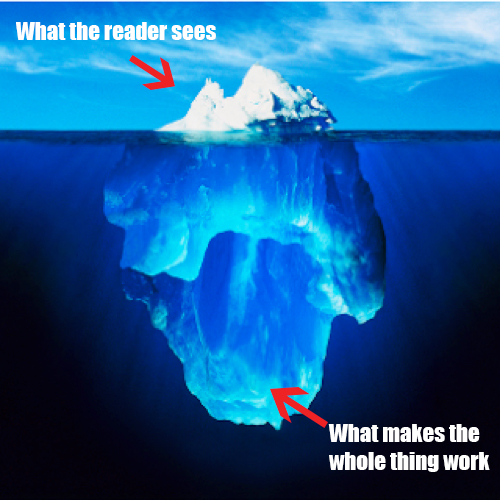
There are many ways to create your world–and there are just as many ways to record those details to doublecheck later on when you need to ensure consistency across a series. Some authors create massive world guides (which they can later publish as reader extras!), though I have seen some people spend so much time on this document that they never actually get around to the story they want to tell inside that world. Another downside of the massive world guide is that some authors get so excited about it that the story they meant to tell gets lost amid the new details and context they have developed. Think of this guide as an iceberg–yes, readers know there’s more under the water. They can explore it if they want when they read your guide (published after the series ends, of course), but remember that your job as the author is to tell a story. With Characters. And Conflicts. All these details are nice to know when the moment arises (so you can mention the former governor’s policies on tea taxes), but they aren’t the story you’re telling–and they should always just stay in the background. Just think–if your story is as popular as Tolkien’s Lord of the Rings, you’ll be able to publish multiple guides and early drafts to satisfy the superfans. Most of your readers, though, just want the story that rests atop the world you have created.  

On the other hand, some authors wing it, relying on memory and fans to tell them if they switched a detail. Readers tend to be annoyed by this style, but plenty of authors still do it. The downside, of course, is that once a story screws up a detail or world mechanic, it’s really hard to recover–and some readers will DNF and never forget. 

Let’s avoid all that unpleasantness and allow readers to get lost in the Secondary World of your story! One way to do this is to get a worldbuilding guide–a book designed to help you create your world. (Psst, I wrote one). 

Your worldbuilding guide should help you consider the following: 

  1. Big Picture issues like creation, gods, myths, legends, and heroes (and probably villains)
    1. Where did your world come from?
    2. Are there gods or god-like beings that affect your character’s lives? 
    3. What are common myths or legends your characters would know?
  1. Cultural issues like government, society, cultural practices, warfare, and appearance (and you probably need a map somewhere!)
    1. How does the world run? Who’s in charge? How does this affect your characters?
    2. What social practices are familiar to your characters? What behaviors would shock them?
  1. Social issues like economy, education, relationships, communication, technology, travel, and health and wellness
    1. What does it mean to be educated in your world?
    2. What is a “normal” relationship between characters?
    3. How do your characters communicate over distances?
  1. World Mechanics like science, nature, weather, measurements (time and distance)
    1. Does your world use a recognized system of measurement (Pounds, kilograms) or something you’ve created (wheels, boughs)?
  1. People and creatures who live in your world
    1. Who lives in your world? How do they get along with the other inhabitants?

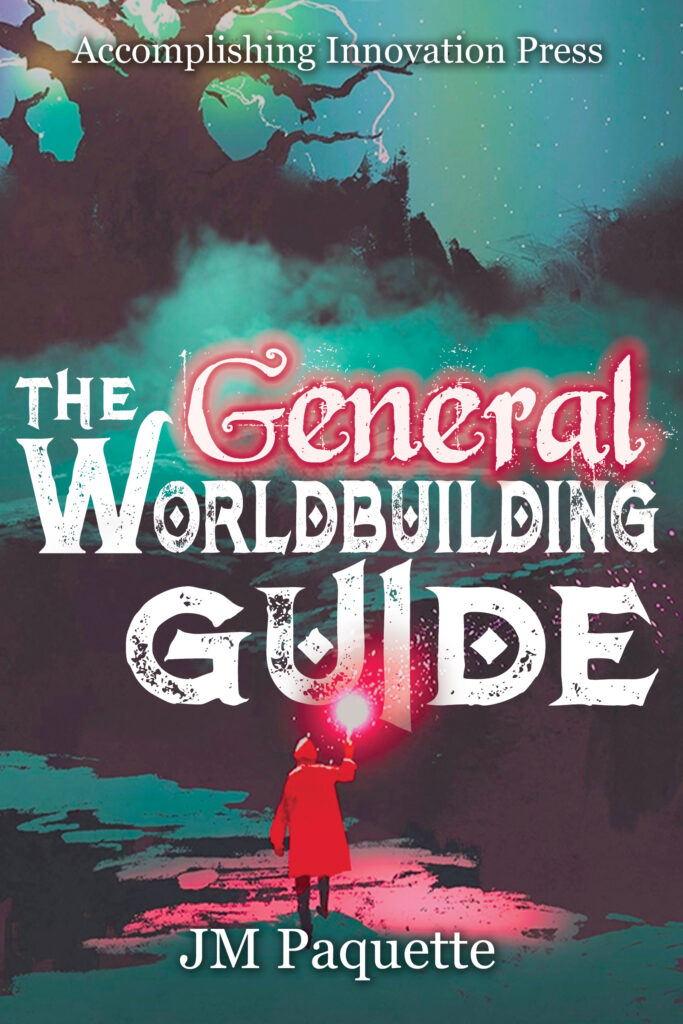
If you like this layout, check The General Guide to Worldbuilding by JM Paquette (order HERE). This one also includes open-ended questions, guided activities, cool artwork, and a ton of resources like character cards, plot points, general notes, and top five lists. 

If you write in a specific genre, you may enjoy the themed Worldbuilding Guides, coming soon from 4 Horsemen Publications–Fantasy, Paranormal Horror, Science Fiction, and Romance. 

Posted on

You’re an Author … and a Celebrity!

Imposter syndrome is often the battle we face throughout our careers as authors, and the definition of success is a gray area that has no hard lines drawn. You’re not an imposter. You are now officially considered and dubbed a “Public Figure” in the public’s eye! Taking a step back, let’s first talk about the fact that once you decide to cross the line of writer to published author (Self-pub, small press, big publisher, etc.), you’ve officially become a celebrity, or in more legal terms, a public figure. 

WHAT? A public figure? Who, me?

That’s right. The moment you decide to become accessible to the public and engage with selling your work in one way or another, you fall under this category, and there’s some legal ramifications. Your rights, the way lawyers and courts handle your involvement, and even how you fall in the hierarchy of society shifts. In doing so, you need to be diligent to establish and lock in your public presence, pulling much of it under your control. Let’s break this down!

Legality of a Public Figure

In the US, the definition and first impact on who and how a public figure is defined was first set during the New York Times Co. v. Sullivan case in the United States Supreme Court in 1964. The decision of you passing into the realm of a public figure can happen in several ways. It’s been defined as a person who has reached some level of fame, prominence, or notoriety within society through luck, achievement, action, or even through no purposeful action at all! 

Yes, that’s right. You can accidentally and unknowingly become one! WHAT! In any case, action and achievement are the more important ones here that cause the main event for us authors. The moment you publish a book and achieve public awareness, this new challenge starts. Here’s some things that can be startlin. Even if you aren’t selling more than a few books a month, these can still impact you as an author or public figure:

  • Defamation and slander will be harder to fight without obvious proof of actual malice.
  • What you say can be held against you more so than any other time.
  • You have a responsibility to the public.
  • If there is a large enough presence and history, you can use public figure status as another proof of Identification for Notaries.

Establishing Your Public Figure Status

Marketing is the bane of any author, but this coincides with the ability to build stronger roots for your presence as a public figure. Being in control of your identity is vital, and there are several things you can do to secure your public image. Be sure to be consistent in biographies. Keep things up to date and use consistent branding, colors, images, covers, content, and more. You are the entrepreneur, and your books are your product, so commercialize how you present yourself. This helps with being able to prove and disprove your content and public figure status. We recommend establishing the following items if they are applicable to your individual journey:

  • Lock in a website and domain name
  • Copyright your books in your name, LLC, or Alias
  • Register you pen names as a company or alias 
  • Pull and own your own ISBN (self-publishers especially!)
  • Social Media accounts and presence (same naming pattern is a must!)
  • Wikipedia author page
  • BookBub author page
  • Amazon author page
  • Goodread author page
  • Register yourself as a business on Google Business and similar sites
  • Wikipedia book page(s)
  • Anywhere you can add yourself as an author and professional!

Imposter Syndrome

We’ve interviewed HUNDREDS of authors, and it doesn’t take long to realize we all suffer from Imposter Syndrome. You know–that gut-wrenching sensation that we’re not a “real” author and make us wonder why are we even bothering to keep this “sham” going as a so-called “author.” Sound familiar? STOP IT. These negative insecurities happen even to successful authors such as Stephen King and Jonathan Maberry, and it can be mind blowing. When we struggle to write, to sell, to do events, to do anything under the umbrella of being an author, we tend to doubt ourselves. But you became a public figure the moment that book hit the hands of the public or was posted within access to them. You’re there. Check out our article on how to deal with imposter syndrome here!

Growing Your Public Figure Presence

Now we’re back to your current presence. You’ve barely sold a book, so you may wonder why any of this matters… STOP IT! You’re amazing, and you’ve done something many haven’t–put a piece of yourself out into the world in the hands of the public. CELEBRATE. You’re a public figure, and you shouldn’t be afraid to ask! Venture out of your comfort zone to make it known not only in your network, but in circles and places you wish to be part of. How? Start growing your presence by:

  • Attend events by getting an artist alley or vendor table
  • Participate in panels
  • Teach workshops
  • Introduce yourself to book clubs, libraries, and schools
  • Send copies of your book to podcasts, influencers, book reviewers, and others involved in your circles who have proven status as public figures themselves
  • Participate in interviews
  • Create press releases
  • Introduce yourself to brick-and-mortar bookstores using sell sheets or one sheets
  • Create media kit or press kit for journalists

Remember: you’re a big deal now! You may not feel this, but you have the power to grow and make your presence known!

Posted on

New Releases for September 2023

The General Worldbuilding Guide

by JM Paquette

September 1, 2023

As a writer, I like to think I know everything about my characters and the world they inhabit.

But do I? I certainly don’t always recall those details—and definitely not when I need them most. Cue the dive down an internet rabbit hole for the next hour instead of continuing to write my draft. There’s a time for writing, and there’s a time for worldbuilding—and they aren’t the same!

Use this book to build your world in all its glory, so that the next time those townsfolk are suspicious of strangers, you know what happened the last time they trusted someone who walked into town from the world beyond. Just imagine, when you sit down to write, already knowing the answers to questions like:

What is that song on the radio at the bar?
How long does it take to drive from Town A to Town B?
Who established that law about bathtubs in the street?
Where is the best place to get a burger in this town?
When did that family take over the monarchy?

Tackling everything from creation myths and cultural practices to building relationships and measuring time, this worldbuilding guide has the questions and activities you need to help you craft a believable world for your story.

Witch of the White Serpent

by Maria DeVivo

September 4, 2023

Long Live the Blood Witch.

Helpless, 17-year-old witch Blodwyn watches as her mother, the Blodheska, dies in childbirth. Unwilling to inherit the mantle and incredible power of the Blodheska, Blodwyn is intent on resurrecting her. After all, only her mother could possibly bring back the Old Gods, as was written in the prophecy.

Blodwyn does not think she can carry such a heavy burden. Her grief is heavy enough. She finds herself at odds with her own coven, all of whom insist she follow the rules and caution against the arcane ritual. Inspired by true events, Witch of the White Serpent is a study on loss, longing, and letting the dead rest in peace.

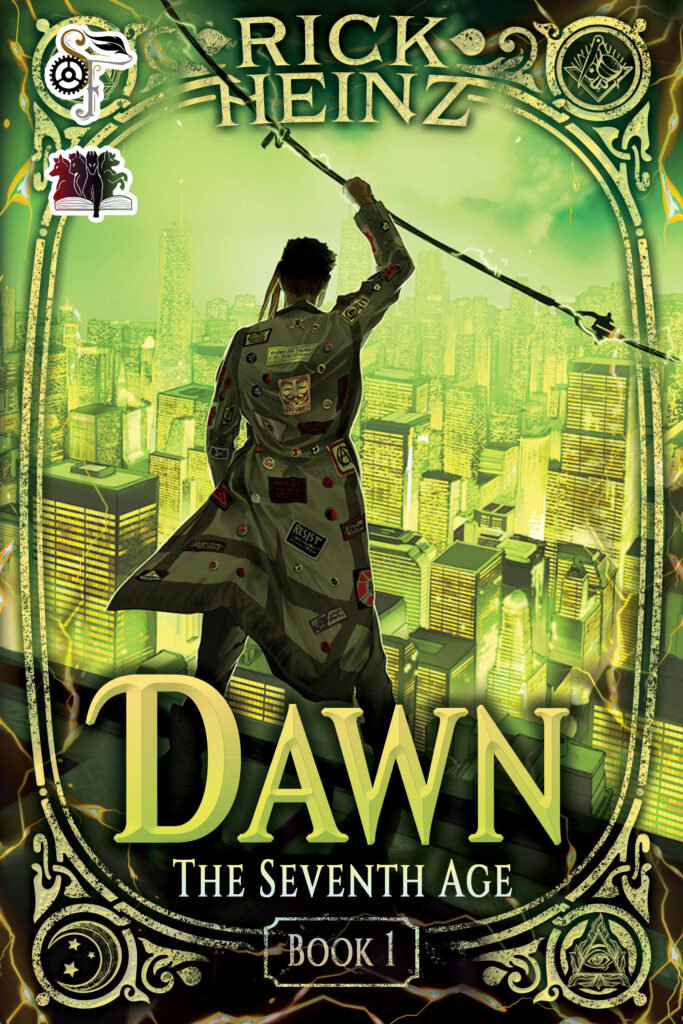
Dawn

by Rick Heinz

September 16, 2023

For centuries, a global conspiracy of secret societies have hoarded magic, keeping it hidden from the rest of the world.

Before the age of reason and science, magic ruled the world. Now, it’s coming back. If most of humanity gets wiped out in the process … well, sometimes you have to break a few eggs. A group of anarchs and heretics in Chicago work to tear down the barrier that has kept humanity ignorant of demons, forgotten myths, and ancient legends. Obsessed with discovering evidence of the afterlife, Mike Auburn’s death-defying stunts have brought him closer than ever to lifting the veil of reality.

However, his ventures to the edge have not gone unnoticed. The boss of a tenebrous organization recruits Mike to their cause. Nothing can possibly go wrong. Right? Before long, a world ruled by the scientific method and rational thinking is challenged by the supernatural. Drawn out by the long-awaited return of magic, the dead, the damned, and the demonic will stop at nothing to bring it back for good. Suddenly, Mike is stuck at the center of a battle between the forces of reason, of good, of evil and everything in between.Dawn is a clash of American Gods, Constantine, and The Dresden Files.

The Turkish Connection

by D. A. Spruzen

September 16, 2023

“I don’t think anyone can forget their own war—the loss, the pain—however hard they try.”

Lin Thoren, a minor Norse goddess, is both beautiful and terrifying. While her powers have diminished over time, she can still move faster than light, shapeshift for short periods of time, and throw a grown man across the room. All of these skills make her a particularly adept Private Investigator.

Mary Lambert has just earned her Master’s degree in creative writing and aspires to be an author. Lin hires her to be a live-in ghostwriter and record her memoirs, which cover many eras, cultures, historical events, and criminal cases. As Lin recounts a tale about trafficked women hidden in a D.C. suburb, Mary begins to realize just how powerful her host is. Soon, Mary finds herself becoming an integral member of the Thoren household—in more ways than one.

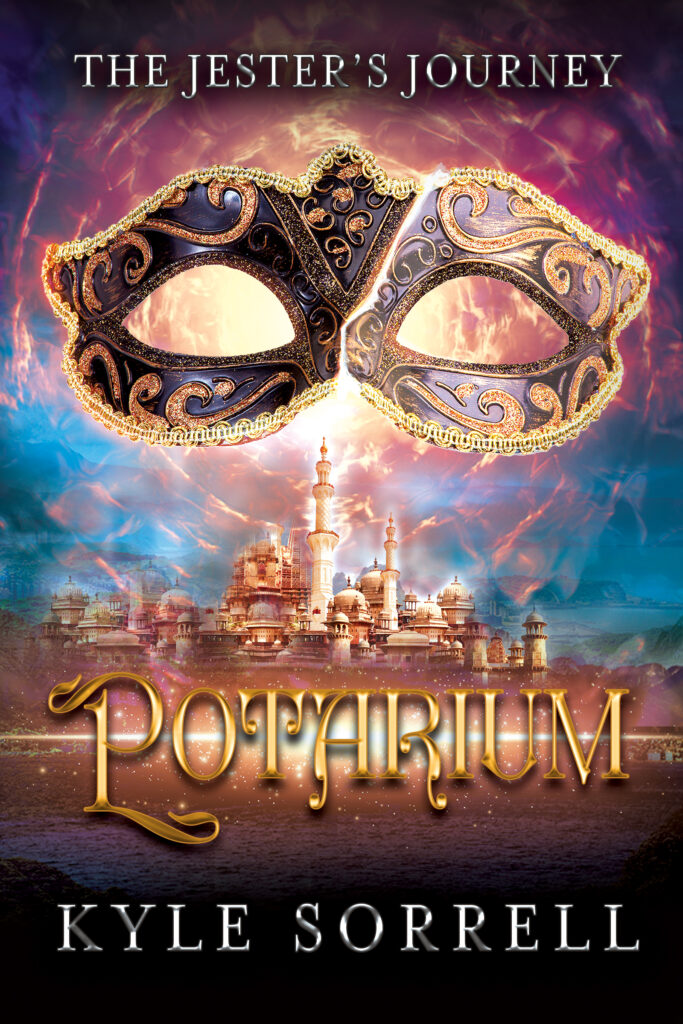
Potarium

by Kyle Sorrell

September 17, 2023

Potarium, the city of heaven, has finally revealed itself.

After reaching the bottom of Munderworld and speaking to the enigmatic and all-powerful Munder King, Cynkz is granted passage to the heavenly city. Once washed upon its shore, he reunites with an old friend, and the two seek assistance in finding the long lost Sister of Elm.

Cynkz gets more than he bargained for when a dark secret from his past comes back in the worst way imaginable. New allies lead him down a dangerous path, and the jester must come to terms with his mistakes to save the last bastion of peace. Old grudges and new dangers put the fate of every living soul on the line, and Cynkz finds himself at the dark center of it all.

The Witch of the Whirlwind

by R.J. Young

September 19, 2023

Even the Wind can kill when the Gods are angry.

It’s been two decades since the Sky Elders returned to the mortal realm, entrusting the Itiwana tribe with protecting the Tree of Life. Tawa, chieftain of the Itiwana, is now an experienced warrior, beloved by his people. After the village is attacked by the Witch of the Whirlwind, Tawa learns he must fulfill an old promise and go on a quest. Tawa’s quest takes him far from home, where he must fight his foes alone.

Meanwhile, Tawa’s children must honor their own promises. Young Pahana is appointed as interim ruler while his father is away, and he struggles with the burden of defending his people and protecting the sacred tree. The disruptive influence of the newcomer Hayoka blurs the line between friendship and duty. Tawa’s daughter Kia is one of the most powerful Shamans in the world. She finds herself tempted by outside forces who want to use the young prodigy’s formidable abilities for their own agenda.

Unbeknownst to them all, the Witch of the Whirlwind is preparing to unleash the greatest threat that the Itiwana have ever faced.

Traitor

by D. Lambert

September 17, 2023

History is written by the victors.

Victory has been bought with a bracelet; Tohmas Galanth is to be married. With Arnika Trulin’s hand comes the Princedom of Trulin, freeing Tohmas to continue his conquest of Espar. But even magical love is real, and Tohmas is blind to any betrayal from within his ranks. As he marches, his enemies from this word and beyond plan a unified strike meant to stop him and free the conquered princedoms. Arnika is not the only target.

The closer he comes to success, the further Tohmas feels he is from what he wants for himself and for Espar. Chief Tamv of the Rydans is expecting homage and obedience. How can a son, even a pretend son, not honor his father?

He was born Esparan but raised Rydan. Now Tohmas must choose which to serve.

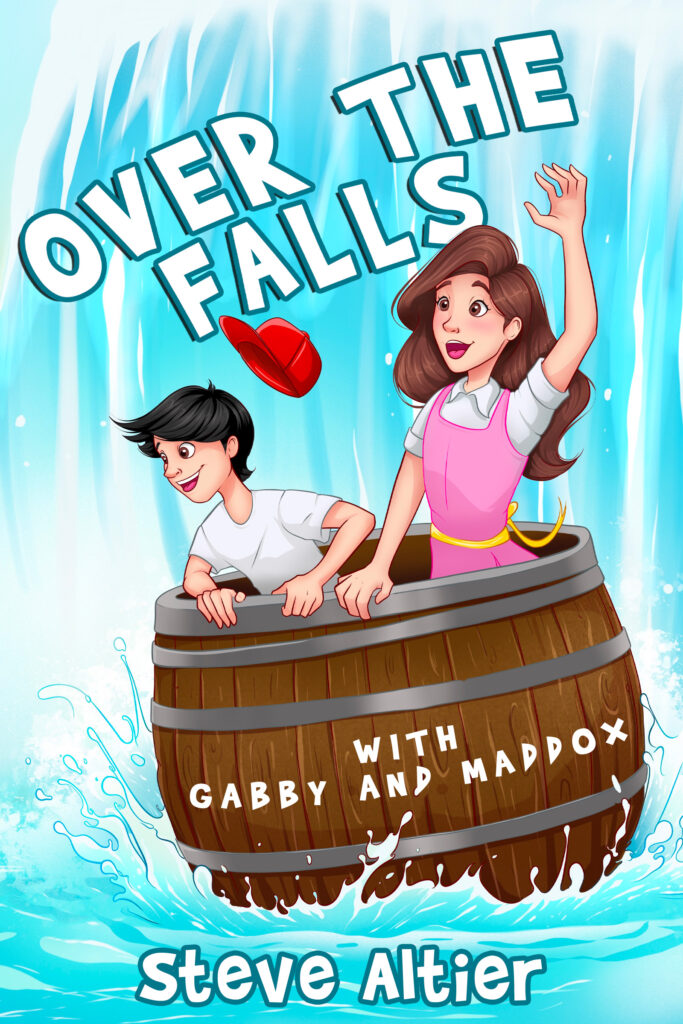
Over the Falls with Gabby and Maddox

by Steve Altier

September 23, 2023

The siblings go to great heights!

Gabby and Maddox visit the historic Niagara Falls and make new friends traveling from Canada. They learn about the rich history of the area and the people who have tried to conquer the powerful falls.

Seeking adventure themselves, the kids brave the Cave of Winds and explore the Hurricane Deck at the base of the American Falls. They take a ride on the Maid of the Mist boat tour all the way to the bottom of the Horseshoe Falls. Of course, a trip to Niagara wouldn’t be complete without an exciting helicopter ride!

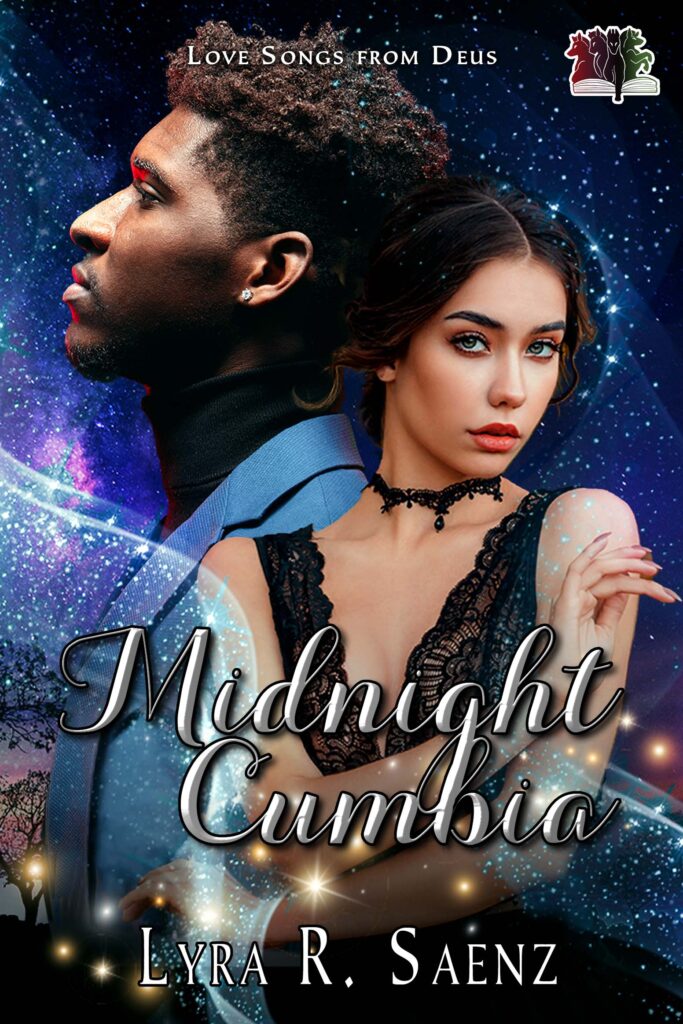
Midnight Cumbia

by Lyra R. Saenz

September 27, 2023

Some people fall in love like feathers dancing in the breeze. Others plummet.

I’ve known my husband’s name since I was twelve years old: Chike Nagi, Crown Prince of Ebele. On our wedding day, as he led me in a dance throughout the untamed wilds, I wondered, “Is this what falling in love feels like?” Or was it just the savannah heat?

As a diplomat, I am accustomed to navigating different social spheres, but love is another beast altogether. I have been taught that love isn’t as important as power. But when his hand touches mine, I feel strong.

We couldn’t have known how rapidly our whole world was about to change.

Aestrangel the Fallen

by Maria DeVivo

September 29, 2023

Hell hath no fury like an angel scorned!

Aestra, favorite teenaged angel of The Lord, has been sent to Earth to ensure that high school senior, Jake Parker, pursues the correct path. He is teetering between two options that may seem innocuous, but only one will lead him to positively impact the lives of millions of humans.

But what happens when the heart chooses love over responsibility? For Aestra, one fateful night will set into motion a chain of events unforeseen by even her infallible Creator.

Orchestrated Love

by A.J. Buchanan

September 30, 2023

Love hurts—is a second chance worth the risk?

Over a decade after breaking up with the love of his life, 42-year-old Jackson Knox has given up on finding anyone new. Breaking things off had been for the best for both of them, and Jackson has learned to live with the heartache. As he prepares to start a new job at a well-respected music school far from the place where he and Noah Santiago fell in love, he unexpectedly bumps into him again. Is it fate?

Musical genius Noah Santiago is hiding in his family’s home in a lakeside town in upstate New York, trying to figure out how to go on without being part of the world-renowned Barrington String Quartet. The pain of losing his career has left him gutted. The last person he expects to bump into is the man who still owns his heart after all these years.

Noah is wary of opening himself to more pain, and Jax fears Noah will never forgive him. Can their withered love bloom again? And how will they find their place together after so long apart?

Posted on

Unveiling the Magic: The Importance of Using Psychological Principles to Create 3D Characters!

In the world of storytelling, characters serve as the heart and soul of any narrative. Crafting 3D characters, those who feel real and relatable, requires more than mere description and plot devices. By incorporating psychological principles into character development, writers can breathe life into their creations, resonating deeply with readers and leaving a lasting impact. In this blog post, we’ll explore the significance of using psychological principles to create 3D characters and how it elevates the art of storytelling.

  1. Relatability and Empathy: One of the key advantages of applying psychological principles to character development is the ability to create relatable characters. Human beings are inherently drawn to stories that reflect their own struggles, emotions, and experiences. By understanding the nuances of human psychology, writers can craft characters with flaws, fears, and aspirations that readers can connect with on a profound level. As readers empathize with the characters’ journeys, they become emotionally invested in the story, making the reading experience all the more powerful and engaging.
  2. Authenticity and Depth: A character’s authenticity is crucial to their believability. Psychological principles allow writers to delve into the complexities of human behavior and emotions, creating characters with depth and authenticity. By exploring their backgrounds, motivations, and internal conflicts, writers can paint a vivid picture of the character’s persona. As readers witness the inner workings of a character’s mind, they develop a sense of intimacy with the story, making the characters feel like real people with genuine struggles and triumphs.
  3. Character Arcs and Growth: Psychological principles also play a pivotal role in shaping character arcs. Understanding how individuals respond to challenges and evolve over time enables writers to create dynamic character development. Characters can start with weaknesses and vulnerabilities, and as they encounter obstacles, they grow and transform, ultimately overcoming their flaws or facing their inner demons. This growth not only adds depth to the character but also provides readers with a sense of fulfillment as they witness the character’s personal journey.
  4. Reader Engagement and Investment: The power of psychological principles lies in their ability to captivate readers’ attention and keep them invested in the story. As readers observe characters navigating through relatable psychological struggles, they find themselves drawn into the narrative, emotionally attached to the outcomes. By creating multi-dimensional characters, writers can hold readers in suspense, drive them to turn each page, and keep them emotionally engaged until the story’s resolution.

Incorporating psychological principles into character development is an art that elevates storytelling to new heights. Creating 3D characters fosters empathy, authenticity, and growth, leading to more profound connections with readers. As writers harness the power of psychology to craft multi-dimensional characters, they gift their readers with an immersive and transformative journey. So, the next time you sit down to create characters, remember the magic of psychological principles, and let your storytelling prowess shine.

In summary, by understanding the psychological motivations and complexities that drive human behavior, writers can craft characters that resonate with readers on a profound level. Creating 3D characters that are relatable, authentic, and undergo growth throughout the story ensures an engaging and emotionally fulfilling reading experience. As writers embrace the magic of psychological principles, they elevate the art of storytelling to new heights, creating narratives that leave a lasting impact on their audience. So, the next time you sit down to create characters, remember the power of psychology, and let your storytelling prowess shine.

Do you want to learn more? 

Check out the book and the course, The Psychology of Character Design—Using Psychological Principles to Design 3D Characters and uncover all the secrets of using psychological principles to craft life-like characters.

Posted on

From the Author/Editor’s Desk: A Guide to Worldbuilding (Part One: Secondary Worlds and Why We Care–the Reader Side)

We’ve all been there, right in the middle of a tense scene, when something in the story contradicts something we already know about the world, and boom–we’re sitting outside the story again, disappointed and a bit miffed that the author couldn’t maintain the magic. Whether it’s something complicated like a magical system or something simple like the song on the radio at the bar, the stories we read need consistent details to make the world feel believable. These little things all add up to create the word of the story, a world readers to crawl inside and explore. 

Tolkien talks about what he called the Primary and Secondary Worlds in his essay “On Faerie Stories” (where he basically defends fantasy as a worthy genre, among other things). The Primary World, of course, is the one in which you live, the one in which you now sit, currently reading these words. Perhaps the words are on your phone screen; maybe you’re waiting for a bus or curled up on a couch, nursing your morning coffee. Either way, odds are you don’t always find the Primary World to be the Best Thing Ever. For Tolkien, the Primary World is good because we all live in it, but it’s definitely lacking in certain aspects–and that’s why readers read Fantasy (or really anything imaginary at all). We want to escape the Primary World and spend some time in a Secondary World. 

Now, let’s pause for a moment, as Tolkien did, to examine that word “escape.” One of the easy criticisms of fantasy readers is that they can’t face the real world and have to run away into a book. I’m probably not alone in being told that reading so-called “escapist fiction” is some kind of cop-out, a weakness, a failure to accept the very real world around all of us. Tolkien disagrees, and in the most Tolkien way ever, of course, because he starts by examining that word “escape” (Tolkien’s love of words and philology knows no bounds!). He argues that there is a difference between what he calls the Flight of the Deserter and the Escape of the Prisoner. Readers of fantasy aren’t deserting reality because they can’t handle it. They aren’t running away. Instead, readers (and everyone else in the Primary World) are all prisoners of what can be, honestly, a pretty terrible place sometimes. For Tolkien, a devout Catholic, the Primary World is a fallen world, a kicked-out-of-Paradise world, and so of course, like anyone imprisoned, the inhabitants will long to escape–to occupy their minds with something not so depressing. Keep in mind that Tolkien lived through two World Wars (he fought in WWI and was one of a handful of survivors among his classmates). You don’t need to be Catholic to see that some days, the Primary World sucks–and the urge to escape into somewhere else, anywhere else, is a perfectly normal human reaction. It’s not that fantasy readers can’t handle the real world; it’s that the real world is often ugly and harsh–and humans need a break. A release. An escape. Who would deny a prisoner the chance to escape, at least in the mind?

So where are we prisoners, I mean, readers to escape into? The Secondary World. Where can we find that? Inside the writer’s mind, at first, but then through some artful magic, what Tolkien calls Enchantment, readers are also allowed to inhabit this Secondary World. And this world only works if it is consistent in and of itself. There must be rules, and the rules must be followed, or readers (and prisoners) risk being knocked out of the story forever, unable to enter it believably again. 

In other words, if people in the book’s world use the sun and candle rings to tell time, then someone shouldn’t say it’s 10:11pm. If people can fly on broomsticks, then that’s how gravity works (or doesn’t) in that world. The world should be consistent. Readers pay attention to the little things, the details, when they invest in a story. If authors switch out the small stuff, readers will notice, and then remember they are reading a book, finding themselves back in the Primary World rather than still lost in the Secondary World the writer has created for them. 

Another thing to keep in mind when discussing worldbuilding: willing suspension of disbelief. You may have heard this term somewhere in a literature course, but the essential idea is this: Of course I always know I’m reading a book. My fingers feel the pages, possibly my neck aches from staying in one position too long, I can hear the soft shuffle of the page as I turn it (or hear that little electric swoosh noise my Kindle makes when I turn on that sound feature). But sometimes, when the enchantment is done right, I can forget all that, and really lose myself in a story, falling headfirst into the world of the characters, blissfully watching their trials as the real world goes by outside the pages. In order to do that, though, I have to willingly suspend my disbelief. If I’m reading a book where people can fly, and I know that flying isn’t possible in the Primary World, I have to willingly and knowingly suspend my natural disbelief in the possibility–and just go with it. Often, people who don’t enjoy reading fiction have a hard time making this leap. In order to travel from the Primary World to the Secondary World, you have to leave your disbelief behind–and accept whatever rules the Secondary World has. 

Since we spent so much time on Tolkien, this is a good time to bring up the fact that while he enjoyed plays (and movies) in theory, he never “got lost” in them because he could never forget he was watching people perform either on stage or screen. He thought performers could never transport him the way words on a page could, the way his own imagination could. Either way, there is no transportation at all if the Secondary World isn’t coherent and complete in itself. 

Proper worldbuilding, creating a world behind the story that stands on its own and supports the tale being told, is critical if authors want readers to join them in a Secondary World. How does one create a believable world? As the old adage says, lots and lots of time and practice. And maybe a little help. 

Check out The General Worldbuilding Guide, coming soon from 4 Horsemen Publications (pre-order HERE).

In Part Two of this blog, I’ll delve into the nitty gritty of worldbuilding, and we can get you started on creating a viable Secondary World for your readers. 

Posted on

From the Editor’s Desk: A Guide to Ellipses

You wouldn’t think that three little dots would cause so much trouble… but here we are! An ellipsis is the mark of punctuation created when you join three periods together and hit the spacebar–your writing program should join the separate periods into a single unit of punctuation. 

An ellipsis indicates hesitation… and it’s really annoying when people overuse them. There are legitimate reasons for people to pause in your writing (especially during narration), but when someone always ends a sentence with an ellipses, it makes them seem uncertain about everything. 

A few ground rules: 

  1. An ellipsis includes three periods. Not two or four, but three. 
  2. An ellipsis can function as end punctuation. You do not need to add a period or question mark or exclamation point after it.  
  3. You use an ellipsis to indicate a pause in the sentence, a moment for a character to find the right word or decide how to proceed or what to say, or even for the narration to reveal something … slowly. 
  4. Generally speaking, treat ellipses like a word when they occur in the middle of a sentence or clause; that is, they get a space on either side. So if you begin … a sentence, and then continue the thought, it looks like this. 
  5. If the ellipsis occurs after a complete clause, put a space after it, but not before. So if I’m not certain how to do this… but eventually I read a blog and figure it out, it looks like this. 
  6. If the ellipsis ends the clause and the next sentence is its own thought, capitalize the first word after the ellipsis. For instance, if I am uncertain… Then I go home and read a blog about ellipses, this is how it would look. 

Ellipses in action

If the ellipses ends the sentence, it looks like this: 

  • Don’t get me wrong: I had a blast. I don’t know… It just didn’t spark anything, you know?
  • “I won’t let you paint my nails because…” Jordan thought for a moment. 

If the ellipse is in the middle of sentence, it looks like this:

  • He paid his bills, his taxes, bought what he needed … and watched his bank account dwindle.
  • We’d need sets, actors, cameramen, sound people … and more importantly, money to pay those people.

If the ellipses is in the middle of a sentence where it is more “stuttering” or hesitating, it looks like this:

  • I… I don’t know. 
  • Wh… What?

MORE Ellipses Examples

No Space before—new idea after ellipses… 

  • Gabriella tells her, “Like you… yes… I see a part of myself in your face, the way you are looking at me now.” 
  • He helped them start the genocide that’s happening where I was born, blinding them into believing they were gods… that they have the power over life and death. 
  • It’d break her heart to hear… and you and I both know I shouldn’t be naysaying a gift. 
  • I would say I like to go out in that rec yard, but it’s a concrete box with mesh over my head… still walls. No need to belabor that… I’m fucking done. 
  • But this… this type of thing, she can’t investigate. 
  • Wilson’s dead… my boy… my legacy is dead, but I’ll be goddamned if my legacy will be some bitch sitting in my house. 
  • He swirls the brown liquid in the cup, teasing spilling it on her white couch… messing with her some. 
  • I know you have something you want to say… Not speaking isn’t an easy thing for you. 
  • I… I don’t know.

Space—pause within same idea … within the sentence (Christopher Walken style) 

  • “They are evil. Devils … destroying what was a great country, a great people.” 
  • Some places … like the one I was at before all this started, they had good food. 
  • Her face absorbs the seriousness of the space … and the death. 
  • Tanner … Brogdon is not just some pretty boy. 
  • That you exaggerated or lied about … some truth.

Both space and no space in the same sentence! 

  • He thought … he couldn’t accept that by working with those … savages who now control the South… He thought he could control everyone. 
  • Either you embellished it or something, or you made it up… Either way … it hurts your credibility.

The bottom line is that ellipses are hard, but they can be mastered by following a few simple rules. Think about the clauses in your sentence and use that as your guide for spacing!

Posted on

4 Must Haves for Covers to Land in Book Stores

It’s every authors’ dream to see their book on the book shelf at a local store. In fact, there’s something awe-inspiring when it lands on a shelf at a large retailer such as Barnes & Noble. With the publishing industry rapidly evolving, even the self published author has a chance to achieve this. Traditional publishing is no longer the only path to allow this dream to come true, but there’s a lot of factors that impact how successful your attempt will be. You have to have the right distribution channels, a book genre they are needing to fill the space for, register the title in such a way, and more importantly, design your book can be the difference between a hard no and getting that yes.

We hear the adage of “don’t judge a book by its cover” all the time, however, in the world of selling and marketing, this is the first point of contact. Your cover has 3 seconds to grasp an amazon customer’s attention as a thumbnail, but that’s for digital sales. When it comes to landing on a bookshelf things get more complicated. Stores have needs, stipulations, and more that if the book’s design doesn’t meet these, you won’t get that dream locale.

1. Be On Trend

The most apparent aspect is making sure your book matches the trends. This means even considering changing your cover as the hot trends in your book’s genre and audience as they evolve. You see even the bigger publishers do this for books such as Stephen King’s The Stand with covers evolving in several ways. You’ll find his name grows larger with his popularity, that variation covers for television and movie adaptations, and even recent remakes to match current trends. In short, as much as you loved the art or that cover, you can’t keep your book competitive by settling on one version and hope that the trend stays. In short, your cover needs to sell to today’s readers, not yesteryear’s fans. It has to compete and be on the same level as the big publishers, so don’t be afraid to find a cover designer that can take this to the next level and this may come down to forfeiting your initial vision for the cover completely.

2. Spine Text

As 4 Horsemen Publications steps deep into year four of being in business, it’s surprising to see the gap in what readers are buying and what traditional says is expected for books in regards to word count and book lengths. Overall, books pushing over 80,000 words in all genres sell better. With that in mind, books with a 5×8 to 6×9 book size, or trim size, will have the spine width needed to have room to place spine text. If your book doesn’t have title, author, imprint logo, and series number (on top preferably) – your book won’t be considered for in-person shelf placement. That’s right, because they need the readers to be able to see what book that is among the sea of books, and added bonus if at a glance they know which in the series it is. Even the library system wants to see this more on books they carry! I can’t express how important it is for them to be able to shelve the 

3. Barcode Placement

Did you know there’s a book group in charge of regulating what a book barcode looks like? Every book in the market has the same barcode pattern and now large retailers including Amazon are demanding in 2023 that print books, paperback and hardcover, have the barcode on the back cover always in the bottom right corner. Why? Because automation is king and the more consistent and standard these are the easier to process large volumes of books. Your barcode consists of ISBN, or International Standard Book Number, as well as your book’s price. Barnes & Noble and many large retailers make it clear in the fineprint that they only carry books who have the price listed on the barcode. For example, 52299 on a barcode indicates USD, or US dollars with the 5 followed by $22.99 price. If your code says 90000, this means no price is listed and this book will have a hard time landing at brick and mortar stores.

4. Leveling Up

Don’t stop with the basic shelf needs! Be sure to take advantage of the cover and look at the trends for your genre. If you have a non-fiction book, you will be making space for the author’s short bio alongside the blurb so readers know why they are the best expert about their topic of choice. Regardless, every publisher and author should be using this space to add a modern touch and include not only website information but social media. With author platforms being number two in the best way readers discover new authors and books for over a decade, don’t leave it out (Statistics from Ingram, Written Word Media, BookBaby, etc.)! Make sure to add your book award seals, quotes or one liners from reviews, and “foreword by” are all great additions to catch the reader’s attention and connect.