Posted on

From the Editor’s Desk – Revision and Editing Part Two: Editing (or making sure you are consistent)

Woot! You made sure your story is ready to be shared with the world! 

Except, is it really? 

Think of it this way: your story is out of bed and dressed, drinking coffee and preparing to leave the house. But wait, do those shoes actually match, or is that a brown sandal and a black sandal? Maybe that hair could use a few more moments with a brush…

Taking the time to edit at this point saves everyone (especially your editor) a lot of time and energy. Let’s polish up that outfit and make sure everything is where it should be. 

Disclaimer: you’re going to read your story AGAIN (I know, awful, right? Please, you know you love it. That’s why you wrote it!). Except this time, you’re NOT reading for the story. You’re not looking at the overall picture–you’re zooming in on the nitty gritty, the small stuff. You’re looking at sentence-level issues and that CTRL F key is going to get a lot of use. 

This process may seem overwhelming, but there are specific things to look for that will improve the quality of your writing almost immediately. First, let’s start with the easy stuff–consistency!

Consistency in this case isn’t about the story at all; it’s about the way you have told the story. Is your capitalization and italics usage the same throughout? Here’s a quick reminder of the rules for both. 

Capitalization

You use capital letters in the following situations: 

  • The start of a sentence
    • She said there would be no tests on this. 
  • A title/position followed by a name
    • I was joined at the table by Captain Blythe and Admiral Ackbar and prepared myself for some very awkward dinner conversation.
  • A nickname or name that you call someone
    • Was Mom ever going to show up to this event?
      • Was my mom ever going to show up?
    • I know Little Bit was thrilled to wear her new dress tonight. 

You do NOT use capital letters in the following situations: 

  • Between dialogue and speaker tag
    • “Would you prefer soup or salad?” he asked. 
    • “I’ll take the salad,” she replied, “with ranch dressing.”
  • A title/position without a name
    • I enjoyed the commander’s company at the event. 
    • The president was happy to speak to Admiral Ackbar about the plans for reconstruction. 
  • A term of endearment
    • What do you think, sweetheart?
    • I’ll get you, my pretty, and your little dog too!

I realize that last one may be confusing, so let me pause and give some more context. Yes, this means you have to distinguish between a nickname and a term of endearment. I call my daughter Biscuit so often that it’s become a nickname, so I capitalize it. I sometimes call my husband boo, but it’s not something I use every time, so it’s lowercase. You have to decide how you are using it, and then use CTRL F to find every occasion and make sure you have it the same way. 

Here’s a handy list of other words you may want to CTRL F to doublecheck capitalization: mom, dad, captain, commander, president, king, queen, princess, prince, detective, sergeant, lieutenant (basically, any titles or positions that come up in your story!)

Since we’re here, let me add this suggestion as well–if you have words that are unique to your book, add them to a Style Guide so you can consistently capitalize (or not) or italicize (or not) them throughout the whole story. Does your fantasy world have elves or Elves? Do your characters speak of God or god? Both are correct. Capitalizing something just makes it slightly more formal–heels instead of sandals–so decide if your story needs the elevation. 

Final Thought for Capitalization: When in doubt, GOOGLE IT!

Not sure if you should capitalize that dog breed? Google is your friend. Don’t know if you should capitalize Italian food? Google it (Yes, you capitalize food names that are places). What about french fries? Google! (Actually, no because french is the style of cut, not the origin). If you see both, choose the one that fits your situation.  

Italics: When to go sideways

Italics have specific uses in many academic style guides, but their uses in fiction are a bit more flexible. Generally speaking, here are some occasions when you should italicize something: 

  • A flashback or dream sequence
  • A foreign word that you want to emphasize is a foreign word
    • Jamie calls Claire his sassenach, a word meaning “outlander.” 
  • Titles of long works like movies, albums, books, TV series (shorter works get quotes)
    • Yes, this is MLA format, but I’m an English major! If you’re writing for a discipline, check your style guide, but most fiction uses this. 
    • I went to see Guardians of the Galaxy 3, and now I can’t stop hearing “Dog Days are Over” by Florence and the Machine. 
  • Names of planes, trains, ships, paintings
    • I took the Orient Express to the Louvre to see the Mona Lisa. 
  • Sounds
    • Thud! We all looked at the door in horror. 
  • Anything you want to emphasize or draw attention to
    • I never said Josh stole the money! Why would you think I meant him?

Again, when in doubt, google it! As long as your usage is consistent throughout your story (and series!), you’re fine. 

Take a moment to doublecheck your capitalization and italics usage throughout your story. Then, add any special uses to your Style Guide, you know, that document you have that records details like this so you don’t have to re-read this book before you start writing the next one in the series!

Now, think about other words or phrases that are unique to your story. Make sure that you have spelled them the same way throughout. A useful trick is to CTRL F for easy misspellings of any names or titles that may slip by tired eyes. If my character’s name is Hannah, I check for Hanna, Hanah, Hana, Annah, Anah, and Ana, just in case my fingers slipped, and my spellcheck doesn’t catch it. 

You’ve done a chunk of editing for now, and your story is looking much better. Take a breather, and when you’re ready, come back for a final review. Then your story can actually leave the house!

Posted on

From the Editor’s Desk – Revision and Editing Part One: Revision (or making sure you said what you think you said)

What’s that? You finished your book! Yay!!! Congratulations. Take a minute to enjoy this feeling. You earned it. 

Okay, now it’s time to get back to work! You didn’t think you were done, did you? Get ready, pour yourself a new drink, and prepare to enter the next stage of writing: Revision. You do not need a red pen, but you definitely need to take off those rose-tinted glasses. It’s time to get serious about your writing. 

To make this process a bit easier, we’re going to break it into three separate stages: Revision, Editing, and Final Review. Let’s start with Revision.

First things first: settle back and re-read your book–the whole thing. Yes, the entire book, from start to finish, preferably with as few breaks as possible so the story stays fresh in your mind. Use this read-through to experience the story you want readers to. 

Also, while you’re here, ask yourself a few questions: 

  • Does this story make sense? Do the events make logical and chronological sense to happen this way? 
  • Are the characters consistent to themselves (and also show growth in an arc as the story progresses)? 
  • Does the pacing feel right when the story is read straight through? Do certain parts drag or seem too rushed? 
  • Do you need to add more scenes or remove others?

Now, here’s the trick: don’t stop in the middle of your read-through to address any issues. Take notes, and when you have finished that last page, take a breath (maybe cry a little because the beauty of your writing has moved your soul), and then settle down to add/remove/tweak whatever story elements, character details, or other issues you saw on your way through. Cross off or delete your notes as you accomplish each change–trust me, this part feels so satisfying. 

When you have finished, if you are motivated, give it another read-through (or send it to your best–and super generous with their time–beta reader for a final round of feedback). Congratulations–part one is done! You have finished Revision. Now, it’s time to start Editing.

Stay tuned for part two of this series for Editing Tips and Tricks!

Posted on

Imposter Syndrome – How to Deal as an Author

As an author, or any other profession really, it is very easy to fall into the trap of Imposter Syndrome. 

What is Imposter Syndrome?

Oxford defines Imposter Syndrome as: “the persistent inability to believe that one’s success is deserved or has been legitimately achieved as a result of one’s own efforts or skills.”

YIKES!

As an author it can be easy to find yourself thinking that you do not deserve the accolades you are receiving or even worse, you might think that nobody cares about your writing. This can be made worse by a bad review. When in fact, your writing might be impacting way more people then you realize and you might have a ton of people that can’t wait for your next release. 

One of the first things to remember is reviews are NOT for the author for the most part. The audience for them is other readers. You should not look at your reviews unless you have the ability to not take it personally. This is easier said than done. However, if you cannot distance yourself from them, then don’t read them.

As far as your work being “good enough”; simply put, it is the best work you are able to create in the moment you are in. Guess what? You will get better with every word you write. Something I find myself telling my authors all the time is this; when you get to the end of a book you are writing and you begin reading it for edits, remember: The work in the beginning of the book is not as good as the work at the end. Just clean up what needs to be cleaned up and move on to the next thing you are going to write. Otherwise, you will be in a forever loop of editing. You will not get your work into the hands of those adoring fans. 

STOP REWRITING!

In those moments when you are having self doubt about you as a writer and your work you need to remember: 

  • You are creating art because you have something to say. 
  • The words you are putting down will impact people regardless of if you ever hear how it has done that. 
  • You should not be writing to get a pat on the back or for someone to tell you how awesome you are. 
  • You should be writing because it is something you love to do. 

And most importantly:

  • YOU ARE AMAZING!!! You are writing which is a huge accomplishment and you should be proud.

Please refer back to this post any time you need a boost.

Posted on

New Releases for May 2023!

A Humorous Erotica Collection

by Chastity Veldt

Jake Nilsen is a touring stand up comic with a penchant for one-liners and one-night stands.

In this 8-book collewhitection, Jake travels from Milwaukee to Jacksonville where he meets fifteen beautiful women and tickles more than just their funny bones. Experience sexual conquests like nothing before as each city leaves fond and fondling memories of ladies like Lydia, Alyssa, Carrie, and even Molly!

Readers looking for puns and naughty humor will find the Stand Up, Lie Down set tantalizing and entertaining. Yoga instructors, book sellers, artists, professors, and bartenders are on the menu as Jake travels from one club to the next facing the club managers, swapping sex stories with his wingman Curtis, tripping in his old pick up truck, and enjoying the occasional fourth wall break.

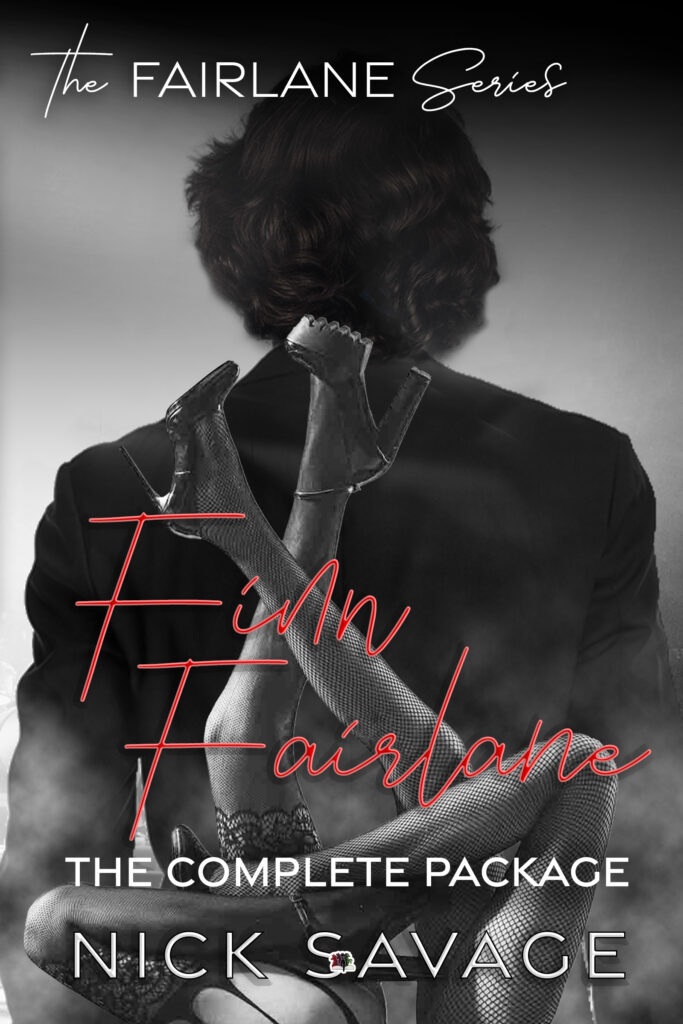
Finn Fairlane: The Complete Package

by Nick Savage

Finn’s a piece of shit, but you’ll root for him anyway. Faith’s no better, but he loves her just the same.

After years of writing songs for corporate labels, record producer extraordinaire Finn Fairlane moves from the Big Apple to The City Beautiful to redefine his career. While working with a choice client, he runs into Faith Suibhal, the love he left behind to chase fame and fortune.

Realizing he still holds a torch for her and hoping she holds one for him, he sets out to prove he has changed his ways since their split almost twenty years ago. With more than one woman vying for his affections and his heart strings pulled in every direction, Finn will have choices to make and situations to explain.

Finn Fairlane: The Complete Package compiles the three books of The Fairlane Series into one beautiful edition for the discerning reader. Give yourself everything you deserve. Give yourself … the complete package.

The Erotic Cryptid Collection

by Honey Cummings

There are things that go bump in the night … and slither beneath the sheets.

Cryptids are thought to be beings of folklore, crafted to explain the unexplainable. Sasquatch, the Chupacabra, and the New Jersey Devil have become a part of the collective unconscious and are responsible for thousands—millions!—of nightmares. But sometimes, the most frightening thing is exciting.

Join Frankie, Clara, and Abigail as they explore what it means to be afraid—and titillated. For Frankie, that means helping a Sasquatch shifter escape his furry form. Clara sets fire to her own life, and ignites a new fire in Chupacabra’s loins. Abigail loses it all but seduces a Devil at the roulette table.

Honey Cummings offers three tales that will make you tingle … in every conceivable way.

Honey Pot Series

by Ali Whippe

Submit to your pleasures. Ali Whippe cracks the whip with this 4-book collection.

Whether submitting to an old flame, a stranger, or one’s partner(s), it’s tantalizing to test one’s boundaries. For MaryBell, that means finding out what drives James wild. Steve finds out that acts of service earn him Katie’s undivided attention. Sorina’s bratty ways get her into trouble with her dominant husband. Swinging becomes a spicy new kink for Emily and Ryan.

Get on your knees and say “please.”

The Dr. Cage Collection

by Grayson Ace

Dr. Cage explores the minds (and bodies) of his patients, but is he brave enough to find love?

Dr Hunter Cage is an Ivy League educated sex therapist who is not afraid to be hands-on, when the treatment plan calls for it. He knows that sex is an integral part of mental wellness and his unorthodox methods work.

When he leaves small town Pennsylvania to launch a private practice in San Francisco, he looks forward to helping a larger client base with more varied treatment modalities. Dr. Cage is just what the gay men of San Francisco need—he successfully treats men who refuse to bottom (and top!) and sufferers of sexual addiction.

There’s just one problem: he can’t treat himself. Instead, Dr. Cage scours dating apps for men he can spend the night with and send home the next morning. He even hooks up with a flight attendant he has only ever kissed at 36,000 feet. But love has a way of finding a person. Will Dr. Cage know it when he sees it? Or is he destined for loneliness?

Let Dr. Cage writes you a prescription for twelve steamy tales.

The Urban Erotica Fairy Tale Collection

by Honey Cummings

Honey Cummings puts a spicy, urban spin on your favorite fairytales!

Submit to a beastly Professor in pursuit for love or even follow Goldie’s appetite for men with beards. Every character comes to life in this interconnected world where some are looking for love while others just want a wild erotic adventure for the night. Whether things unfold at Pinnochio’s office, or heat up at Red’s bar, there’s a little something for everyone.

Join us in this 10-book collection and get c(u)mfy for an adult bedtime story you’ll never forget. Fans will find the steam and laughter a delight whether it’s the idea of wearing that old high school drama troll mask to a masquerade orgy or the hidden toys our Princess Pea can’t help but find all the way back to her bedroom (Why the blender? Or the bowl of cherries?).

Prepare to go on an urban fantasy like no other!

Dark Origins

by AJ Parnell

To survive his circumstances—and a serial killer—Vander must make a monster of himself. 

Growing up in abject poverty, Vander Masozi faces dangers from all sides: his abusive father, roaming street gangs, predatory police officers, and the premonitions that are becoming more horrifying by the day. He is destined for a short, brutal life. That is, until Alexander Dayton offers him an opportunity to live a more extraordinary one.

Alexander is a wealthy philanthropist, but his intentions are not as pure as Vander—and the less fortunate of Cape Town—believe. He has a connection to a serial killer who also has a vested interest in his success. When it comes to Vander, Alexander must decide whether to put him on a pedestal or leave him in the dirt where he found him.

Can Vander survive unleashing the power growing inside him to save himself from certain destruction?

Welcome To Mansfield

by A. R. Farina

Sometimes you have to leave home to find where you really belong.

Junior Price desperately wanted to get out of her small town and the demands of her big family. Upon winning a scholarship to an elite private college thousands of miles away, she packed her bags and went to find her place in the world. She soon discovers that she may not be ready to be out on her own.

Mansfield College is full of the rich and the wealthy who play by a whole different set of rules. She tries her best to fit in and follow her heart only to discover that her small-town southern charm doesn’t work on everyone.

Will she become someone she doesn’t recognize to try to make everyone happy or will she find herself and become the young woman she wants to be? This book is a modern-day, coming-of-age retelling of the classic Jane Austen story filled with heartache and friendship.

Deeply Devoted to Him

by Eskay Kabba

Jamel James is in love with his husband, for better, for worse…

Since their initial encounter, the two military veterans have been through a few storms, such as Connor’s step out of the closet to stand up to his family. As a couple, they have built close friendships, family ties, and a community in their New England town. Through it all, their bond is still strong and their intimacy still undeniably hot.

Now a married, domesticated couple with a ten year anniversary on the horizon, Jamel and Connor must navigate dueling work schedules, communication issues, and family drama while trying to maintain the fire they once had. But when tragedy strikes Jamel’s life, the aftermath could affect their happy life and change things between them. Is the perfect match they worked hard for no longer perfect?

The Shadowless

by Ty Carlson

The Everstorm is merciless—the people who live beneath it are even worse.

The earth has become a wasteland as a result of humanity’s mistreatment. The sky has been dark for as long as anyone can remember, covered in an infinite roiling mass called The Everstorm. There are no trees. There is no hope. Unless, of course, you’re one of the privileged who live in the protected cities beneath the domes. In these cities, there are trees, parks full of vibrant grass, and even waterfalls—all thanks to the solar energy harvested by those who have no choice but to brave the Everstorm.

Shipley Boden is a low-life working his way into the good graces of the Citizens, hoping one day to be allowed a living space beneath the protective dome. But when he stumbles upon an orphaned girl in the ruins of the past, he decides to deliver her to the nearest settlement and be done with it. When Shipley runs afoul of violent marauders who call themselves The Red Kings, he must draw upon all the knowledge he’s gained. Only now, he has a little girl to think about.

Journey Into Hell

by Joe Davison

Mike Strong has a face the bad guys like to punch.

Valkyrie City is full of killers, mobsters, and thieves—and that’s just on the surface. In the city’s underbelly lurks something far worse. Generally, the citizens of Valkyrie City are blissfully unaware of the supernatural beings who live among them.

Harvard professor turned soldier Mike Strong returned from the battlefield a changed man. The evil he encountered gave him powers he never thought imaginable. Now he’s on a mission to rid his city of monsters, even if that means taking on a crime syndicate, a demon, and all the possessed contents of a haunted toy factory.

But if anyone is game: it’s Mike Strong. While he’ll earn his fair share of bumps and bruises, you should see the other guy…

Moon Bound

by Chelsea Burton Dunn

The Everstorm is merciless—the people who live beneath it are even worse.

The earth has become a wasteland as a result of humanity’s mistreatment. The sky has been dark for as long as anyone can remember, covered in an infinite roiling mass called The Everstorm. There are no trees. There is no hope. Unless, of course, you’re one of the privileged who live in the protected cities beneath the domes. In these cities, there are trees, parks full of vibrant grass, and even waterfalls—all thanks to the solar energy harvested by those who have no choice but to brave the Everstorm.

Shipley Boden is a low-life working his way into the good graces of the Citizens, hoping one day to be allowed a living space beneath the protective dome. But when he stumbles upon an orphaned girl in the ruins of the past, he decides to deliver her to the nearest settlement and be done with it. When Shipley runs afoul of violent marauders who call themselves The Red Kings, he must draw upon all the knowledge he’s gained. Only now, he has a little girl to think about.

To Be Normal

by Jessica Salina

When you’re a superhero’s sidekick, kiss your normal life goodbye.

Elijah Baron isn’t thrilled that his vigilante superhero best friend Kane—better known as Hematite—signed him up for a dating app, even though he’s single and in need of a date for a wedding. He’s even less thrilled that the dating app is so Kane can spy on the mysterious new girl in town, Hannah. Women are going missing in Riverpeak, and Kane suspects Hannah’s sudden arrival may be to blame.

When fantasy author and video game streamer Hannah Cohen moves to Riverpeak, she hopes a change of scenery will help her conquer writer’s block and escape her troubled past. But the more she falls for Elijah Baron, the more her past catches up to her.

As Elijah dates Hannah, he suspects she may have superpowers of her own. Will Hannah and Elijah end up on opposing sides of a superhero showdown, or will they get to live a normal life happily ever after?

Posted on

A Handy Guide to Book Club Questions

Have you ever finished a book and find yourself dying to talk about it? You can tell others what you think by writing a review and see what others thinks by reading their reviews, but what if you want more interaction? Book club questions can help guide a focused discussion!

Readers love discussing books with fellow readers. They love it even more when they have somewhere to begin that conversation. A convenient way to make that discussion easier is to include a list of book club questions at the end of your book.

What are book club questions? These are 10-15 open-ended questions designed to be answered by people who have finished the book and want to talk about it. Don’t worry about spoilers—assume that anyone seeing the questions has finished the book. They already know what happens—and they’re dying to talk about it!

Have you ever tried to talk about a book with a friend, but you don’t know where to begin? A list of questions to guide the conversation can be a useful tool to get things started.

How do you write engaging book club questions? Here are some things to keep in mind.

  • Don’t ask yes/no questions.
    • These do not encourage discussion at all.
      • Did you like Character A? Yes. End of discussion. Boring.
      • Did you like the ending? No. End of conversation. Boo!
      •  Will you read the next book? Yes… You see where I’m going with this.  
  • Do ask open-ended questions that force the respondent to justify their answer.
    • These allow readers to explain how and why they reacted this way.
      • Why did you like Character A more than Character B? Well, let me tell you that, at first…
      • Why did you like/dislike the way the book ended? I think I liked it because I’m a sucker for love stories but…
      • What do you think is next for these characters? What do you predict for the next book? Why do you think that’s where this is going?
  • Don’t ask simple questions.
    • If they can answer in one word or phrase, it’s too basic, and the conversation will end without getting into the good stuff.
      • What was your favorite part? The bar fight.
      • Who is your favorite character? The bartender.
  • Do ask complicated questions.
    • Why is our favorite word when crafting book club questions. It forces readers to think about the reasons supporting their position.
      • Why was the bar fight your favorite part? What about it struck you that way? Why do you think you appreciated that scene over the rest?
      • What about the bartender appeals to you? Why that character and not Character X or Y?
  • Do focus on the themes in your story and ask readers to react to them.
    • Character X struggles with Topic B. How does this affect your perception of their journey in this story?
    • Theme C is a major part of the conflict in this story. How does this affect Character B?

Here are some sample questions from a selection of 4HP books:

  • In what ways did the characters and their challenges feel real to you? Were there moments when the story felt unbelievable? (The Shooting by CK Westbrook)
  • This story focuses on the tendency to blame the messenger when something incomprehensible happens. How realistic did you find Kate’s experience? (The Collision by CK Westbrook)
  •  Kate often says she would not want to live in a world that does not include several things that are important to her. What are some things you value as highly in your world? (The Collision by CK Westbrook)
  •  “Centurion” focuses on the anger of an old woman—what does her perspective on her life say about the way society treats the elderly? (Cheeky, Bloody Articles by Cathleen Davies)
  •  “Your Son’s Good at Time’s Tables” showcases a familiar situation—someone wants to speak up but doesn’t and then obsesses about what should have been said–can you relate to this feeling of missing the moment to connect? (Cheeky, Bloody Articles by Cathleen Davies)
  •  Many of these stories: “White Butterflies,” “Blank Face,” and “Oh, Rats!” deal with grief and survivor’s guilt. What do you think the author is trying to say about grief? Do you feel this is an accurate representation of suffering? (Cheeky, Bloody Articles by Cathleen Davies)
  • If you could capture the memories and emotions of a deceased loved one, would that make them the same person they were when alive? Why? (The Bench by Ty Carlson)
  • If data could feel pain, loss, sadness, etc., would there be a moral consequence for its cause? (The Bench by Ty Carlson)
  • The author was inspired by medieval period myths, lores, legends, and history. How much of this can you find evidence of within the reading? People, places, events, culture, or other means? (Cedric: The Demonic Knight by Valerie Willis)
  •  Who’s the better werewolf: Nyctimus or Romasanta? Why? (Romasanta by Valerie Willis)
  • Tony is thrown into his quest with little direction. In what ways is this vital for his character development? (King Incubus by Valerie Willis)
  • Who should Hannah end up with: Klauden or Rory or neither? Why? (Klauden’s Ring by JM Paquette)
  • Hannah struggles with the conflicting values of her homeland and her newfound friends. How well does she handle this challenge throughout the story? What could she have done better? What did she do well? (Hannah’s Heart by JM Paquette)

Including book club questions in the back of your book is the easiest way to get picked up by book clubs—and even libraries—but more than that, your readers will appreciate your conversation starters. 

Posted on

New Releases for April 2023

Dead Vessel

By Amanda Fasciano

Having died in the line of duty, Detective Cadence Riley has been recruited to help police haunted locations so that the spirits don’t give too much away to the living. She and her partner have also helped protect the living from non-human evil spirits. All is going according to procedure until someone alive appears before her.

Cadence has been reunited with her brother–who died ten years before when the majority of coeds in his dorm were slaughtered. Restoration of the old Victorian style dorm has begun as the college is intent on opening the building up once more. The construction does more than disturb the spirits of the dead, however.

The spirit of an old classmate, one not killed in the massacre, appears out of the blue. As Cadence and Snow begin to put the pieces of the puzzle regarding his sudden appearance in place, it becomes clear that more is at stake. This case, for both the living and the dead, is as dangerous as a raging fire. Someone is bound to get burned.

Judgement

By Valerie Willis

Death is the ultimate judge.

Talib and Hotan face off against Iapetos, the element of Death. When they fail, Talib’s life flashes before his eyes. As he experiences thousands of years, memories that were once forgotten bubble to the surface.

From the fall of Helike to the plague in London, he discovers his brother has something to do with every horrifying event. Hotan’s hands are slick with the blood of thousands-no, millions-of innocent people.

Chasing Hotan’s shadow, Talib learns that family is flawed, and he may not be able to repair the damage without making sacrifices. Will he find the answers in his past in time to aid Hotan?

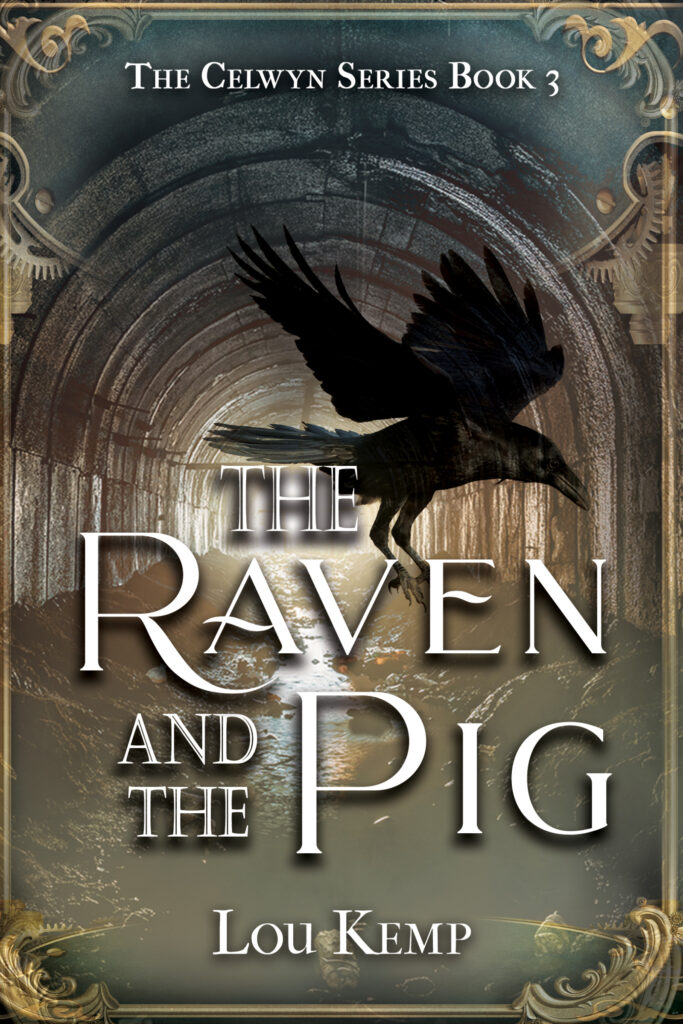
The Raven and the Pig

By Lou Kemp

A magician, a widower from the Sudan, and an automat travel the world…

It is 1876. Three close friends—Jonas Celwyn, the automat Professor Xiau Kang, and Bartholomew, a scientist and widower from Sudan—set out on another adventure. Celwyn has been wounded and all that keeps the immortal peyote-eating magician alive are the skills of an old enemy, his half-brother Pelaez.

After Celwyn is taken aboard the submarine Nautilus by his companions, they must journey to Thales, the healer of the immortals. Even for the intrepid Captain Nemo and his fearless crew, the adventure will prove deadly. Vampires, witches, and warlocks are gathering nearby. Friends or foes? Who is the target: Jonas or Professor Kang and his plans for a world-changing flying machine?

The Raven and the Pig is a steampunk fantasy filled with murder, magic, and adventure.

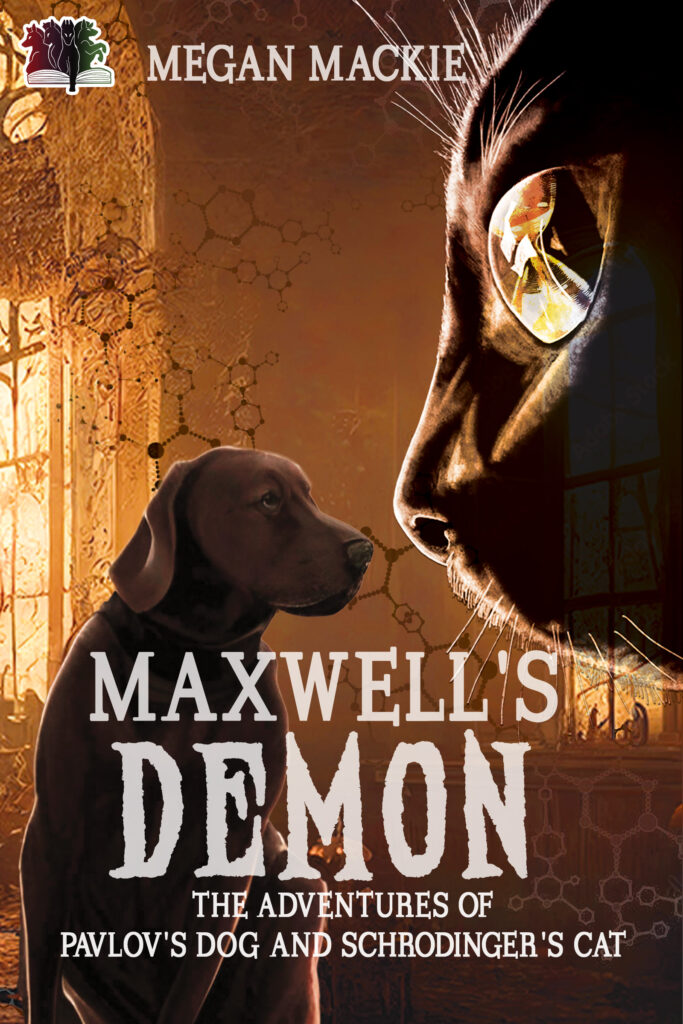
Maxwell’s Demon

By Megan Mackie

The mysteries of the universe, a journey through space and time, and a cat and dog in the middle of it all.

Pavlov lived a contented life, being an experimental dog for the great scientist Ivan, until, of course, the day the cat showed up.

Schrodinger was very concerned that she may … well … not exist. Determined to solve the mystery of her existence, her search has led her to a very unusual dog.

Now the two must join forces to find their way through a mysterious building to find Schrödinger the answers she craves and Pavlov a way home. And the only clue they have may lead them to something called Maxwell’s Demon…

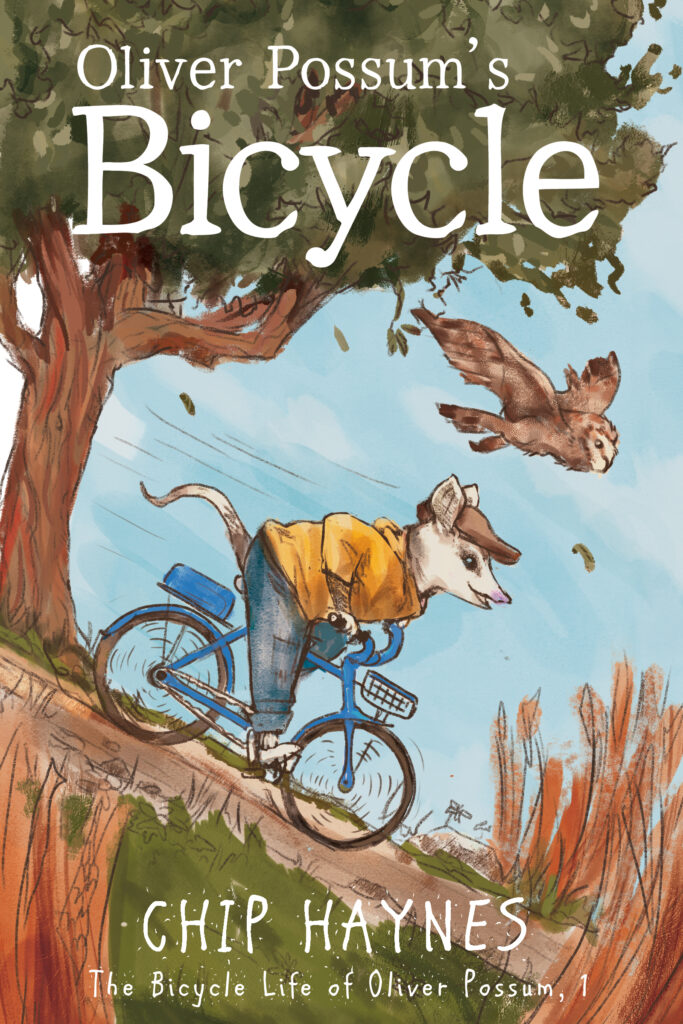
Oliver Possum’s Bicycle

By Chip Haynes

When Oliver Possum was just a young joey, he walked everywhere.

Well, everywhere he could, which wasn’t far. All of that changed when he got his first bicycle.

Now the whole world is his, as long as he was back by dark. And he made sure he was, mostly. Now he is making new friends, too! Well, mostly.

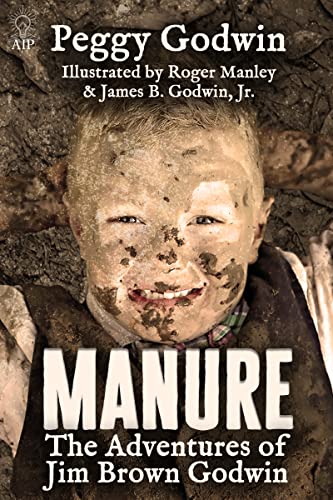
Manure: The Adventure of Jim Brown Godwin

By Peggy Godwin

This is not a once upon a time story with fire breathing dragons, aliens from outer space, nor giants climbing down beanstalks.

Even something as disgusting as manure can take on magical qualities that lead to adventures in your own backyard. In the summer of 1942, while the world was at war, Jim Brown Godwin found himself covered from head to toe in manure. This is his story, how he got there, what he did, and – most importantly – how he got out.

This is a real story complete with bratty brothers, adults who never grew up, and some very ordinary, everyday heroes… and, oh yes, manure. There’s no mistaking it. If you see it, smell it, or step in it, you know it. Call it poop, dung, do-do, cow pies, scat, turds – or as your grandmother might politely say, excrement, bowel movement, feces, or defecation, there’s only one word for it – Yuck!

So We Stay Hidden

By Nick Savage

Balancing high school and being a Legend is is more than they bargained for.

Scarlett and Briana are tested by a new relationship. Allison and Connor stumble upon a gruesome murder that hits close to home and tears them apart.

With changes to the prophecy, Vistrus must find out what the future holds for The Nation by uncovering the secrets of his wife’s past.

But corruption runs deep in the Chicago suburb of West Haven and the repercussions of the prom linger. The Legends must take matters into their own hands without losing themselves.

Posted on

Amazon Just Closed My Account! Where Do I Go From Here?

It appears stepping into 2023 with Amazon has gone from a cobblestone road with a few bumps to completely lost in the woods. Visually, it’s equivalent to riding in a carriage with an angry Violet Crawley from Downtown Abbey before teleported to the woods at night being chased in The Blair Witch Project. So what is happening? Authors who have been publishing for YEARS are waking up to closed accounts without warning, notice, or reasons to explain why. Since January there has been a huge wave of alarm rumbling through the community. Social media is exploding as the community shares similar stories. Authors who have been long-time KDP published sellers are finding themselves with closed accounts without notice. And worse, met with aggression, no reply, or nonsensical answers with little to no hope of recovering these accounts nor being able to open new accounts. 

A Snapshot of a Rocky Past

Amazon has always had a rocky relationship with independent authors and self-publishers for a while, long before they bought out and folded in CreateSpace. This includes policy changes in erotica that sent a wave of blocked, pulled, and closed accounts to book review changes that continues to plague and confuse authors and readers alike. In short, they have been notorious for the inconsistency in which how and why they take said actions has been a mystery thwarting authors for years.

During the mass closing and COVID pandemic in 2020, many of these same authors were met with their audiobooks being held back, frozen, rejected, or their submission clocks reset while big publishers were still being launched as normal. From March until mid-November anyone under a certain size or account type found themselves completely dead in the water and no path for getting scheduled audiobooks out as they normally had been. It forced many to abandon ACX or find other methods to reach these channels outside self-publishing methods.

Why is This Happening?

It can only be speculated as there hasn’t been any formal statements from Amazon on why not only accounts are being closed without notice, but even big publishers are having unreliable data entry on the product pages (including here at 4HP!). Other problems include misspelled author names, wrong product linking (a preorder book had reviews for a kitchen appliance!), wrong BISAC or keywords, and more. Regardless, the question is: WHY?

Several news reports have been flooding Forbes, NBC, and more on recent layoffs and positions being dissolved. Amazon’s new CEO has been, as he phrased it, “making the company leaner” and many tech-based positions have been completely canned. The first wave hit on January 18th and again in March, with reports stating remote work stops in May, and that he “looks forward to the remaining team’s creative solutions” and “re-establishing in-office culture.” What does it really mean? Who knows, but we are definitely seeing an impact as lack of communication, confusion, and chaos erupts in our latest Amazon encounters. Rejections vary including:

  • Your account is associated with another banned/suspended account (Despite no history of one from the author).
  • “During a recent audit of your account, we found content and/or activities that are in violation of our Terms and Conditions” which doesn’t explain exactly what it was. This could involve:
    • Erotica was too much or a scene reported in a book that triggered this.
  • Copyright infringement. Your book had a cover, title, content, or something similar to a title already published. This one is scary, because in the recent months those who reported someone for plagiarism or selling content that they didn’t own, they’ve simply suspended ALL ASSOCIATED ACCOUNTS instead of doing any investigation work.
  • You mentioned trademarked items, characters, or used them. Fanfiction falls into this category and you should refrain from selling such works without putting in the effort to trade out and revise it to be its own book.
  • Enrolling in KDP Unlimited with a book sold wide.
  • Multiple accounts with the same books listed.

What Do I Do Now?

There are options! And more than you realize. For the sake of sanity here are some links and advice on options to consider. There is information out there and remember you’re not alone in this! Many authors are sitting there foaming at the mouth and in complete devastation (or completely in tears). It’s like that time you thought you deleted that manuscript or the cloud server ate a file. We’ve been there friend, so here’s some sources and options to soften the blow:

  • If you haven’t found Amazon’s verbiage on this matter, here’s their answer to what to do and if you can appeal from the affiliate side. There was a link and verbiage on amazon and as I write this, I can’t locate it but many are using the KDP Contact form to reach out to start communications on appealing: https://affiliate-program.amazon.com/help/node/topic/GACDBRFKVDTXSPTH  
  • Want to start fresh with a new account but worried you might do this wrong? No problem! Someone has recently written this how-to, but be mindful this one isn’t author centric but has a lot of insight and shows it’s not just authors being slammed by this: https://sellerinteractive.com/blog/opening-amazon-account-after-suspension/
  • Kindlepeneur is a great resource and they have a wonderful article on this topic with the difference between Suspended versus Terminated with insight on what options you have: https://kindlepreneur.com/amazon-account-suspension/ 
  • PUBLISH ELSEWHERE! There’s still ways to get your books back on Amazon without facing or dealing with Amazon directly. Consider using distributors or aggregators such as:
    • IngramSparks, Lightning Source, or CoreSource Plus is one of the largest distributors for self-publishers/IndieAuthors to big publishers.
    • Draft2Digital is a wonderful option for self-publishers and independent publishers. They aggregate and distribute widely and reach far.
    • Associations such as IBPA and others have a means for members to distribute through their own accounts and channels. Also, they often provide discounts and coupon codes for using services or list where to go.
    • Find a Small Press or Publisher who takes in previously published work! 4HP is one of those, so if this is something you want to give a try, head over to submissions or check out the details on other publisher sites to see what their policies are on accepting such works.
    • BookBaby is a great author services site that has expanded a lot in recent years and added distribution options for ebooks and more.
    • Author Services and groups are a great way and if there are issues they can spot them for you before publishing the content live and have no risk of suspension.
    • Vanity Presses have publishing packages and you can save on them by choosing to provide the files for the book (typeset and cover). Ask about special packages that simply give you access to their publishing channels and how much this would cost you per year to keep your book live on their channels (though this may be the most expensive route compared to the ones mentioned above).
Posted on

What’s the Deal with Word Counts?

Ah, a great mystery in the industry that will blow your mind by the time we finish having a chat about this. Coming from a background in typesetting (book formatting) there’s so much that can be told about a book via its word count and the patterns we see across genres, readers, platforms, and more. Have you seen The Author’s Accountability Planner we release here at 4 Horsemen Publications every year? In this wonderful planner we have front matter to help you set goals and it includes this amazing snapshot:

Genre and Reader Impact

At a glance, it’s amazing to see where these numbers fall when you look at the right column in the image above. Depending on the reader you are writing to can decide how low or high you can go with your word count. Please note it’s not uncommon for Epic Fantasy and Epic Science Fiction to push close to the 200,000 word count range! Mixing and matching genre types can make the word count grow beyond the initial genre’s limits. Interestingly enough, looking at word counts on best selling books or staples for your genre and readership can be eye opening. 

  • TRUE: Books selling organically are often over the 80,000 word count range. This is seen within our own numbers in-house as well as industry.
  • FALSE: younger readers read lower word counts.
    • Upper middle grade (5th to 8th Graders) ranges: 45,000 to 100,000 words.
    • Percy Jackson: The Lightning Thief by Rick Riordan is often read by 5th graders and has 87,223 words approx. 
    • Harry Potter and the Sorcerer’s Stone starts at 76,944 words but as the series evolved they sky rocket to over 100,000 to 200,000 words! Peaking at Order of the Phoenix with 257,045 words.
  • TRUE: Best selling works often peak well over the 100,000 word count range.
  • FALSE: The modern reader doesn’t have time to read so shorter works are best.
    • With audiobooks and eBooks readers are having an easier time finding books at lower prices as well as reading longer works in piecemeal. 
    • Short stories sell better in collections over the 50,000 word range.
  • TRUE: First chapters shouldn’t be super long. Many best selling novels have shorter, more concise first three chapters with word counts falling between 1200 to 2500 words.
  • FALSE: Chapter word count doesn’t impact readers.
    • It depends on the reader. When writing webnovels and similar serializations you want to fall close to 1200-1700 words consistently every time. 
    • Some even push as high as a 2500 word count depending on genre.
  • TRUE: Readers are ok with series word counts getting higher. Oftentimes we see novels go higher and lower. As long as the books don’t fall too much lower than the initial work, readers tend to not notice and feel longer works as a type of reward.
  • FALSE: You can put a short story or novella within a novel series.
    • Readers will riot. These are best left as spin-offs independent from the core series.
    • You can often make a sub-series of short stories and novellas to keep them together.
    • Readers do enjoy spinoffs and shorter works from their favorite series, but if it’s implied as the next book in the main series that’s been novel length until this point, it will make them feel as if the author didn’t put their best foot forward.

Best Selling Novels

  • Don Quixote by Miguel de Cervantes 345,390 words
  • A Tale of Two Cities by Charles Dickens 146,500 words. Originally released in monthly installments of 18,500 words
  • The Lord of the Rings by J.R.R. Tolkien 455,125 words
  • The Lion, The Witch and the Wardrobe by C.S. Lewis 38,421 words
  • The Da Vinci Code by Dan Brown 170,000 words
  • The Alchemist by Paulo Coelho 45,000 words
  • Anne of Green Gables by Lucy Maud Montgomery 39,500 words
  • War and Peace by Leo Tolstoy 561,304
  • Pride and Prejudice by Jane Austen 120,697
  • Watership Down by Richard Adams 156,154
  • The Time Traveler’s Wife by Audrey Niffenegger 155,717 
  • Pet Sematary by Stephen King 142,664
  • Twilight by Stephanie Meyer 118,875
  • Throne of Glass by Sarah J. Maas 113,665
  • Divergent by Veronica Roth 105,143
  • Gone Girl by Gillian Flynn 145,719
  • The Hunger Games by Suzanne Collins 99,750
  • Discover more here: https://brokebybooks.com/the-word-count-of-175-favorite-novels/ 

Publishing Snapshot

From seeing a word count, a professional in the publishing industry can speculate and predict a lot about a book’s end product. Granted, it’s not 100% accurate but it can be startling to see in action. The first thing we do is make sure the word count meets the genre and reader needs. From there, we start thinking in terms of the final product. Here’s some fun facts:

  • The average 5.25 x 8 to 6 x 9 book page holds roughly 300-600 words depending on the design and font choices.
  • Most 80,000 word novels land between 250-300 pages.
  • Every 10,000 words often translates into 1 finished hour of audiobook. For example, an 80,000 word novel will often be an 8-9 hour audiobook.
  • Digital typesetting a 100,000 word novel for print and eBook with no images when utilizing InDesign can take anywhere between 2-6 hours. 

Wait! Formula Writing!

Even then, many authors have found developing a formula for writing based on word counts can aid in productivity. This ranges from writing sprints, to chapter goals, or simply being aware of the final word count target can keep the mojo flowing. Keep in mind that these just some numbers to be aware of when writing that may help you manage writing as a whole:

  • A 20-minute sprint will produce 200-350 words on average.
  • Speech to Text apps like Otter can convert 1 hour of talking into 2,000-4,000 words.
  • The average web novel chapter is 1200-2500 words.
  • Revisions on a non-edited 80,000 word first draft can add 10,000 to 30,000 words on average.
  • The average novel contains 25 to 50 chapters. Each can range from 1000 to 10,000 words.
Posted on

Josh Stehle Featured in Mainline Today

Josh Stehle, autism activist and author with our sister publisher Accomplishing Innovation Press, has been featured in an article in Mainline Today. He sat down with them to discuss his new book, I am a Superhero Expert: Growing up with my Autistic Brother, and what his life with his brother has been like. Read the full article below:

Posted on

Your Publisher Dissolved, Now What?

Let’s talk about the unspoken what if or even for many since COVID and other buyouts – WHEN YOUR CONTRACT IS NO MORE. That moment many authors may have already experienced when the Publisher or Press you signed on for is Dissolved. What does that mean? It’s a technical term for a company closing its doors permanently. The reasons can range:

  • Bought out and discontinued by a larger publisher/press.
  • Company filed and dissolved (sometimes filing bankruptcy or the owner unable to keep the company going for personal or business reasons).
  • Lawsuits or other legal action exposed royalties unpaid and other unsavory business practices.
  • Sometimes it’s a merger or buyout that doesn’t renew most of the contracts.

Where does the Backlist go?

First off, a backlist for an author or publisher is considered a book that was released 2+ years ago. These are the first books in a series or start of an author’s career in most cases. Prepare for the industry to refuse your backlist, a staple that is archaic and old as time (unless you’re a big author like Neil Gaiman and still considered ‘relevant’ on the market).

Regardless of the reason why you no longer have these books published, this often leaves authors midway in series and trilogies, or leaving books that once made money unable to reach readers, new and old. Many current publishers and presses will not consider previously published work and often this leads to feeling like you have to start all over again. This isn’t far-fetched from a new experience self-published authors are also feeling. Often self-pub authors will need to pull all their books and completely abandon them in order to sign with a traditional publisher or literary agent with a new book.

So where do all these books go? Nowhere. They return to a shelf or obscure place on a computer somewhere to collect dust meanwhile fans search in hopes of finding that book again in a thrift store someplace. 

Backlist are Vital to the Industry

This is the most confusing aspect of the industry. Why the stigma on backlist? What is it that has left a sour taste in the mouths of agents and publishers? After much toiling, it still doesn’t add up. Let’s review some things you should consider:

  • Ingram reported in 2021 that 78% of their overall sales came from their backlist. This was a distribution reach that included many of the big 20 publishers as well as independent publishers.
  • Written Word Media has reported time and time again, authors with 20+ more books published make more money.
  • New readers will always start at book one in a series, so publishing later books (i.e. 3, 4, 5+) without the rest defeats the purpose.
  • Marketing as an author has best results when you have 3 or more books already out in the series.
  • A large publisher contract is only 3 years long, so books barely hit into the “backlist” zone for a year before being dropped.

What Now?

Let’s discuss what to do. Because the majority of publishers will not accept your backlist, doesn’t mean there aren’t companies out there that will. 4 Horsemen Publications is one of those rare gems, but even some of these publishers will allow you to self-publish the backlist. In short, here are some things to beware of as you get files back, or to prepare in order to revive your backlist. This can even double for canceling a contract and pitfalls to avoid:

  • Don’t feel the need to pay for cover and typeset (especially if the price soars into the 4-digit and thousands of dollars range). Most publishers will want to do their own touch on the book and it’s rare that they keep these even when provided. Instead, focus on giving them the manuscript instead. 
  • Most contracts cover cancellation terms and in the case of dissolution where rights can be reverted. Many simply need a written notice while others might need a more detailed chain of events. Remember to review these sections in the contracts you signed and call upon legal help as needed.
  • Double check the copyrights. It should be in your name with the publisher as an agent. If you discover the copyright is listed under the publisher or another name, you should seek out legal advice on what the next steps should be on this matter. A dissolved company may allow you to change it to your own name, meanwhile a dropped contract may result in you needing to buy your book rights back!
  • Prepare for a complete relaunch and makeover. The best way to revive an abandoned or rocky situation is to take a huge step back and walk forward again. This is going to be the best method to handle a backlist when a publisher takes it on and even more so if you decide to self-publish it on your own.

Will 4HP Consider taking my Backlist? Previously Published Books?

In short, YES! But, as with any book we take on, it needs to be given to us via our submissions page and go through our process. We love to help authors and the community, but we have a quality and expectation to adhere to in order to maintain our values. Whether submitting to us or elsewhere be prepared to provide:

  • Proof you have the rights.
  • Book is no longer available at vendors or for printing.
    • Print versions will always be available as long as someone has it in stock, so this is just part of that used book market that will always show up.
    • eBook versions should be unpublished and unavailable completely.
    • Audiobooks should be unpublished and unavailable, but some distributors and contracts make this more complex. Some are locked in to be live for 5-10 years depending on the contracts the former publisher made. Be sure when you cancel your contract or the company dissolves that you reach out to make arrangements to still get your royalties accordingly!
  • Again, prepare for a complete makeover. New cover, new formatting/interior, and relaunch!
  • Don’t assume the publisher will be ok with the former publisher’s edits. Some might review and decide yay or nay, while others will say no and do it again with their standards applied.