Posted on

My Writing Journey – Mimi Francis

Hello world! I’m Mimi and I’m an author.

I never thought I would say those words. By the time I was in my mid-40s, I figured my time had come and gone. I couldn’t be an author, not a published one anyway. It was too late for me. Everybody knows there’s a small window for pursuing your dreams and it closes in your 30s. Right?

For a long time, I believed that. Dreaming big was for younger people, not for me. Until one day, I said “F**k it,” and decided I would chase that dream, regardless of how old I was. So, four years ago, at 48-years-old, I sat down at my computer and did something I never thought I would do. I submitted my work to a publisher in the hope they would want to work with me.

It took a lot of guts for me to take that step. More than anyone can imagine.

I wrote a lot in high school. I usually had three or four notebooks I carried with me, filled with my inner thoughts. Somehow, as the years progressed, I stopped writing. I was busy going to school, then being a wife and mother of three. While I loved to read, I never thought about writing again. Nothing inspired me.

Until I discovered Supernatural. I came into it later, the summer after season seven. I binged the first seven seasons in about nine weeks. I was obsessed. Ideas filled my head, ideas I couldn’t stop thinking about. I started to write, trying to get the thoughts in my head on paper. Before I knew what happened, I had written a 400,000 word Supernatural fan fiction. A year later, I started posting my fan fiction online.

For the next six years, I devoted my time to writing fan fiction as a part of the Supernatural fandom and, eventually, the Marvel fandom. I’m a Dean girl through and through and I’ll never stop loving Steve Rogers. During those six years, I wrote over two million words of Supernatural fan fiction and close to a million words of Marvel fan fiction. What can I say? I love demon hunters and superheroes.

According to some people in the fandom, I was far too old to be writing steamy fan fiction for monster-hunting brothers or Marvel superheroes. Eventually, those comments got to me, discouraged me, and put me on a path of self-imposed mediocrity. I bought into the idea that I was too old to do what I was doing and I was definitely too old to try something new. I would go weeks without writing and when I would write, it was subpar and not my best work. I struggled every day to get the words out.

Then fate intervened and set me on an alternative path.

A publisher followed my author’s account on social media. At first, I thought it was a scam, but as I looked into them and their work, I realized they were legitimate. And maybe, just maybe, they might be interested in me and my work. An idea took hold, that maybe I could submit something to them. Even if it was just for fun.

It was a ‘why not?’ moment for me. The worst that could happen was they would say no. I’d been rejected before and I knew, even if nothing came of it, at least I could say I did it. So, I faced my fear, emailed off the first 10,000 words of one of my finished books, held my breath, and waited.

When the response to my email came in, I stared at my phone for a full five minutes before I opened it. Even though I’d prepared myself for the inevitable rejection, I didn’t want to see it staring back at me in black and white. No one wants to be rejected, even if you know it’s going to happen. It took everything in me to open that email.

Guess what? They didn’t say no. They said yes.

It’s been almost four years since I opened that email and my life changed forever. 

I now have eight books published, with a ninth releasing in September. My Loves of Lakeside small town romance series is set in my home state of Montana. I live the Hollywood dream vicariously through my characters in my Second Chances in Hollywood series, and I delve into the dark side of the world in my Massachusetts Mafia series. I recently turned in my tenth book, the first book in a novella series about finding love via the internet called Sweet Connections. I am currently working on my next three books.

I left my full-time job a year ago to work part-time and devote more time to writing. I have book ideas coming out of my ears. At least it feels like it some days. Since becoming a grandmother a month ago, I’ve even had a few ideas for children’s books. I would love to hand my grandson a picture book one day and tell him, “Mimi wrote that for you.” I’m also diving into script writing. I hope to one day see my books on screen—big or small, I don’t care. A lot has happened in four years. It’s been a wild, crazy, whirlwind ride. I wouldn’t change it for anything.I’m proud of all I’ve accomplished and I’m excited about what’s coming. But more than anything, I proved to myself and to everyone that said I was “too old” that you are never too old to go after your dreams. I’m in my 50s and I’m having the time of my life. Bring on the next fifty years. I can’t wait to see what they have in store for me.

Posted on

Destination Murder Series of Travel Mysteries

The idea for the Destination Murder series of travel mysteries came out of my years as a working travel writer. As the editor of a travel-industry magazine, I would take about 10-12 trips a year to cover hotels and destinations. As explained to the lead character, Samantha “Sam” Powers, in the first book in the series, these are called “press” or “familiarization” (aka “fam”) trips and are often done in a group with other writers.

One of the things I enjoyed doing when traveling was to find a book set in the place I was visiting at a local bookstore. This way I could read the book on my trip home as a way of revisiting the sites I had just seen. I particularly enjoyed finding mysteries, both because of a life-long love of mysteries and because mysteries tend to be about place, with detectives (both amateur and professional) visiting locales to glean clues to help solve the mystery. I discovered a number of authors writing series set in great places: from C.J. Box in Wyoming and Todd Borg in Lake Tahoe to Ian Rankin in Edinburgh and Sue Grafton in Santa Barbara (even if she called it Santa Teresa).

Then, about 10 years ago, I had a trip that solidified my idea of a mystery-solving travel writer. That particular press trip started at The Algonquin Hotel in New York City before traveling on a newly launched railroad created with antique cars up to Montreal and over to Portland, Maine. To begin the trip, the invited writers gathered for dinner at the Algonquin’s famous Round Table. Perfect setting for a group of writers headed out on a vintage train trip, right? As I sat at the table that opening night, it quickly became apparent that one of the writers—one of the 10 people I was going to spend the next four days with—was (and I don’t say this lightly) the most obnoxious person I had ever met.

After dinner, I went up to my room and called my husband and told him. His response — “If there’s a murder on the train, I know who it will be!” — triggered the idea for the books. The first book in the series, “Destination Maui,” recreates a bit of that same scenario of being trapped on a press trip with an obnoxious person everyone wants to kill. The differences being that the person then dies in a mysterious fashion and it’s set at a luxury resort on Maui instead of on a train. 

“Destination Maui” also sets up the overall setting for the series. We learn that Sam Powers, an investigative reporter in Los Angeles, has returned home to Carmel-by-the-Sea, California, (one of my favorite places in the world) to help care for her ailing father, Carmel’s former police chief. When long-time family friend Mona Reynolds, the editor-in-chief of Carmel Today magazine, asks Sam to come to work for her as the part-time travel columnist, Sam is launched into the travel industry and its various characters. On that first trip, she also meets a handsome Maui detective named Roger Kai, and romance ensues (in addition to her solving the murder, of course).

In the second book in the series, “Destination Monterey,” Sam is assigned to write about her hometown, which can be challenging for a travel writer. Sent on a solo press trip to scenic locales around the Monterey Peninsula, Sam learns to see the area in a new light — in addition to uncovering a cold case involving the strange disappearance of the previous editor of Carmel Today.

With “Destination Lake Tahoe,” Sam is invited to cover the opening of a newly restored lodge in Lake Tahoe. Like a lot of ski-related press trips, Sam is allowed to bring a guest. While briefly wondering if she should invite Roger Kai, the Maui detective she’s still seeing (as well as one can long-distance), Sam decides to bring her best friend, Lizzy, a former professional tennis player turned owner of a dog-friendly cafe in Carmel. As a blizzard hits the area, press trip participants keep disappearing and one is found dead. Sam and Lizzy — and the Scooby gang she creates with her fellow press trip attendees — have to work together to figure out whodunnit. 

The upcoming “Destination New York City” will, as its name suggests, take Sam to New York City. In addition to highlighting the hustle and bustle of the city, the book will feature a luxury hotel modeled after New York’s many fabulous (and history-filled) hotels — including, of course, the one where it all began: The Algonquin.

Posted on

May the Ghostly Road Rise to Meet You

My name is Amanda Fasciano, and I am the author of The Life After Series, as well as the upcoming Silent Sentinels Series.

If you had told me 15 years ago that I would be a published author (not just self-published, but with a publisher), I would have thought you were playing a trick on me. Not only that, but I’m learning screenwriting to adapt my books as well. I’ve wanted to be a writer ever since I can remember, having always had a strong passion for crafting stories.

The Life After Series started as a mix between a “what if?” scenario, and a dream. I grew up in a haunted house and have always had a fascination with the paranormal because of it. As such, when shows like “Ghost Hunters” and “Ghost Adventures” started popping up, I devoured them.

This is where the “what is?” part comes in. I’d been watching an episode of one and of course they only got half of a shadow on camera, fragments of voice answers on EVP and such. A random thought hit me, as they so often do: What if there were rules to being a haunting spirit? What if there were ghostly officers to enforce said rules?

That was an idea I pondered over for a while, but it wasn’t until I had a certain dream that I linked the two together and it became a real story.

The dream was a female detective whose brother was killed in a college dorm, and his ghost haunted the dorm. She could see him and could try to go in and get to him but ended up in a kind of booby-trapped cave system trying to get into the house through an open basement door.

Everything clicked into place then. I suppose you could even say I was kissed by a muse.

Within six weeks I had the first drafts of books 1 and 2 done. Things sometimes work like that for me, and I get very lucky. I’ll throw myself into writing this brilliant idea and be done quickly. I recently did that with my new Silent Sentinels Series, which is a companion or sister series to The Life After Series.

Whereas The Life After Series is kind of a PG-13 to R rated Paranormal Mystery series regarding ghosts and ghost hunters, The Silent Sentinels Series is in the same universe and characters will freely cross over between the two. The Silent Sentinels is a spicy Paranormal Romance that focuses on the earthbound realm of the supernatural, vampires, shifters, gods, etc.

The funny thing is none of this would have been possible without two key people. A Power Rangers Putty and a viciously wonderful soul sister.

At Tampa Bay Comic Con I went to a panel that had R.A. Salvatore and Neo Edmund to name a few. Afterwards Neo, who had been talking about the benefits of self-publishing, was gracious enough to speak with me. I told him I had written these books, had the first one professionally edited, but I was scared to put it out there. After one hell of a pep talk by the man, I went home and pushed the publish button on Amazon. The Life After Series came to Kindle life on 8/27/2016.

In 2018 I met a woman who would end up being one of my best friends and colleagues: Amanda Byrd. In late spring of 2022, she messaged me about Four Horsemen Publishing. She told me that they were a publishing house that strictly dealt with series novels. I took the info but proceeded to sit on it for a couple more months. Finally, I got the nerve to submit the first three chapters, per the instructions. I expected, like other submissions, to either not hear back at all, or get a very nice rejection.

Within a few weeks, however, I was in an online meeting with the Senior staff of Four Horsemen (all of whom are amazing, kind, and talented people in their own right). I was signed by them, and the rest is history. The first four novels of The Life After Series have been published under their banner, and the 5th comes out in a few more months.

In the meantime, I found an actor who is a perfect fit for one of the characters and I’m working with him on creating a trailer from Aiden’s point of view. Another thing I never thought I would be doing, talking to actors about *my* projects.

Don’t get me wrong, I’m still in the part of this where it is passion, not money. I work a normal day job and live paycheck to paycheck like everyone else. But I am a very lucky woman to be able to be doing something I love that others enjoy too.

So, the next time you feel like you might be in the mood for something that is a mash up of the X-Files and Ghost Adventures, but from the ghosts’ point of view, check out The Life After Series. And if you’re more in the mood for the more flesh-based side of the universe I’ve created, check out the upcoming Silent Sentinels Series (because alliteration and spiciness are fun!) coming for your eyeballs in 2025!

In the meantime, Happy Haunts!

Posted on

Where The Impact Series Originated

I have always loved nature and wildlife and appreciate its role in providing people with everything they need, including food, water, air, clothes, housing, jobs, and physical and mental health. Throughout my career, I have worked for national nonprofit environmental organizations, the government, and in politics to protect nature. 

My favorite law is the Endangered Species Act. I have worked to stop the five reasons we are in the entirely manmade 6th mass extinction: invasive species; climate change; pollution (including plastics); habitat loss; and wildlife trade. I have worked as a lobbyist, grassroots organizer, policy expert, and activist. I have even been arrested at peaceful non-violent protests. I have also been active in the anti-gun violence movement, as well as equal rights, especially for women.   

As I walked the halls of Congress and organized across the country, I would often hear that we will never stop climate change, wildlife extinctions, or get rid of guns. But I remained optimistic and believed if people understood what was happening, they would change their behavior and the world would become a better place for everyone and everything.  

In 2020, the climate and extinction crises were growing worse, violence and mass shootings were too common, and the courts were being filled with anti-women and anti-equality judges. Then, due to chronic abuse of animals and wildlife, a virus jumped from an animal to a human, and the world was sent home to stay safe from COVID.

Like many people, I was at home watching the news, seeing the virus spread around the world killing millions, hospitals overflowing with patients, and people turning on each other over vaccines and other issues. During that dark, scary, and hopeless period, I had time to let my imagination run wild. 

The Impact Series was born and I became an author. 

In the series, the characters address gun violence, pollution on Earth and in space, sexism, patriarchy, trust, racism, and environmental protection. 

The series starts with The Shooting when almost every gun owner in the world turns their weapon on themselves at the same time in a global mass shooting. How on Earth could that happen? Why? A hero rises and must figure out what is happening and try to stop more catastrophic violence. In book two, The Collision, the issues of space debris, Kessler Syndrome, and unregulated and reckless exploration in the modern space race are involved. In The Judgment, book three in the series, someone is getting judged for causing so much destruction, violence, and death, but who is getting judged, and who is doing the judging? 

My fourth book called The Aftermath, will be published on September 13. The story takes place five years after the mass shooting. What is the world like? Will the survivors view guns, environmental protection, and sustainability differently? Who’s in charge? Has the world fallen into dystopia or utopia? Or something in between?  

I love science fiction. It often has a catastrophic event that changes everything, new and creative technology and addresses important issues involving the environment and natural resources. A recurring theme is that some people, such as scientists, are not listened to, just like in the real world. As sci-fi writer Sir Arthur Clarke said, “Science fiction is not about predicting the future. It’s about preventing and inventing the future.” These elements are in The Impact Series and foretelling events and prescient social commentary. My stories also include romance because I believe there is the possibility of love wherever people are. 

I hope these books encourage people to think deeply about the problems and issues addressed in the stories and contemplate the solutions. The Earth and nature do not need humans to survive, but humans need them for survival.

I’m currently working on a novel that will be published in 2025. It’s a prequel and involves the decisions and politics that got the world into a situation where The Shooting could happen. Politics impacts everything in our lives, every day, from the control and health of our bodies to the water and food we consume, to the air we breathe. These elements, as well as extraterrestrials, are intertwined in the story. I’m eager to complete this book and get it into the world.   

I see this new endeavor as an author as a continuation of what I have done as an environmentalist. Now I use entertaining and suspenseful stories rather than fact sheets and reports. So far, writing and all it encompasses has been an amazing experience and I hope readers enjoy these books.

Posted on

Writer’s Row – Louiseville PopCon

Writers’ Row is coming to PopCon Louisville and we could not be more enthused! 

4 Horsemen Publications has partnered with Southgate Media Group to create Writers’ Row, a con-exclusive bookstore, which we’re bringing to PopCon Louisville August 23 – 25th, 2024.  

Writers’ Row features signings by published authors who write science fiction, horror, paranormal, fantasy, mystery, LGBTQ+, and more.  Additionally, we have our own panel room that we have programmed with various types of content, including panels with authors about writing, publishing, and worldbuilding, plus entertainment panels and group meet ups.

So far, the confirmed author guests include Paige Lavoie, CK Westbrook, Chelsea Burton Dunn, KN Fitzwater, PC Nottingham, Janice and Leslie Sommers, RJ Joseph, Molly Southgate, AN Mouse, Alexa Winsdor, Anya Belle, Maeve Southgate, and Rob Southgate. 

Get your tickets now: checkout.conventions.leapevent.tech/eh/PopCon_Louisville_2024

Posted on

Writing Journey

I decided to become a writer early on in my life. I thought I wanted to work in comic books. If I can’t do something, I’m one of those people who gives me the drive to do it even more. I suffer from dyslexia and severe learning disabilities—ADHD as well now—so reading was always a challenge until I got older. I couldn’t read substantially until the 3rd grade. My love of reading took off when I started reading tie-in books for Halo and Star Wars. 

Conversely, I could always write. My mother and grandmother were both English teachers. My sentence structure and voice have almost always been there. During my reading journey, I began thinking, I could do this; I could write the words that take place in my head. Commas still baffle me. 

The adage is to write what you know. I know crime. I found my authorial voice while working in a jail. The first serious story I wrote involved one of my favorite character creations, which is probably the closest character to me in terms of autobiographical details and thoughts, and sadly, a character most people haven’t been introduced to, Paul-Wayne Collins. The story involved the investigation of a missing kid and a realization that the parents had done something to the kid. The crux of the story was the interview of the parent. The story was written while I worked overnight as a Detention Officer in the Tulsa County Jail. Somewhere during writing that story, my voice (as it is now) exploded onto the page. There was no turning back at that point.

I am now a detective for a suburb of Tulsa. I love learning and listening to people. They fascinate me. I like to know why something happens. 

In progressing through my career, I’ve become enthralled with empathy. 

When I finished The Olympian (my first novel), editor Jim Thomsen asked me, “Why do you write?” It only took me about fifteen novels (published and unpublished) to figure it out. Empathy.

As far as crime as a genre goes, I like to have my characters tell readers how they feel as opposed to me telling them in interior dialogue. Most authors could write great dialogue by turning interior thoughts into conversational scenes. Because I write characters through dialogue, and through character comes plot, it’s easier to stay in contemporary settings, as far as description and setting.

I also like the idea of crime happening around us. I daydream, and through daydreaming, I imagine a world happening around me that people usually don’t see. I like using “mundane” settings and set pieces to tell tense and exciting stories. I read once that many thriller writers do the global hopping/spanning narratives to give readers an escape. I chose to do the opposite to accomplish the same task.

I love the idea of not keeping anything from the reader and telling the story through multiple viewpoints. Still, in doing so, the reader gets to puzzle out the greater narrative—that’s where the mystery comes in.

I am not doing my job if I cannot kill off a character. If, at some point, I resist what the story is telling me to do versus my intention, I always go with what scares me and what the story is telling me to do. It knows better than I do. I don’t have a starting repeating character, but I do have some favorites that come and go in certain books. They’re safe until they are not. 

My first book, The Olympian, and the follow-up American Standard were both difficult but for two different reasons. The Olympian was difficult because it was my first book, and I tried to include too much. American Standard was difficult because I had not learned to let the narrative tell me the story versus forcing the narrative into a story. I learned much about that book, specifically explosive openings and avoiding flashbacks. I learned to tell a straight-line story. It’s more complicated than you think. Flashbacks should be limited, valued, and not used because you aren’t smart enough as a writer to include the information differently.

I write in the present tense because it works for me. I am a detective. I write in past tense all day long because detectives investigate crimes that have already happened. I would love to be able to write in the past tense in my novels, and I believe it would earn me a more significant readership; however, it quickly becomes work and not fun. Present tense allows me to have fun, write creatively, and use jump cuts.

I found I write in chronological order. Sometimes, a scene or chapter is written out of sequence, but for each scene to be truly important to the narrative, it must build upon what’s come before it. 

I usually start with two ideas smashed together and motivations for the characters I believe can best tell the story. Then I go from there. 

I find outlines limiting and draining and typically don’t stay with them for very long. Not because of anything I do. It’s the characters. They have a mind of their own and don’t like to be told what to do.

The best advice I’ve received about starting a novel is, what is it about? Mainly, what is the theme? What do you want the reader to take away from the experience? What are your characters’ motivations? Why are you doing this? Money and fame—do something different. Because you like talking to yourself and sharing those conversations with others—this is the only way you can do this without people looking at you funny.

As far as what people can expect as they read my work, simply this, they will be entertained. It is my only promise as a writer and my only goal. If readers get something else out of my writing, I’m thrilled, but as far as my goal as a writer…entertainment—I want the reader to finish the books with a satisfied smirk and think it was a journey.

Posted on

Series Catch-Up: The War of the Ravens

Do you love to dive into an amazing series?

We have the ultimate Time Travel and Magical Realism series for you: 

There are 3 books so far in this series.


Check out book one The Conspiracy of the Ravens here:

His brain destroyed by epilepsy and his body wracked with Stevens-Johnson syndrome, an author sits down to pen his last book.

It’s a tale of Rains-a-Lot, the warrior who ate Thomas Custer’s heart; Ivy d’ Seille, a child soldier and veteran of the French Resistance; Dr. Kelle Brainerd, holder of three Ph.D.s in Reality Physics; and a purple 1957 Chevy concealing the spirit of a New Orleans Macumba from the 19th century as they run into a wizard, a shadowy Company, and a whole bunch of ravens.

But no story is just a story, and our author isn’t just an author.

The reviewers are raving about the War of the Ravens series.

”…ten pounds of crazy in a five pound sack.” — A famous musician who refused to give her name.

“…everything that is wrong with the 420 movement.” —an anonymous Iowan politician.

“You will never publish this crap in a million years…”— A writing professor in New England.

You can order this book  in all formats directly from our 4HP Website and receive 10% OFF using coupon code 4HP10!

Posted on

5 Reasons You Should Pay Attention to Book Formatting

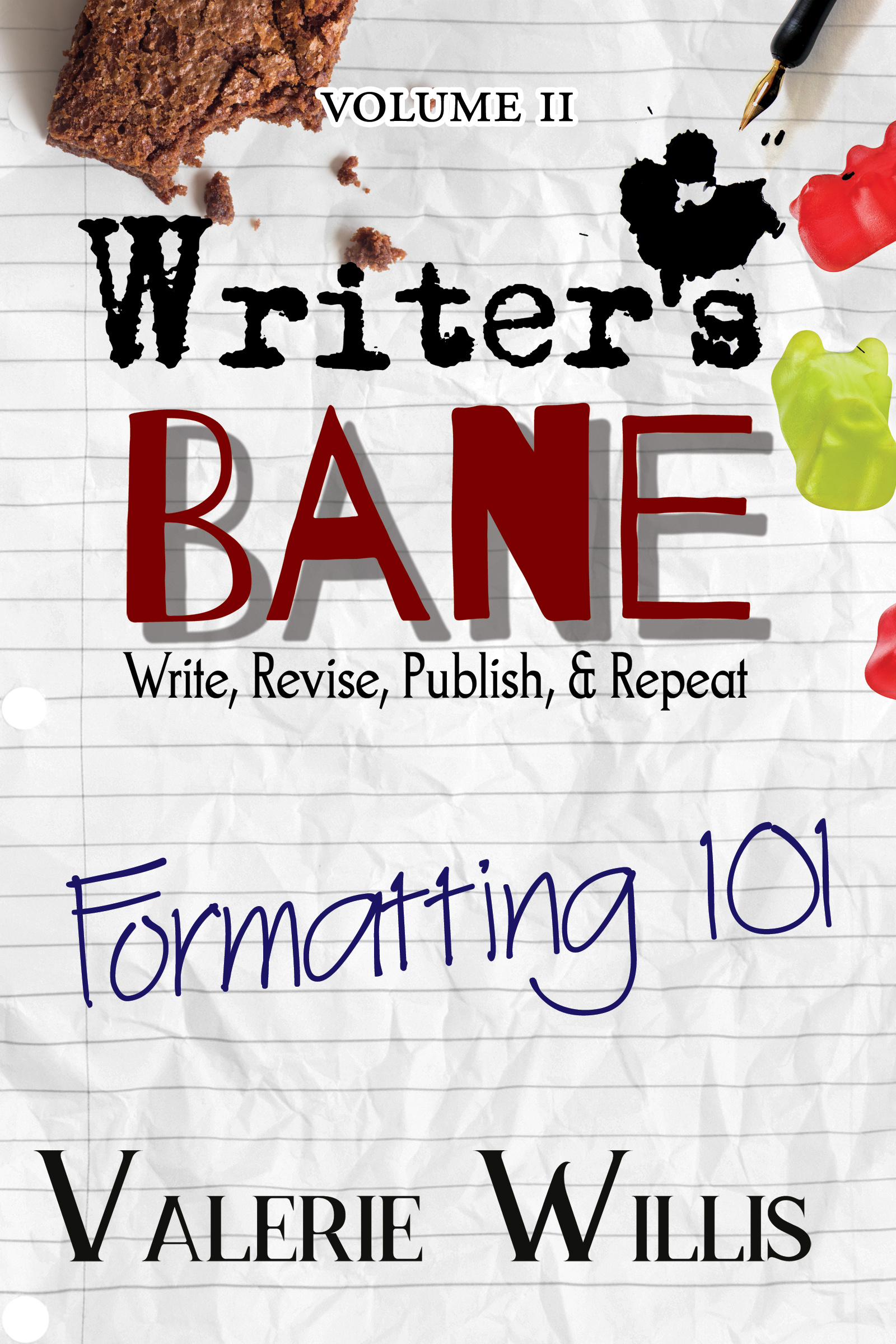
It’s strange to think about the fact that book formatting and layout still shows signs of those early printing press books in the 1400-1500s. Over the centuries, academia has evolved that format to create standards that began to take hold as public consumption increased in the 1800s. Regardless, your book’s format has to fall in line in a lot of ways for several reasons which include guiding and navigation of content, pacing of a story, placement on bookshelves, limit print issues, and reader immersion. If you haven’t discovered Writer’s Bane: Formatting 101, you’ve been missing out on a lot of answers to questions and even a stronger understanding of how impactful formatting is on a book. This includes what goes inside your book, how to prepare a manuscript for a typeset, and how to design the interior of your book. 

Guiding and Navigation of Content

Imagine a world where books didn’t have an expected chronological order to the content presented. I mean, no chapter numbers, no headers, and no page numbers. PURE CHAOS! A book’s format has an expected order and rhyme and reason. If they didn’t, it would be impossible to grasp where the information can be found. Even in “Choose Your Own Path” novels they have clearly written instructions and rely on guiding a reader via the page numbers. Let’s also be mindful that, for example, page numbers should land in the same spot throughout a book, but if this was inconsistent, you would be lost especially in a textbook. 

Keeping these navigational devices in your book in place and consistent means a lot. There have been a few books where page numbers were non-existent, and with so much automation in even word processors, WHY? How am I supposed to know where I am and what page my bookmark fell out? CHAOS. And worse, this example had a Table of Contents with numbers. PURE CHAOS. Be mindful of using all the navigational tools not for you, but your readers.

Pacing of a Story

This starts at the manuscript level and can skew how a typesetter or book designer “translates” the final book format, but be sure to use double returns and marking line breaks (***, #, or some other consistent searchable indication) in the right way. 

For example, double returns often come into play when a flashback starts or ends, a change in point of view or head hop happens in the moment or scene with no jump in time, or in non-fiction change in thought or moving on to the next thought within the same subject matter for that section/chapter. 

As for the line break, this is often where an ornamental icon will be added into a book. These often signal a change or passing of time in fiction work, change in location or jumping to a character not in the current scene, or the start of a new subject matter in a more significant manner in non-fiction. 

Placing these consistently and using them for the age-old expected reasons can help how a reader and story paces visually and limit any confusion. Imagine if neither of these existed in the novel you’ve been reading? MAYHEM!

Placement on Bookshelves

If you fail to fall in line with CMS or similar styling (Chicago Manual Style, APA, MLA, ect.), there’s a good chance that your book will not be chosen for bookshelves in commercial stores, libraries, and schools. It’s not uncommon for schools to require books to be in APA for medical books and degrees while other textbooks on certain matters for researched content may want MLA. Overall, commercial or public consumption often falls under the CMS standards though they aren’t as strict as academic and textbooks can be. These tend to be far more artful and allow more creative means. That doesn’t mean go hog wild and go above-and-beyond to break the formatting until it’s no longer recognizable. We’ve spent centuries to develop these styles and for good reason. 

Limit Print Issues

Margins and layout are also defined under these styles. Not only does it help identify the anatomy of what’s on the page, but these often aid in keeping the content from printing off the page or deeping into the spine of the book. Headers and footers play dangerously close to the edge, but the core content never should come close to this. The information is far more vital if the page prints crooked, right? Often book designers will have to adjust the margins dependent on the printer and press they are sending the file too. For example, for a perfect binding or glue binding Print-on-Demand book we typically set the inner margin with no bleed. Meanwhile, for Smythe Sewn or sew-bound hardcovers we would have to add bleed/trim/margin for stitching and binding to take place. A lot of math gets involved in those final moments of a book’s design that can impact the final look, so be mindful that anything that is pushed to the edge or super close has a high potential of “being lost” or cut off completely. 

Reader Immersion

Lastly, the biggest factor in all of this is the impact your consistency in formatting has on the reader. If the styling and broken style rules are too many, the reader will be confused and most likely will stop reading or even abandon the book. Again, for CENTURIES, books have an order and cadence that readers for GENERATIONS have been taught to read. Breaking the normal expectation in certain umbrellas can have detrimental effects to how readers feel and perceive your book and its content. Bad reviews, low sales, and social media thrashing will be just a few of the impacts here. The way a book is formatted is designed to optimize COMMUNICATION and to alter that has dire consequences and breaks the connection with the readers. Immersion can be granted, but the moment the font changes without warning, or the content isn’t labeled as expected, the reader gets distracted or frustrated. Remember, you’re not formatting for you, but for the audience. Don’t cause chaos!

Discover More

Like the advice and information you see here? Check out the Formatting 101 textbook here at: https://4horsemenpublications.com/product/writers-bane-formatting-101/ . This book holds a variety of answers for those seeking to become typesetters, looking to self-publish their book, or simply want to learn how to communicate and prepare their manuscripts to get the most out of their designers. The Writer’s Bane is a curse and passion, both a want and need to tell a story. In this volume, you will learn the importance of preparing a book for layout as well as laying it out in a way that appeals to your readers of any genre including picture books, chapter books, fiction, memoirs, textbooks, workbooks, and everything in-between.

Posted on

Chronicles of the Crossing – Crowdfunding

Where Epic Metal RPG Campaigns and Fantasy Novels Meet!

We are excited to announce in partnership with Storytellers Forge, the crowdfunding campaign for the Chronicles of the Crossing. These epic full-length novels of different genres, each written by a different author to explore the journeys through the Purgatory setting of The Black Ballad.

These novels explore the age-old question of any adventurer has had to ask in a TTRPG campaign…..

You died, now what?

Be one of the first to reserve your spot here: https://get.storytellersforge.com/

Posted on

From the Author’s Desk: Calling all English Teachers!

Looking for a new composition book for your class? The faculty at Hillsborough Community College decided that none of the publishers had what our students needed, so we wrote our own book that meets the needs of today’s students. 

Composition & Grammar is an easy to use, ADA-compliant textbook that includes useful overviews, practice exercises, and student samples. 

Take a look at the Table of Contents to see what is included in the textbook:

  • Part 1: Reading
    • Ch 1 Active Reading Techniques 
    • Ch 2 Reading Comprehension Strategies
  • Part 2: Writing Process
    • Ch 3 Writing Situation 
    • Ch 4 Writing as Exploration 
    • Ch 5 Planning/ Prewriting
    • Ch 6 Outlines 
    • Ch 7 Thesis Statements 
    • Ch 8 Introductions 
    • Ch 9 Conclusions 
    • Ch 10 Organization
    • Ch 11 Drafting, Revising, & Editing 
  • Part 3: Modes and Types of Writing
    • Ch 12 Writing Modes
    • Ch 12.1 Narration 
    • Ch 12.2 Description 
    • Ch 12.3 Exemplification
    • Ch 12.4 Definition 
    • Ch 12.5 Classification/Division 
    • Ch 12.6 Process 
    • Ch 12.8 Cause & Effect 
    • Ch 12.9 Argumentation 
    • Ch 13 Types of Writing 
  • Part 4: Grammar
    • Ch 14 Parts of Speech 
    • Ch 14.1 Nouns
    • Ch 14.2 Verbs
    • Ch 14.3 Adjectives 
    • Ch 14.4 Adverbs
    • Ch 14.5 Prepositions 
    • Ch 14.6 Pronouns 
    • Ch 14.7 Conjunctions 
    • Ch 14.8 Interjections 
    • Ch 15 Sentence Structure
    • Ch 15.1 Parts of a Sentence
    • Ch 15.2 Types, Patterns, & Structure 
    • Ch 15.3 Coordination & Subordination 
    • Ch 15.4 Modifiers 
    • Ch 15.5 Parallelism 
    • Ch 16 Punctuation 
    • Ch 16.1 End Punctuation 
    • Ch 16.2 Commas 
    • Ch 16.3 Semicolons 
    • Ch 16.4 Colons 
    • Ch 16.5 Apostrophes 
    • Ch 16.6 Hyphens 
    • Ch 16.7 Dashes & Parentheses 
    • Ch 16.8 Ellipses & Brackets 
    • Ch 16.9 Quotation Marks & Italics 
    • Ch 17 Common Errors
    • Ch 17.1 Verb Errors 
    • Ch 17.2 Pronoun Problems 
    • Ch 17.3 Run-on/Fused Sentences
    • Ch 17.4 Comma Splices 
    • Ch 17.5 Sentence Fragments s
    • Ch 17.6 Mixed Sentences 
    • Ch 17.7 Commonly Confused Words 
    • Ch 18 Style 
    • Ch 18.1 Person
    • Ch 18.2 Voice
    • Ch 18.3 Diction 
    • Ch 18.4 Clarity & Conciseness 
    • Ch 18.5 Tone 
    • Ch 19 Reference Overview
    • Ch 19.1 Numbers 
    • Ch 19.2 Abbreviations 
    • Ch 19.3 Capitalization 
  • Part 5: Research
    • Ch 20 Plagiarism 
    • Ch 21 The Research Process 
    • Ch 22 Finding Sources 
    • Ch 23 Integrating Sources 
    • Ch 24 MLA Format 
    • Ch 25 APA Format 

We live in a world of words.

The way we interact with our fellow humans is very often based on the language that always surrounds us, whether it be the messages we send, the news we read, or the assignments we complete in classes that give us the education intended to lead us to success.

What might be the best way to navigate the complexity of language, especially in a first-year composition course? This book addresses these issues by presenting lessons, examples, and student samples through an approach that is friendly, conversational, and realistic.

Created by actual instructors of composition at HCC, this book includes many resources to guide composition students of different skill levels:

  • In-depth overviews of reading, writing, and revising
  • Engaging exercises that anticipate and address the most common errors of writers
  • Actual student samples that provide the basis of class discussions and analysis

With guidance that includes both theory and practice, Composition and Grammar for HCC by HCC provides students with the skills they need for their educational goals, their careers, and their lives.